On a live site, power rarely arrives where the work is. Utility connections land at the boundary, permanent plant rooms get built late in the programme, and the work front moves every few weeks. Portable generation exists to close that gap.
The term covers more ground than most buyers expect. A unit that two people wheel into position and a containerised set craned onto a hardstanding are both described as portable, and they solve very different problems. Getting the deployment class right matters as much as getting the output right.
This guide covers the deployment classes of portable generators, how to size for real site loads, what UAE conditions demand for mobile equipment, and which mobile and relocatable ranges GENAVCO supplies.
The Deployment Classes of Portable Power
Portability is a spectrum. Placing your requirement on it narrows the choice faster than comparing output figures.
- Compact and site-movable: Small output, moved by hand or with a light vehicle, repositioned daily. Suits trade work, small sites, temporary supply and short-duration tasks where demand is modest and intermittent.
- Towable and self-contained: Larger output on a chassis or skid, relocated by vehicle between work fronts. Suits construction phases, night works and any operation where the power point moves with the programme rather than daily.
- Relocatable and containerised: Substantial output housed in a container or shelter, craned into position and left for weeks or months, then moved to the next phase or project. Suits long-duration site power, temporary plant supply and shutdown work.
The wrong class is expensive in both directions. A unit too small to serve the work front means running extension leads and losing pressure at the tool; a unit too large to reposition means the work comes to the power rather than the reverse.
Where Portable Power Is Used in the UAE
- Construction and civils: Site offices, tools, temporary lighting and welfare before a permanent supply is energised, moving through the programme as the work front advances.
- Night works and road projects: Illumination plus a modest power take-off, deployed and recovered daily on live road corridors.
- Events and temporary installations: Defined-duration supply where nothing permanent exists and the whole installation is struck afterwards.
- Shutdown and turnaround maintenance: Temporary power for a fixed window when the permanent system is offline or does not reach the work area.
- Remote and off-grid operations: Locations with no utility connection at all, where generation is the only supply rather than a backup to one.
- Standby and contingency cover: Bridging supply during a planned outage or a fault, without permanently oversizing the fixed installation.
Mobile and Relocatable Ranges Available from GENAVCO
GENAVCO supplies GPS power generation solutions across the UAE. The table below sets out which ranges suit which deployment class.
| Range | Deployment class | Output and key detail |
|---|---|---|
| Lighting Towers | Fixed or mobile | Up to 22 kVA, one-phase or three-phase, petrol or diesel |
| Containerised sets | Relocatable | 10?, 20?, 30?, 40? containers or shelters; silenced options |
| GPS Industrial Range | Semi-permanent | 10 – 2500 kVA; closed canopy for continuous-duty site power |
Three ranges are worth looking at in detail, described here purely by how they move and deploy.
1. Containerised Sets — relocatable between project phases
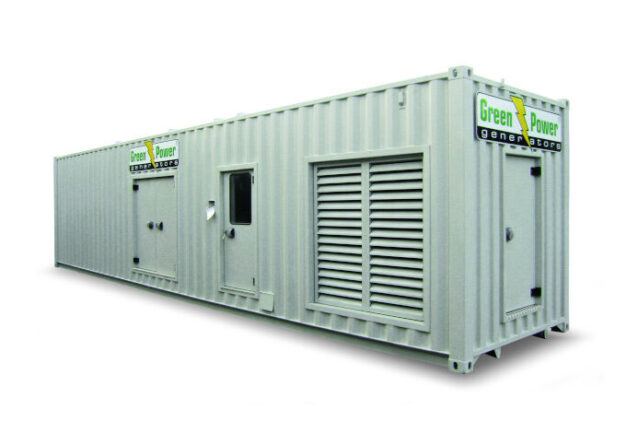
The heavy end of portable. Craned into position, connected, and left for weeks or months before moving to the next phase or the next project.
- Mobility class: Relocatable — craned, not towed
- Container sizes: 10?, 20? (BOX and HC), 30?, 40? (BOX and HC), or shelters to requirement
- Sea transport: RINA certification available on request
- Site equipment: Light system and auxiliary outlets, heaters with thermostat, motor-driven grids
- Support: Design-phase support with a range of customisation options
The container is what makes the relocation practical — the set arrives weather-protected and pre-connected internally, so redeployment is a lift and a hook-up rather than a re-installation.
View containerised generator solutions
2. GPS Industrial Range — semi-permanent site power

For a site position that will not change for the duration of a phase, but that is still temporary in the life of the project. Moved a handful of times rather than daily.
- Mobility class: Semi-permanent — relocated between phases
- Output range: 10 kVA to 2,500 kVA
- Frame: Solid electro-welded steel frames with built-in varying-capacity tank
- Canopy: Steel construction suitable for tropical environments, built for maintenance access
- Applications: Building sector, industry, agriculture and civil protection
The built-in tank matters most in this class. A unit that stays put for weeks is refuelled in place, and tank capacity decides how often someone has to reach it with a bowser.
Not sure which deployment class fits your programme?
Tell us your load, how often the unit needs to move, how it will be transported and how long it stays at each position — our team will specify the right class and return a cost proposal.
Advantages of Portable Generation
These are the benefits that show up in programme terms rather than on a datasheet.
- Power arrives at the work front: No long trailing leads from a distant supply, which means no accumulated voltage drop between the source and the tool.
- Independent of site infrastructure: A self-contained unit works from day one, before power, before permanent services, before the substation is energised.
- Follows the programme: The unit relocates as the work front advances rather than dictating where work can happen.
- Deployable across multiple projects: One asset can serve several sites over its life instead of being tied to a single facility, which changes the return calculation entirely.
- Fast to bring into service: No installation, no permanent pipework or cabling, no commissioning programme — position, connect, work.
- Covers temporary and contingency needs: Shutdowns, peak demand and outage cover without permanently oversizing the fixed installation.
- Scalable by adding units: Additional capacity comes from a second unit rather than a redesign, which suits phased or uncertain demand.
- Recoverable asset at project end: Unlike a fixed installation, a mobile unit leaves with the contractor and retains value across the fleet.
How to Size Portable Power for a Site
Undersizing is the most common site error, and it rarely presents as an obvious fault — tools simply run slowly and nobody escalates it.
Step 1 — Count simultaneous users, not total equipment. Size for what genuinely runs at the same moment. Six tools on site with two operators is a two-tool demand, not a six-tool one.
Step 2 — Identify the largest starting load. Motors draw several times their running current at start. That surge, not the running total, is what determines whether the unit copes.
Step 3 — Confirm phase and voltage requirements. Single or three phase, and the voltage the connected equipment expects. On lighting towers this is an order-stage selection.
Step 4 — Establish run time between refuelling. Built-in tank capacity sets how often someone has to attend the unit. On a remote work front, the logistics cost is real.
Step 5 — Derate for UAE ambient conditions. Rated output assumes reference conditions. A unit sized exactly to demand on paper will fall short in summer, so specify with margin.
Step 6 — Plan the transport and positioning method. How the unit is moved, what lifts or tows it, and where it sits with adequate cooling clearance. This decides the deployment class as much as the output does.
If your load schedule is in kW rather than kVA, the conversion and the starting-load calculation are covered in our guide to understanding electrical output and kVA.
Operating Mobile Equipment in UAE Conditions
Mobile units face harsher conditions than fixed installations, because they rarely get the benefit of a properly designed plant room.
- Positioning determines cooling: A unit parked against a wall, in a corner or between stacked materials recirculates its own hot air and will derate or shut down in summer. Clearance for airflow is not optional, and it is the most common cause of nuisance stoppages on site.
- Dust load is far higher than on a fixed site: Filters load faster and radiator fins block with fine sand. Service intervals should be set against the actual environment rather than copied from a manufacturer schedule written for temperate conditions.
- Fuel handling discipline matters more: Refuelling from cans and bowsers on an open site introduces water and particulates. Contaminated fuel presents as engine faults, and it is preventable with clean storage and disciplined practice.
- Security and siting: Mobile units are movable by definition. Positioning, lighting and anchoring are practical considerations on any site with public access or overnight vacancy.
Why Choose GENAVCO for Site Power in the UAE
A unit that stops on site stops a work front. Support availability matters more here than in any fixed installation.
- Part of Juma Al Majid Holding Group: Decades of established presence in the UAE market and the financial stability that comes with a major regional group — this matters when you are signing multi-year service agreements.
- Authorised GPS representation: Genuine equipment, factory-backed specification and full warranty integrity — not grey-market imports with uncertain parts availability.
- In-country spare parts inventory: Site downtime is measured in idle crews, not just lost power. Our genuine spare parts operation holds stock locally so a filter or belt does not stop the job for a fortnight.
- On-site service across the Emirates: Scheduled servicing, preventive maintenance and breakdown response through our repairs and maintenance division, covering Dubai, Abu Dhabi, Sharjah and the wider UAE.
- Deployment-led specification: We size against the load, the movement pattern and the transport method rather than a headline kVA figure. The deployment class is a specification decision, not an afterthought.
- Complete site equipment supply: Mobile power alongside our wider earthmoving and light construction equipment range — one supplier relationship across the site fleet.
- Range across every class: Lighting towers, semi-permanent canopied machines and containerised installations, so the recommendation follows the programme rather than the inventory.
Common Site Problems — and What Causes Them
- Tools running slowly or weakly: Almost always insufficient supply or voltage drop along the lead rather than a tool fault. Check the voltage at the tool, not at the unit.
- Shutting down on high temperature: Restricted airflow around the unit, recirculated hot air, or a dust-blocked radiator. Usually a positioning issue rather than a machine fault.
- Running out of fuel unexpectedly: Tank capacity sized without accounting for actual load percentage. Consumption at high load is considerably higher than at the figure most people plan around.
- Rapid filter blockage: Normal in dusty environments. The fault is the service interval, not the machine — shorten it to match the site.
- Equipment tripping when a motor starts: Starting load exceeded what the unit was specified to absorb. A sizing decision made without recording starting current.
- Unit too heavy to reposition: The deployment class was decided from the output figure alone, without asking how often it needs to move or what will move it.
Frequently Asked Questions
What size portable generator do I need for a construction site?
Size against the equipment running simultaneously rather than the total on site, at the phase and voltage your equipment requires, and account for the largest starting load. Rated output assumes reference ambient conditions, so specify with margin for UAE summer temperatures.
What is the difference between a portable and a containerised generator?
Both are relocatable, but they solve different problems. A compact or towable unit moves frequently and is repositioned by hand or vehicle. A containerised set is craned into position, delivers substantially more output, and typically stays for weeks or months before moving to the next phase.
Can a lighting tower also supply power to tools?
Yes. Lighting towers are available up to 22 kVA in one-phase or three-phase configuration, petrol or diesel, which allows a modest power take-off alongside the lighting. The phase configuration is selected at order rather than changed on site.
How long can a portable generator run before refuelling?
It depends on tank capacity and the actual load percentage, since consumption rises with load. On remote work fronts the refuelling interval is a logistics cost as much as a technical figure, and it should be part of the sizing conversation.
Do portable generators cope with UAE summer heat?
Yes, provided they are positioned and maintained correctly. Rated output falls as ambient temperature rises, so specify with margin, allow clearance for cooling airflow, keep radiators clear of dust, and avoid positions where the unit recirculates its own exhaust heat.
Does GENAVCO service mobile generators on site in the UAE?
Yes. GENAVCO holds genuine parts in-country and operates a certified service network covering Dubai, Abu Dhabi, Sharjah and the wider UAE, with preventive maintenance programmes and on-site breakdown support.
Ready to Specify Your Site Power?
Portable power is specified against the programme as much as the load. How often it moves, what moves it, how long it stays and what it has to start are the questions that decide the deployment class — and getting that right is what keeps crews working at full rate.
GENAVCO supplies mobile, semi-permanent and containerised generation across the UAE, backed by genuine parts, on-site service and local application expertise. For the wider selection framework, see our guide to choosing a power generator.
Tell us your load and how the unit needs to move. We will specify it and price it properly.
ENQUIRE NOW - GET YOUR SITE POWER SPECIFICATION
Serving Dubai, Abu Dhabi, Sharjah and the wider UAE.