For decades, aging roads were treated the same way: tear out the old pavement and rebuild from the subgrade up. Today, asphalt rehabilitation is replacing that approach on a growing share of UAE infrastructure projects. Rather than removing an entire road structure, rehabilitation techniques restore strength and surface quality while reusing much of the existing pavement. The result is a road that performs like new, delivered faster, at lower cost, and with far less disruption to traffic.
This shift is being driven by better equipment, smarter planning, and a clearer understanding of how pavement construction performs over its lifecycle. Understanding how modern rehabilitation works helps contractors and asset owners plan road maintenance programmes that extend infrastructure lifespan without the cost and downtime of full reconstruction.
Why Road Rehabilitation Is Replacing Full Road Reconstruction
Full reconstruction is no longer the default response to a deteriorating road. When the underlying base is still structurally sound, rehabilitating the surface layers delivers comparable performance at a fraction of the time and cost.
Lower Project Costs
Rehabilitation reuses the existing base and sub-base wherever possible, cutting material, haulage, and disposal costs that make full reconstruction expensive. Asphalt recycling further reduces spend by processing milled material for reuse in new asphalt mixes rather than sourcing fresh aggregate. For agencies managing large road networks, these savings allow more kilometres to be maintained within the same annual budget.
Reduced Traffic Disruptions
Rehabilitation projects typically move faster than full reconstruction because there is no need to excavate and rebuild the entire road structure. Milling and resurfacing can often be completed in stages overnight or over a weekend, keeping lanes open during peak hours. This is especially valuable on high-traffic urban corridors and highways where prolonged closures carry a significant economic cost.
Phased rehabilitation also allows contractors to work lane by lane rather than closing a full carriageway, which keeps traffic moving even on busy arterial routes. For municipalities managing large road networks, this reduced footprint translates directly into fewer public complaints, lower detour costs, and less disruption to local businesses along the corridor.
Equipment That Makes Modern Road Rehabilitation Possible
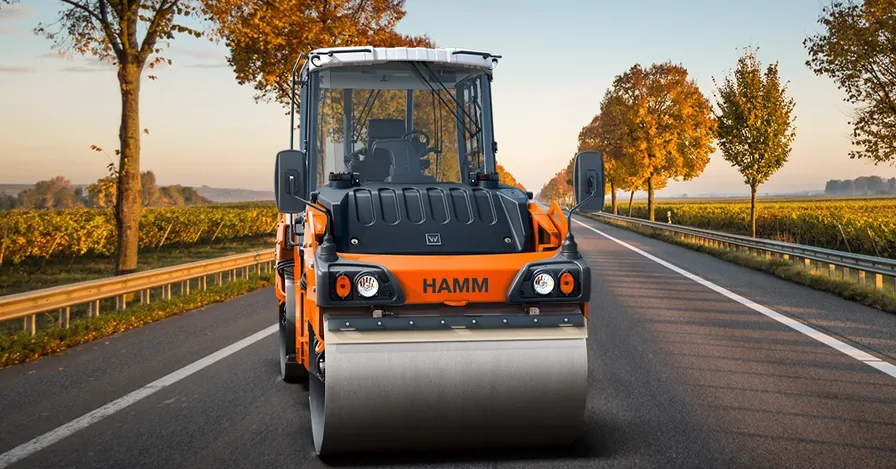
Modern rehabilitation depends on specialised machinery capable of removing, treating, and rebuilding pavement layers with precision. Our guide to road construction equipment: pavers, rollers and milling machines covers the complete machine range used across UAE infrastructure projects in more detail.
Cold Milling Machines
An asphalt milling machine removes deteriorated surface layers with precise depth and grade control, exposing a clean, stable profile for the new wearing course. Cold milling can remove anywhere from a few millimetres to the full asphalt depth in a single pass, and the recovered material is well suited to asphalt recycling back into new mixes. This precision is what allows rehabilitation to restore ride quality without disturbing the sound structural layers beneath.
Bitumen Spray Tankers
Before a new surface course is laid, a tack coat is applied to bond the new asphalt layer to the milled surface below. A bitumen spray tanker applies this bonding layer evenly across the full width of the road, ensuring the new and existing layers act as a single structural unit rather than separating under traffic load. Consistent spray application is one of the most overlooked factors in long-term rehabilitation performance.
Building Longer-Lasting Roads Through Better Planning
Equipment alone does not guarantee a lasting result. Rehabilitation projects perform best when paired with careful planning at every stage, from surface preparation through to final sign-off. Compaction quality also plays a direct role in how long a rehabilitated surface lasts; our comparison of soil compactors and plate compactors explains how the right compaction equipment supports durable results.
Surface Preparation
Proper surface preparation determines how well a new layer bonds and performs. This includes milling to the correct depth, cleaning debris from the profile, repairing any localised base failures, and applying the tack coat before the new mat is laid with a road paver. Skipping or rushing this stage is one of the most common causes of early rehabilitation failure.
Weather and temperature also factor into planning. In the UAE's climate, asphalt cools quickly once laid, so scheduling rehabilitation work during cooler night-time hours helps maintain the compaction temperature window and reduces the risk of premature layer separation.
Quality Assurance During Construction
Consistent results depend on verifying compaction density, layer thickness, and surface tolerances as work progresses rather than only at project completion. Real-time monitoring during compaction, combined with routine density testing, gives contractors and asset owners confidence that the rehabilitated pavement will meet its intended design life. Strong pavement construction quality control at this stage protects the cost and time savings that rehabilitation is meant to deliver, ensuring the road performs reliably for years of continued road maintenance cycles ahead.
FAQs
What is the difference between road rehabilitation and full reconstruction?
Rehabilitation restores the surface and upper layers of a road while reusing a sound underlying base, whereas full reconstruction removes and rebuilds the entire pavement structure from the subgrade up. Rehabilitation is faster and less expensive when the base remains structurally sound.
Can milled asphalt be reused on the same project?
Yes. Material removed by an asphalt milling machine can often be processed and blended back into new asphalt mixes through asphalt recycling, reducing material costs and the environmental impact of hauling and disposing of old pavement.
How long does a rehabilitated road typically last?
Service life depends on traffic loading, climate, and construction quality, but a well-executed rehabilitation with proper milling, tack coat application, and compaction can extend pavement life by ten years or more before the next intervention is needed.
Conclusion
Modern asphalt rehabilitation gives contractors and road authorities a faster, more cost-effective way to restore ageing pavement without the disruption of full reconstruction. Success depends on the right combination of precision milling, controlled bitumen application, and disciplined pavement construction quality control at every stage. With the right equipment and planning, rehabilitation delivers a road that performs like new while protecting budgets, schedules, and the travelling public from unnecessary disruption.