Sand that comes out of the ground is rarely sand alone. It arrives mixed with clay, silt and slimes — fine material that coats the grains, weakens the bond in concrete and mortar, and pushes the product outside specification no matter how well graded it is.
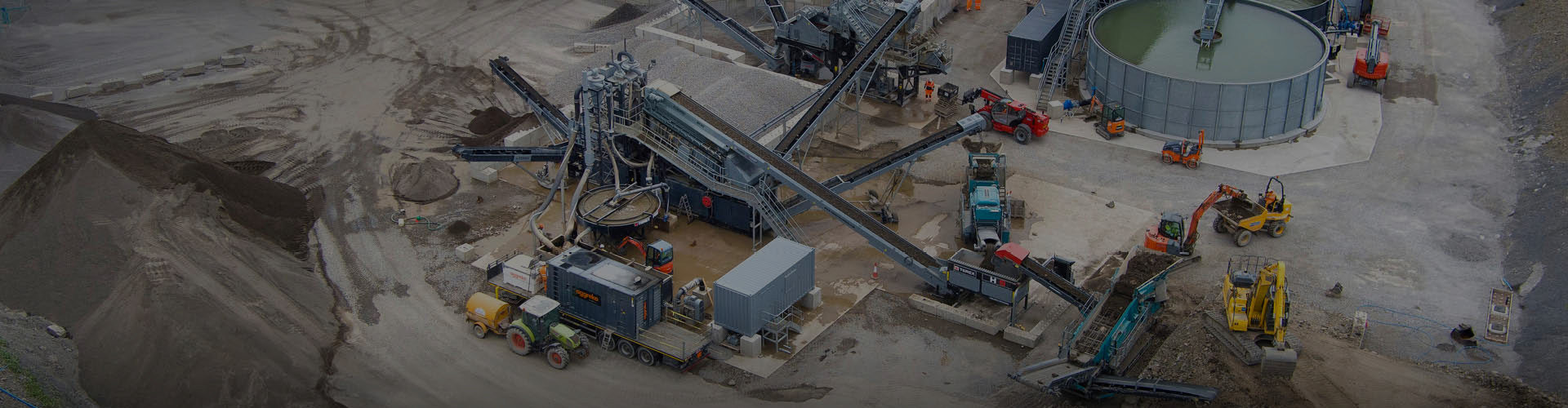
A washing plant exists to separate those two things. It removes what should not be there, recovers everything saleable that would otherwise be lost with the waste, and delivers sand dry enough to convey straight to a stockpile.
This guide covers what a sand washing plant actually does, why the 75 micron cut point governs the whole process, how water management determines running cost, and the Terex Washing FM range GENAVCO supplies in the UAE.
What a Sand Washing Plant Removes
The contaminants in raw sand are not simply dirt. Each behaves differently and each causes a different problem in the finished product.
- Clay is the most damaging: Clay particles coat sand grains and prevent cement paste bonding to them. Concrete made with clay-contaminated sand loses strength, and the effect is disproportionate to the quantity present.
- Silt reduces workability and increases water demand: Fine silt increases the surface area the mix has to wet, which pushes up water content and undermines the strength-to-water ratio the mix was designed around.
- Slimes carry through the process: Ultra-fine material stays in suspension rather than settling, which is why it ends up in the water system and eventually in settling ponds rather than being removed at the first stage.
- Quarry dust is a recoverable by-product: Crushed fines from a quarry operation are frequently treated as waste when a washing plant can turn them into a saleable manufactured sand.
The commercial point is that washing does two jobs simultaneously. It brings the sand into specification, and it recovers material that would otherwise be lost — and on a high-fines feed, the recovery is often the larger part of the return.
The 75 Micron Cut: Where the Money Is
Almost every specification in this sector turns on one number. 75 microns — 200 mesh — is the conventional boundary between saleable sand and waste fines.
Above 75 micrometers is product: Material coarser than this is saleable sand. Every particle that ends up in the waste stream instead of the stockpile is revenue lost, and on a high volume operation those losses accumulate quickly.
Below 75 microns is contamination: Clay, silt and slimes below this size are what the plant is there to remove. Leaving them in the product is what causes specification failures.
The cut has to be sharp: A plant that removes fines but takes saleable sand with them is throwing away product. One that retains saleable sand but leaves contamination behind produces out-of-spec material. Cut accuracy is the single most important measure of washing plant performance.
Below 75 microns there is still value: Ultra-fines recovery reaches material well below the conventional cut, turning what would go to a settling pond into a saleable product and reducing pond volume at the same time.
Hydrocyclones are what make the sharp cut possible. Slurry enters tangentially at pressure, centrifugal force throws heavier coarse particles outward and down to the underflow, and lighter fine material carries up and out through the overflow. Adjusting the cyclone controls where the cut falls.
Bucket Wheel or Hydrocyclone: Two Approaches
| Factor | Bucket wheel dewatering | Hydrocyclone classification |
|---|---|---|
| Method | Mechanical lifting and draining | Centrifugal separation in a cyclone |
| Handles | Bulk of the material volume | Fine fraction and precise cut control |
| Cut control | Coarser separation | Sharp, adjustable cut point |
| Wear | On the wheel and structure | On rubber-lined pumps and cyclones |
| Typical use | High volume, reduces load on pumps | Precision classification to specification |
| Combined | Wheel processes most of the feed | Cyclones handle what the wheel passes |
These are complements rather than alternatives. A plant combining both processes the bulk of the material mechanically and sends only the remainder through the cyclone circuit, which reduces wear on the rubber-lined components where wear is most expensive.
Water Management: The Running Cost Nobody Budgets
A washing plant consumes water continuously, and in this region that is a serious operating consideration rather than a footnote.
- Water is a cost and a constraint: Supply has to be secured and paid for, and in most operations it is recirculated rather than drawn fresh. The efficiency of that recirculation determines how much make-up water the plant needs each shift.
- Fines determine recovery cycle time: Water carrying a heavy load of fines takes longer to clarify before it can be reused. Removing fines earlier in the process shortens the recovery cycle and reduces the pond capacity required.
- Settling ponds occupy productive land: Ponds take up space, require periodic desilting and represent a permanent site commitment. Reducing the volume of solids reporting to them has a direct effect on site footprint and maintenance cost.
- Evaporation is significant here: Open ponds in UAE conditions lose substantial volume to evaporation, which increases make-up water demand beyond what the process itself consumes.
This is why ultra-fines recovery earns its place twice over: it produces a saleable product from material that was waste, and it reduces the load on the water management system at the same time.
Advantages of a Sand Washing Plant
These are the returns that justify the capital, and most of them are commercial rather than technical.
- Product meets specification: Removing clay, silt and slimes brings sand within the limits that concrete, mortar and asphalt specifications require.
- Higher saleable recovery: Material that would leave with the waste stream is retained as product, which on a high-fines feed can transform the economics of a deposit.
- Waste becomes revenue: Quarry dust and crushed fines, frequently treated as a disposal problem, become manufactured sand with a market value.
- Stronger concrete from the same mix: Clean sand bonds properly with cement paste, so the mix achieves its design strength without additional cement.
- Immediately conveyable product: High frequency dewatering screens deliver sand dry enough to stockpile directly rather than needing to drain.
- Reduced settling pond load: Recovering fines before they reach the water system shortens the recovery cycle and reduces pond capacity requirements.
- Multiple products from one feed: A single plant can produce two in-specification sands, or a sand and an aggregate, from one feed point.
- Rapid specification changes: Adjustable classification allows the product to be switched between grades as demand moves, without mechanical reconfiguration.
Terex Washing Systems Available in the UAE
GENAVCO supplies Terex Washing Systems in the UAE. Six units in the FM range cover washing, classification and fine recovery from compact dust washing through to full sand and aggregate plants.
1. Terex FM Bucket Wheel — high volume classification and dewatering

A complete classification system on a single chassis, combining mechanical dewatering with cyclone classification so each handles the part of the duty it does best.
- Configuration: Dewatering bucket wheel(s), centrifugal slurry pump, hydrocyclone(s), collection tank and dewatering screen on a single chassis
- Output: 1 or 2 grades of sand from wet feed, or bolt-on boiler box option for direct dry feed
- Cut point: Maximum recovery through removal of silt, slimes and clays below 75?m (200 mesh)
- Wear management: Variable speed bucket wheel processes 80–90% of material, reducing wear on the rubber lined pumps and cyclones
- Water system: Major reduction in fine material discharging to the water management system, reducing recovery cycle and cost
- Applications: Concrete, mortar and asphalt sands, quarry dust and crushed fines, lake and beach sands, silica sand, golf course sands, filter bed sands, recycled materials and iron ore
The 80–90% figure is the detail worth understanding. Rubber lining on pumps and cyclones is a consumable, and it is the most expensive wear in a washing plant. Passing the bulk of the material through the wheel instead means the costly components handle only a fraction of the tonnage.
View the Terex FM Bucket Wheel
2. Terex FM Compact — cyclone classification on a small chassis

A static washing and classification unit built around hydrocyclones, designed to be both cost and energy efficient within a small footprint.
- Configuration: Collection tank, centrifugal slurry pump(s), hydrocyclone(s) and dewatering screen
- Method: Centrifugal force within the hydrocyclone(s) removes clay, silt and slime to bring sand into specification
- Output: Up to 2 clean sands
- Pumps: Underflow rubber lined slurry pump(s)
- Cyclones: Two rubber lined hydrocyclones with self regulating cyclone tank
- Dewatering: High frequency dewatering screen fitted with polyurethane modular mats
- Cut point: Maximum recovery of material above 75?m (200 mesh)
The self-regulating cyclone tank matters operationally. Cyclone performance depends on consistent feed pressure and density, and a tank that maintains those conditions automatically holds the cut point steady without an operator adjusting it through the shift.
3. Terex FM Direct Feed — dust washing on a minimal footprint

A compact plant taking dry pre-screened feed directly, particularly suited to dust washing where the aim is converting crushed fines into saleable sand.
- Feed: Dry pre-screened material with minimum oversize
- Process: Feed delivered to a wash box with a high pressure spray bar to pre-soak before reaching the screen
- Output: 1 rinsed aggregate and 1 grade of sand, or 1 coarse sand and 1 fine sand, from a single dry feed
- Cut point: Maximum recovery through removal of silt, slimes and clays below 75?m (200 mesh)
- Construction: Robust easy to assemble steel construction with galvanized walkway and handrails for access
- Best for: Dust washing applications and sites where footprint is constrained
Taking dry feed directly is what makes this unit fit alongside an existing crushing operation. Quarry dust coming off a crushing circuit can be routed straight in without an intermediate wet handling stage. The crushing side of that arrangement is covered in our guide to designing a crushing circuit.
4. Terex FM 60 Hydro — washing and sizing in one structure

A complete sand classification plant combining washing and sizing on a single compact structure, with electronic control over where the cut falls.
- Configuration: Dewatering cyclone combined with flat bottom classifier
- Output: 2 in-spec sands from a single feed in point
- Classification: Electronically controlled hydraulic classification system extracts light or small particles from slurry at high efficiency while displacing a minimum of heavy or coarse particles to the overflow
- Dewatering: High frequency dewatering screen ensures dry, immediately conveyable product for stockpiling
- Control: Electrical control system stores up to 5 different settings for rapid change of product specification
Five stored settings is a commercial feature rather than a technical one. An operation supplying concrete sand, asphalt sand and filter sand can move between specifications as orders come in, without recalibrating the plant each time or accepting a compromise grading that suits none of them well.
5. Terex FM Pentium — sand and aggregate from one chassis

A static sand and aggregate washing unit combining several components on a single chassis, built on the Fines Master range for higher production and versatility.
- Type: Static unit, remaining in one position during operation
- Output: One sand and one aggregate on a single chassis
- Feed rate: Up to 150 tph of pre-screened material
- Washed sand production: Up to 120 tph
- Positioning: Increased production and versatility over the Fines Master range
The relationship between the two figures is the useful one: 150 tph in, up to 120 tph of washed sand out. That gives a realistic basis for sizing against a target output rather than working from feed capacity alone, which is how washing plants end up under-delivering against expectation.
6. Terex FM UltraFines — recovering what the plant would lose
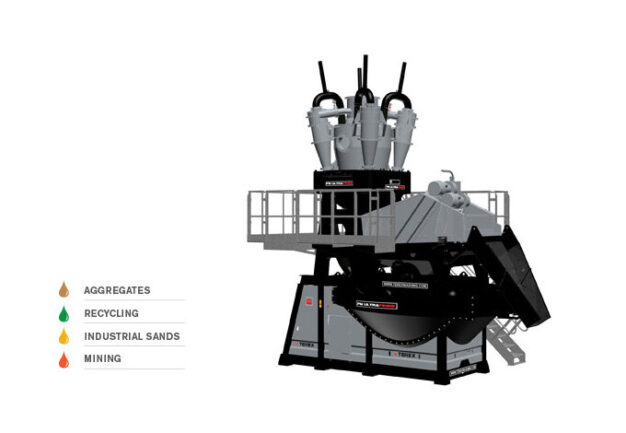
An ultra-fines recovery unit working on the waste water stream from the washing process, capturing material well below the conventional cut point.
- Throughput: Up to 450 m³ per hour of slurry
- Recovery: Material as low as 40 micron
- Configuration: Centrifugal pump, cluster of 4 hydrocyclones and a high frequency dewatering screen on one chassis
- Tank design: Uniquely designed conical tank with anti-turbulence system, essential to ultra-fines recovery
- Water benefit: Reduces volume of solids reporting to storage ponds or water treatment plants
- Serviceability: Large volume conical tank with bolt on sides, removable chassis cover panels, accessible lined pump and motor, cyclone array with easy access catch boxes
Recovering to 40 micron reaches well below the 75 micron cut that governs the main plant. That material was previously wasted in two senses — lost revenue, and solids loading the water system — so the unit returns value on both sides of the equation.
Not sure which washing configuration suits your feed?
Send us your feed material and its clay and silt content, your target sand specifications and your tonnage requirement — our team will configure the plant and return a costed proposal.
How to Specify a Sand Washing Plant
Step 1 - Get the feed analysed properly. Particle size distribution and the proportion of material below 75 microns determine everything downstream. A washing plant specified without a gradation analysis is specified on assumption.
Step 2 - Define the product specifications you must meet. How many sands, to which gradings, and whether an aggregate product is also required. Work backwards from what you can sell rather than forwards from what the feed contains.
Step 3 - Establish realistic tonnage. Feed rate and washed product output are different figures, and the gap between them depends on how much of the feed is contamination. Size against product output, not feed capacity.
Step 4 - Plan the water system as part of the plant. Supply, recirculation, settling capacity and desilting. This is frequently treated as a site matter and it belongs in the plant design.
Step 5 - Decide whether fines recovery pays. On a high-fines feed, an ultra-fines unit adds a saleable product and reduces pond load. On a clean feed it may not be justified. The gradation analysis answers this.
Step 6 - Confirm the footprint and feed arrangement. Static plants need a permanent position and a feed method. Compact units suit constrained sites. The site layout should be settled before the configuration is fixed.
Sand Washing in UAE Conditions
- Water is the defining constraint: Supply cost, recirculation efficiency and evaporation from open ponds all bear more heavily here than in temperate markets. Any specification that treats water as an afterthought will produce a plant that is expensive to run.
- Desert sand is not construction sand: Naturally occurring dune sand is too fine and too rounded for structural concrete, which is why the region depends on crushed and washed material. That makes washing plants central to aggregate supply rather than a refinement.
- Quarry dust volumes are high: Extensive crushing activity generates large quantities of crushed fines. Where these are being stockpiled as waste, a washing plant converts an accumulating disposal problem into a product.
- Dust and heat affect the plant itself: Screens, pumps and cyclones work in an abrasive environment at sustained high temperature. Service intervals should follow the conditions rather than a manual written elsewhere.
Site water handling around the plant — sumps, pond transfer and general drainage — is covered in our guide to dewatering pumps for site water control.
Why Choose GENAVCO for Washing Plant in the UAE
Buying the plant is the easy part. What determines whether the investment performs is everything that happens afterwards.
- Part of Juma Al Majid Holding Group: Decades of established presence in the UAE market and the financial stability that comes with a major regional group — this matters when you are signing multi-year service agreements.
- Authorised Terex Washing Systems representation: Genuine equipment, factory-backed specification and full warranty integrity — not grey-market imports with uncertain parts availability.
- Wear parts held locally: Rubber linings, cyclone components and screen mats are consumed continuously in abrasive material. Our genuine spare parts operation holds stock in-country so a liner change does not stop production.
- Certified service and maintenance: Scheduled servicing, preventive maintenance and on-site breakdown response through our repairs and maintenance division across Dubai, Abu Dhabi, Sharjah and the wider UAE.
- Operator training: Cut point control and cyclone settings determine both product quality and recovery. Our operator training centre covers correct operation and daily checks.
- Configuration against your feed analysis: We specify the plant from a gradation analysis and your target product specifications, not from a tonnage figure alone — because the proportion of fines in the feed determines what the plant has to do.
- Depth across quarry processing: Washing and classification alongside our wider quarry and mining equipment range, so crushing, screening and washing are supported from one supplier relationship.
Common Sand Washing Problems
- Product failing specification on fine content: The cut point has drifted, usually through cyclone wear changing the internal geometry. Cut accuracy degrades gradually rather than suddenly.
- Losing saleable sand to the waste stream: A cut set too coarse, sending material above 75 microns to overflow. This is revenue leaving the plant continuously and it rarely announces itself.
- Rapid rubber lining wear: A high proportion of the feed passing through pumps and cyclones rather than being handled mechanically first. Plant configuration rather than component quality.
- Settling ponds filling faster than expected: High fines load reaching the water system. Recovering ultra-fines before that point reduces both pond volume and desilting frequency.
- Product too wet to stockpile: Dewatering screen performance, frequently blinded or worn mats. It presents as a product handling problem but originates on the screen.
- Throughput below expectation: Sizing against feed rate rather than washed product output. If a third of the feed is contaminated, a third of the rated capacity is not producing anything saleable.
Frequently Asked Questions
What does a sand washing plant do?
It separates clay, silt and slimes from sand so the material meets specification for concrete, mortar, asphalt and other applications. It also recovers saleable material that would otherwise be lost with the waste stream, and dewaters the product so it can be conveyed straight to a stockpile.
Why is 75 microns the important number?
75 microns, or 200 mesh, is the conventional boundary between saleable sand and waste fines. Material above it is product; clay, silt and slimes below it are contamination. The accuracy of the cut at that point determines both product quality and how much saleable material is recovered.
What is the difference between a bucket wheel and a hydrocyclone plant?
A bucket wheel dewaters mechanically and handles the bulk of the material volume. A hydrocyclone uses centrifugal force to make a sharp, adjustable cut on the fine fraction. They are complementary — combining both means the wheel processes most of the feed, reducing wear on the rubber-lined cyclones and pumps.
Can a washing plant turn quarry dust into saleable sand?
Yes, and this is one of the strongest commercial cases for washing. Crushed fines that would otherwise accumulate as waste can be washed into manufactured sand meeting specification, converting a disposal cost into a product with a market value.
How much water does a sand washing plant use?
It depends on configuration and how efficiently water is recirculated. Most operations recycle rather than draw fresh, so the practical figure is make-up water rather than total throughput. Removing fines early shortens the recovery cycle and reduces both pond capacity and make-up demand.
Does GENAVCO supply spare parts and servicing for the Terex Washing plant in the UAE?
Yes. GENAVCO holds genuine parts in-country and operates a certified service network covering Dubai, Abu Dhabi, Sharjah and the wider UAE, with preventive maintenance programmes, operator training and on-site breakdown support.
Ready to Specify Your Washing Plant?
Washing plant performance is decided by cut accuracy and water management, and both start with knowing what is actually in the feed. Get a gradation analysis, size against washed output rather than feed rate, and design the water system as part of the plant rather than around it.
GENAVCO supplies the full Terex Washing FM range across the UAE — bucket wheel, cyclone, direct feed, classification and ultra-fines recovery — backed by genuine parts, certified service and operator training.
Tell us your feed analysis and target specifications. We will configure the plant and price it properly.
ENQUIRE NOW — GET YOUR WASHING PLANT SPECIFICATION
Serving Dubai, Abu Dhabi, Sharjah and the wider UAE.