Water arrives in every excavation eventually. Groundwater seeps through the sides, rain collects in the base, and a pit that was dry on Thursday is unworkable on Sunday. Until it is removed, nothing else on that part of the site can proceed.
That makes dewatering a programme item rather than a plant item. The pump is not producing anything measurable — it is buying working time for everyone else, and when it stops, the crews standing in the pit stop with it.
This guide covers how to size a dewatering pump against real site inflow, why abrasion determines service life more than duty hours, how site conditions in this region change the specification, and the Flygt pumps GENAVCO supplies for site water control.
Where Site Water Comes From
Sizing a pump starts with understanding what is filling the excavation, because the three sources behave completely differently.
- Groundwater ingress is continuous and predictable: Water seeping through the sides and base of an excavation below the water table arrives at a steady rate governed by ground permeability and how far below the table you are working. It does not stop, which means the pump duty is continuous rather than intermittent.
- Surface water is intermittent and heavy: Rainfall and runoff arrive in short, high-volume bursts. Sizing for this alone leaves a pump massively oversized for daily duty; ignoring it leaves the pit flooded after the first storm.
- Process water is predictable but often dirty: Water used in construction operations, wash-down and concrete works arrives with high solids content and frequently with cement fines that settle and set.
Most sites need to handle all three. The practical approach is sizing the primary pump for continuous groundwater ingress and having additional capacity available for storm events, rather than running one heavily oversized pump continuously.
Sizing a Dewatering Pump
Four inputs, and the first is the one most commonly guessed rather than measured.
- Measure the inflow rate: The most reliable method is to let the excavation fill to a known level, measure the time taken, and calculate from the volume. Estimating from ground type produces figures that can be out by a wide margin, and the error is usually in the direction of undersizing.
- Establish the total head, not the depth: The vertical lift from the sump to the discharge point is only part of it. Friction through the discharge hose, its diameter and its length, plus any bends, all add resistance. On deep excavations with long hose runs, friction can exceed the static lift.
- Characterise the water: Clean groundwater, sandy water and slurry are three different specifications. Abrasive content is what determines wear life, and specifying a clean-water pump for sandy conditions produces short, expensive service intervals.
- Plan for the peak, not just the average: A pump sized exactly to average inflow has no margin for a storm event or an unexpected water strike. Some headroom, or a second unit available, is cheaper than a flooded excavation.
Abrasion: What Actually Ends a Dewatering Pump
Dewatering pumps rarely fail from running hours. They fail from what is suspended in the water they move.
- Sand is the primary wear mechanism: Fine abrasive particles pass through the pump at velocity and erode the impeller, the wear parts and the seal faces. In sandy ground conditions this is continuous, and it progressively reduces performance before it causes an outright failure.
- Performance drops before the pump stops: As internal clearances open up through wear, the pump recirculates internally and delivers less. A pump that seems to be keeping up less well than it did is usually worn rather than undersized.
- Sump design reduces abrasion substantially: Allowing water to settle in a properly formed sump lets the heaviest solids drop out before reaching the pump. This is the cheapest wear reduction available on any site, and it is frequently skipped.
- Slurry duty needs a slurry pump: Where solid content is genuinely high rather than incidental, a pump built for abrasive suspension is the correct answer. Running a standard dewatering pump on slurry duty produces a very short service life.
- Dry running destroys seals: As the excavation empties, an uncontrolled pump can run dry. Level control is not an accessory on intermittent duty — it is what protects the machine.
Advantages of Submersible Dewatering Pumps
These are the characteristics that make submersible the standard choice for site water control.
- Works from the bottom of the excavation: The pump sits in the sump rather than at the surface, so depth is not limited by suction lift the way it is with a surface pump.
- No priming on an intermittent duty: Permanently primed by immersion, so the pump restarts reliably after every stoppage without attention.
- Compact and easy to reposition: Lowered in on a hose and a lifting line, moved as the excavation advances, with no pump house or mounting required.
- Continuous duty capability: Built to run against steady groundwater ingress hour after hour rather than in short bursts.
- High head available: Deep excavations need substantial lift, and heavy-duty dewatering pumps deliver it from the bottom of the pit.
- Handles dirty water: Site water is rarely clean, and dewatering pumps are built to pass the solids that come with it.
- Quiet in operation: The water absorbs noise, which matters on urban sites and where night working is required.
- Redeployable across projects: A site asset rather than an installation, moving between excavations and between contracts.
Flygt Dewatering Pumps Available in the UAE
GENAVCO supplies Xylem Flygt pumping solutions in the UAE. Three ranges cover site water control from general excavation dewatering to abrasive slurry and high-volume flood duty.
1. Flygt Dewatering Pumps — the construction and mining workhorse
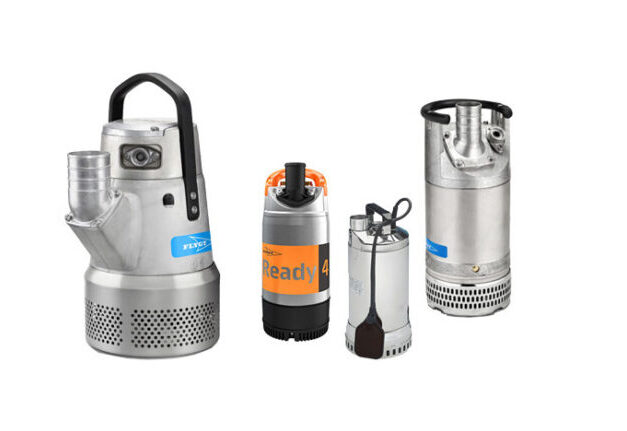
Heavy-duty submersible pumps built specifically for construction and mining site water control, across the range of duties a project encounters.
- Type: Submersible heavy duty dewatering pumps for construction and mining industry
- Coverage: Can be used in every dewatering challenge
- Flow: Up to 270 l/s
- Head: Up to 90 m
- Motor ratings: Up to 90 kW available
The 90 m head figure is what makes this range work on deep excavations. Basement construction, shafts and deep foundations impose lift that lighter pumps cannot deliver from the bottom of the pit, and a pump that cannot reach the discharge point is no use regardless of its flow rating.
2. Flygt Slurry Pumps — for genuinely abrasive water

Where solids content is high enough that a standard dewatering pump would wear rapidly, a purpose-built slurry pump operates directly in the material.
- Type: Submersible heavy resistant slurry pump
- Installation: Operates directly in the slurry, requiring no support superstructure
- Applications: Industrial applications such as treatment plants, fly ash and similar duties
- Flow: Up to 320 l/s
- Head: Up to 88 m
Operating directly in the slurry without a support structure is the practical advantage. A surface-mounted slurry pump needs a platform, suction pipework and priming arrangement, all of which have to be built and then moved when the working area changes.
3. Flygt Propeller Pumps — high volume at low lift
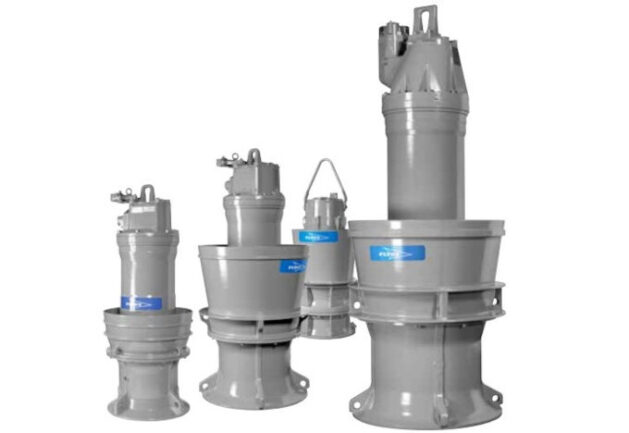
Where the requirement is moving very large volumes over a short lift rather than pushing water high, a propeller pump is a fundamentally different machine.
- Type: Submersible propeller pumps
- Duty: Low head and high flow pumping
- Applications: Irrigation, flood control, municipal storm water and raw water
- Installation: Column pipe or channel type installation
- Flow: Up to 7,000 l/s
- Head: Up to 14 m
- Motor ratings: Up to 578 kW available
Compare the figures with the dewatering range and the difference in purpose is clear: roughly twenty-six times the flow at about a sixth of the head. This is a flood and storm water machine, not an excavation pump, and specifying one for the other produces a poor result in either direction.
Not sure what your excavation needs?
Send us your measured inflow rate, excavation depth, discharge distance and how sandy the water is — our team will size the pump and return a costed proposal.
Planning Dewatering on Site
Step 1 - Measure the inflow before specifying. Let the excavation fill to a known level and time it. A measured figure beats an estimate from ground type, and the cost of getting this wrong is a flooded pit.
Step 2 - Form a proper sump. A sump low enough to draw the water level below the working area, and large enough for solids to settle before reaching the pump. This single measure extends pump life more than any specification decision.
Step 3 - Size the discharge hose properly. Undersized or overlong hose adds friction that the pump has to overcome, and it is a frequent reason a correctly specified pump appears to underperform.
Step 4 - Plan where the water goes. Discharge location, any consent or treatment requirement, and the route. Water pumped out of a pit and back into the ground nearby returns through the excavation sides.
Step 5 - Fit level control. Automatic operation prevents dry running as the excavation empties and removes the need for someone to attend the pump through the shift.
Step 6 - Keep standby capacity available. Dewatering is a single point of failure for the whole excavation. A spare pump on site costs less than a day of stopped work.
Dewatering in UAE Conditions
- Sandy ground makes abrasion the dominant issue: Regional ground conditions mean site water frequently carries a significant sand load. This is the main determinant of service life, and specifications should account for it rather than assuming clean groundwater performance.
- Coastal and brackish groundwater is corrosive: Excavations near the coast encounter saline groundwater that attacks materials not selected for it. Material specification should reflect the actual water chemistry.
- High water tables in coastal development areas: Much of the region’s construction takes place where groundwater sits close to the surface, which means dewatering is a continuous duty from the moment excavation starts rather than an occasional requirement.
- Heat affects both pump and discharge planning: Evaporation from open discharge and settlement ponds is high, and pumps running partially exposed at low water level lose the cooling that immersion provides.
- Storm events are infrequent but severe: Rainfall arrives rarely and heavily. Capacity planning should account for the storm case even though it may occur only a few times a year, because that is when excavations flood.
Why Choose GENAVCO for Site Dewatering in the UAE
A stopped pump stops the excavation and everyone working in it. Support availability matters more here than on almost any other site equipment.
- Part of Juma Al Majid Holding Group: Decades of established presence in the UAE market and the financial stability that comes with a major regional group — this matters when you are signing multi-year service agreements.
- Authorised Xylem Flygt representation: Genuine equipment, factory-backed specification and full warranty integrity — not grey-market imports with uncertain parts availability.
- Wear parts and seals held locally: Abrasive site water consumes wear parts continuously, and a pump waiting on a shipment is an excavation standing idle. Our genuine spare parts operation holds stock in-country.
- On-site service across the Emirates: Installation, scheduled servicing and breakdown response through our repairs and maintenance division, covering Dubai, Abu Dhabi, Sharjah and the wider UAE.
- Operator training: Sump forming, level control setup and dry-run prevention are what determine pump life on site. Our operator training centre covers correct operation and daily checks.
- Specification against measured conditions: We size against your actual inflow, depth and water quality rather than a nominal figure, because abrasion and total head are what determine whether the pump lasts the project.
- Depth across site and quarry equipment: Pumping alongside our earthmoving and light construction equipment and quarry and mining equipment ranges.
Common Dewatering Problems
- Pump keeping up initially, then falling behind: Almost always abrasive wear opening internal clearances rather than rising inflow. The pump is recirculating internally and delivering less than it did.
- Water level not dropping despite adequate flow rating: Total head higher than calculated — usually friction in a long or undersized discharge hose rather than the vertical lift.
- Repeated seal failure: Dry running as the excavation empties, or high abrasive content attacking the seal faces. Level control addresses the first; sump design and specification address the second.
- Very short service life: A standard dewatering pump running on slurry duty. Where solids content is genuinely high, a slurry pump is the correct machine.
- Pit flooding after rain despite adequate daily performance: Sized for continuous groundwater ingress only, with no allowance for storm inflow. Standby capacity is the practical answer.
- Water returning into the excavation: Discharge point too close to the pit, so pumped water re-enters through the ground. A planning issue rather than a pump one.
Frequently Asked Questions
What size dewatering pump do I need?
Measure the inflow rate by letting the excavation fill to a known level and timing it, then calculate total head including friction losses through the discharge hose as well as the vertical lift. Characterise how abrasive the water is, and allow headroom for storm inflow rather than sizing exactly to average groundwater ingress.
What is the difference between a dewatering pump and a submersible pump?
A dewatering pump is a submersible pump specified for site water control — construction excavations, mining and similar duties. The broader submersible category also covers wastewater, sewage and process pumping, where the impeller is selected against solids and fibre content rather than against abrasion.
Why is my dewatering pump losing performance over time?
Usually abrasive wear. Sand and grit erode the impeller and wear parts, opening internal clearances so the pump recirculates and delivers less. Forming a proper sump so solids settle before reaching the pump is the most effective way to slow this.
Do I need a slurry pump or a dewatering pump?
It depends on solids content. Where water carries incidental sand and silt, a heavy-duty dewatering pump is appropriate. Where solids are genuinely in suspension at high concentration, a purpose-built slurry pump is required — running a dewatering pump on slurry duty produces very short service life.
How deep can a dewatering pump work?
Because it is submersible it sits in the sump rather than drawing water up to itself, so depth is limited by the head the pump can generate rather than by suction lift. Flygt dewatering pumps deliver head up to 90 m, which covers deep basement and shaft excavations.
Does GENAVCO service dewatering pumps on site in the UAE?
Yes. GENAVCO holds genuine parts in-country and operates a certified service network covering Dubai, Abu Dhabi, Sharjah and the wider UAE, with installation, preventive maintenance programmes and on-site breakdown support.
Ready to Specify Your Dewatering?
Dewatering is sized on measured inflow and total head, and it lasts or fails on abrasion. Measure rather than estimate, form a proper sump, size the discharge hose honestly, and keep standby capacity on site — because the pump is holding up the whole excavation behind it.
GENAVCO supplies Flygt dewatering, slurry and propeller pumps across the UAE, backed by genuine parts, on-site service and specification against your actual site conditions.
Tell us your inflow, depth and water quality. We will size the pump and price it properly.
ENQUIRE NOW — GET YOUR DEWATERING SPECIFICATION
Serving Dubai, Abu Dhabi, Sharjah and the wider UAE.