Aggregate is the highest-volume material in construction, and almost all of it starts as rock that is too large to use. Crushing is the process that turns quarried stone, excavated rock and demolition arisings into the graded sizes that concrete, asphalt and road base specifications call for.
Doing that efficiently is a circuit design problem rather than a machine purchase. A crusher chosen without reference to what feeds it and what follows it will either sit starved or choke, and in both cases the tonnage on the weighbridge falls short of what the machine is rated to produce.
This guide covers what a stone crusher actually does at each stage, how primary, secondary and tertiary machines fit together, what governs throughput and product shape, and the Kleemann range GENAVCO supplies in the UAE.
The Three Stages of Crushing
Rock is not reduced in one step. Each stage takes a defined feed size and produces a defined output, and the machine types are built accordingly.
- Primary - the jaw crusher: Takes run-of-quarry rock or demolition material and reduces it to a size the rest of the circuit can handle. Two plates, one fixed and one moving, compress material between them. Built for large feed and high reduction rather than product shape.
- Secondary - the cone crusher: Takes pre-crushed material and reduces it further by compressing it between a gyrating mantle and a fixed concave. Efficient in hard, abrasive stone, and the standard second stage in a quarry circuit.
- Secondary or tertiary - the impact crusher: Reduces material by striking it with rotating blow bars rather than squeezing it. Produces better-shaped, more cubical aggregate and handles softer stone and recycled concrete well.
Screening sits between and after these stages, separating material that is already at size from material that needs another pass. A crushing circuit is really a crushing-and-screening circuit, and the screens determine as much about output as the crushers do.
Each stage is covered in depth in our guides to jaw crushers for primary crushing, cone crushers for hard stone and impact crushers for shaping and recycling.
Compression or Impact: The Fundamental Choice
| Factor | Compression (jaw, cone) | Impact (impact crusher) |
|---|---|---|
| Reduction method | Squeezes material between two surfaces | Strikes material with rotating blow bars |
| Suits | Hard, abrasive stone | Softer stone, concrete and recycled material |
| Product shape | More elongated and flaky | More cubical and well shaped |
| Reduction ratio | Lower per stage | Higher per stage |
| Wear part cost | Lower in abrasive material | Higher in abrasive material |
| Fines generation | Lower | Higher |
| Typical position | Primary and secondary | Secondary and tertiary |
This choice is driven by the rock, not by preference. Hard abrasive stone destroys blow bars quickly, which is why quarries in hard formations run jaw-and-cone circuits. Softer limestone and recycled concrete suit impact crushing, which is why demolition and recycling operations favour it and get better product shape as a result.
Designing the Circuit
Four decisions determine whether a crushing plant achieves its rated output on site.
- Feed size sets the primary: The largest rock that will enter the plant determines the feed opening required. A machine that has to be fed selectively because material will not enter is a machine running below capacity all shift.
- Product specification sets the last stage: The gradings and shape the end product must meet determine whether the circuit finishes on a cone, an impact crusher or a screen. Work backwards from the specification rather than forwards from the quarry face.
- Balance determines real throughput: Every stage must handle what the previous stage delivers. A circuit is limited by its narrowest point, and an oversized secondary behind an undersized primary produces the same tonnage as the primary alone.
- Screening decides how much is recirculated: Material already at size should leave the circuit rather than passing through another crusher. Scalping ahead of the primary and post-screening after the crusher both raise net output without adding crushing capacity.
Advantages of a Correctly Designed Crushing Circuit
These benefits follow from circuit design rather than from any single machine.
- Rated throughput actually achieved: A balanced circuit produces close to its design tonnage instead of being throttled at one stage.
- Lower cost per tonne produced: Fuel, wear parts and labour are spread across more tonnes when every machine runs loaded.
- Product meeting specification first time: Correct final stage and screening means gradings and shape pass testing without reprocessing.
- Reduced wear part consumption: Machines fed correctly and matched to the rock wear at the expected rate rather than being punished.
- Less recirculation: Effective scalping and post-screening remove at-size material instead of crushing it twice.
- Predictable stockpile build: Balanced output means stockpiles grow at a rate that can be planned around rather than managed reactively.
- Fewer blockages and stoppages: Correct feed size and continuous feed control prevent the bridging that causes most unplanned downtime.
- Simpler expansion later: A circuit designed with linkage in mind accepts an additional stage without redesigning everything upstream.
The Kleemann Range Available in the UAE
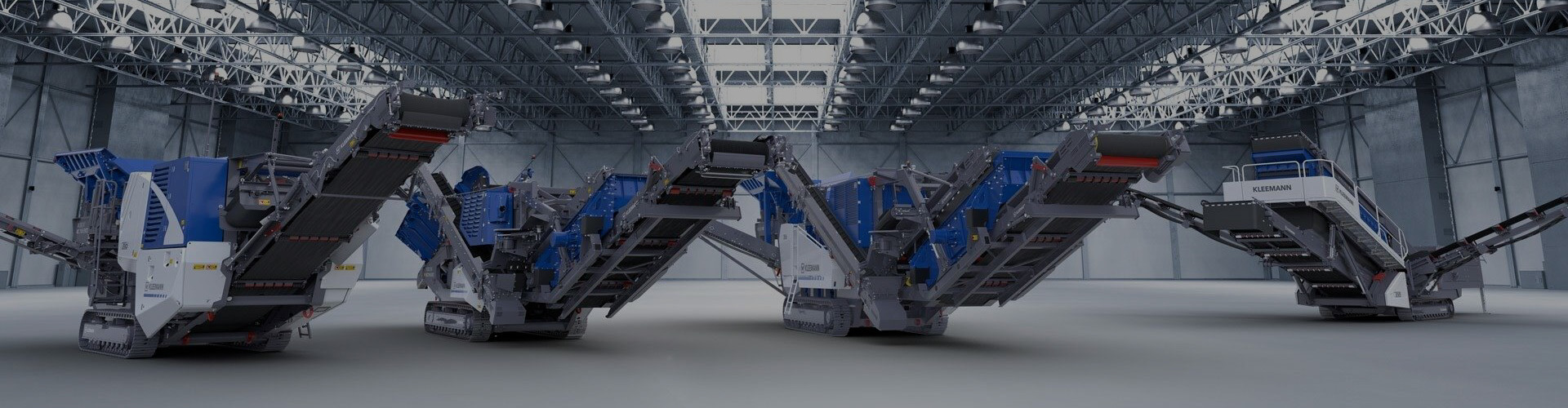
GENAVCO supplies Kleemann crushing and screening equipment in the UAE, covering every stage of the circuit. The table below sets out the full lineup and where each machine sits.
| Machine | Stage | Feed opening / size and output |
|---|---|---|
| MOBICAT MC 100i EVO | Primary jaw | 855 x 530 x 320 mm — 220 t/h |
| MOBICAT MC 110i EVO2 | Primary jaw | 990 x 620 x 370 mm — 400 t/h |
| MOBICAT MC 120i PRO | Primary jaw | 1,080 x 680 x 410 mm — 650 t/h |
| MOBICONE MCO 90i EVO2 | Secondary cone | 200 mm feed — 270 t/h |
| MOBICONE MCO 110i PRO | Secondary cone | 240 mm feed — 470 t/h |
| MOBIREX MR 110i EVO2 | Impact | 880 x 550 x 330 mm — 1,100 mm inlet |
| MOBIREX MR 130i EVO2 | Impact | 1,040 x 650 x 390 mm — 450 t/h |
| MOBIREX MR 130i PRO | Impact | 1,040 x 650 x 390 mm — 600 t/h |
| MOBISCREEN MSS 802i EVO | Scalping screen | 800 x 500 x 300 mm — 500 t/h |
| MOBIBELT MBT 20i | Stacking | Track-mounted conveyor |
Two machines are worth examining in detail here, because neither is a crusher and both are routinely under-specified — yet between them they determine how much of a circuit’s crushing capacity is actually usable.
MOBISCREEN MSS 802i EVO — scalping screen
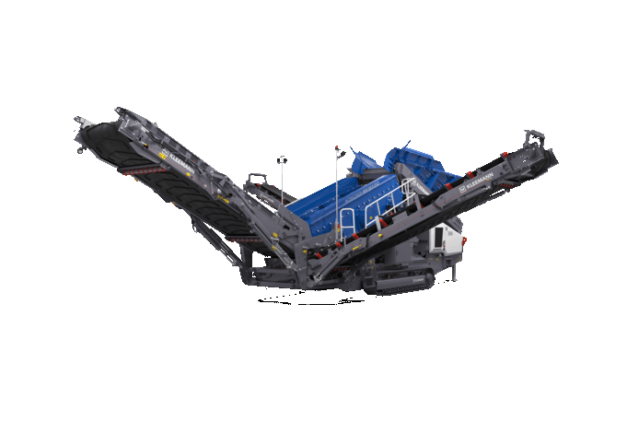
A mobile coarse screen designed to work ahead of or alongside a crushing plant, separating material that does not need crushing before it reaches a crusher.
- Feed opening: 800 mm x 500 mm x 300 mm
- Output: 500 t/h
- Maximum feed size: 500 mm
- Screening unit: Mobile double-deck screening unit for coarse elements
- Drive: H-DRIVE (diesel-hydraulic)
- Flexibility: Large range of screen surfaces with simple setting of screening parameters, for adapting to new application conditions
Scalping is the cheapest tonnage in any circuit. Material removed here never consumes crusher capacity, wear parts or fuel, so a screen ahead of the primary often raises net plant output more than a larger crusher would.
View the MOBISCREEN MSS 802i EVO scalping screen
MOBIBELT MBT 20i — track-mounted stacker
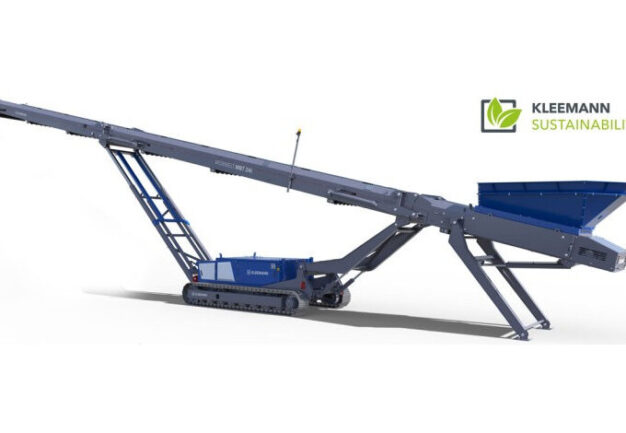
A tracked conveyor that extends the discharge reach of crushing and screening plant, so stockpiles build higher and further from the machine.
- Series: MOBIBELT MBT 20(i) / MBT 24(i)
- Function: Extends the operating range of mobile crushing and screening plants
- Feed: Generously dimensioned feed hopper
- Adjustment: Hydraulically adjustable feeding and discharge height
- Drive: H-DRIVE diesel-hydraulic, with external power supply optional
- Operation: SPECTIVE operating position with local control elements
Stockpile capacity is a real production limit that rarely appears in circuit calculations. A plant that has to stop because the discharge pile has reached the conveyor is losing output for reasons that have nothing to do with crushing.
View the MOBIBELT MBT 20i track-mounted stacker
Not sure how to configure your circuit?
Send us your feed material and maximum lump size, your target gradings and your tonnage requirement — our team will configure the circuit and return a cost proposal.
What Drives Crushing Plant Cost
The purchase price is one input. Across a plant’s working life, wear parts, fuel and downtime dominate the cost per tonne.
- Feed opening and throughput - the largest single factor, and the one that should follow the material rather than ambition
- Crusher type - jaw, cone and impact are different machines at different price points and different wear economics
- Drive concept - diesel-direct, diesel-electric or diesel-hydraulic, with external power supply changing running cost substantially
- Prescreening and post-screening - integrated screens add cost and raise net output
- Wear part specification - jaw plates, mantles and blow bars matched to the abrasiveness of the rock
- Control and linkage systems - continuous feed control and plant-to-plant linkage
- Transport configuration - machine weight and dimensions determine trailer, permits and mobilisation cost
- Service package - full maintenance contract versus parts-only support
The figure that matters is cost per tonne of saleable product, not the invoice. A machine that produces in-specification material at lower wear consumption will outperform a cheaper unit within a single season. Ask any supplier to model it that way rather than quoting a purchase price alone.
Crushing in UAE Conditions
- Rock in the region is frequently hard and abrasive: That pushes circuits toward jaw and cone compression crushing and away from impact crushing in primary and secondary duty, because blow bar consumption in abrasive stone becomes the dominant operating cost.
- Dust load is severe and continuous: The crushing plant generates its own dust cloud and works inside it all shift. Air filtration and cooling packs load far faster than temperate-climate schedules assume, and service intervals should follow the environment rather than the manual.
- Heat affects hydraulics and cooling: Sustained high ambient temperature raises hydraulic oil temperature and reduces cooling margin. Positioning a plant where it can draw cool air, rather than recirculating its own exhaust heat, is a real operational decision.
- Water for dust suppression is a logistics constraint: Suppression systems consume water continuously and evaporation is high, so supply planning belongs in the production plan rather than being treated as a site detail.
Why Choose GENAVCO for Crushing Equipment in the UAE
Buying the machine is the easy part. What determines whether the investment performs is everything that happens afterwards.
- Part of Juma Al Majid Holding Group: Decades of established presence in the UAE market and the financial stability that comes with a major regional group — this matters when you are signing multi-year service agreements.
- Authorised Kleemann representation: Genuine equipment, factory-backed specification and full warranty integrity — not grey-market imports with uncertain parts availability.
- In-country spare parts inventory: Wear parts are consumed continuously in abrasive rock, and a plant waiting on jaw plates is a plant producing nothing. Our genuine spare parts operation holds stock locally.
- Certified service and maintenance: Scheduled servicing, preventive maintenance and on-site breakdown response through our repairs and maintenance division across Dubai, Abu Dhabi, Sharjah and the wider UAE.
- Operator training: Feed control and gap setting decide output and wear as much as the machine does. Our operator training centre covers correct operation and daily checks.
- Circuit-level specification: We configure the plant against your material, target gradings and tonnage rather than quoting a single crusher, because throughput is determined by the circuit and not by any one machine in it.
- Depth across quarry and mining: Crushing and screening within our wider quarry and mining equipment range, so the whole operation is supported from one supplier relationship.
Common Crushing Circuit Mistakes
- Sizing the crusher and ignoring the screens: Screening capacity limits net output as often as crushing capacity does. A crusher fed material that was already at size is producing nothing saleable.
- Feeding intermittently: A crusher runs most efficiently when fed continuously and evenly. Surge feeding produces lower output and uneven wear than a steady, controlled feed.
- Choosing impact crushing for hard abrasive rock: Product shape improves but blow bar consumption can make the cost per tonne uncompetitive. The rock should decide, not the product spec alone.
- Oversizing one stage: A circuit produces at the rate of its narrowest point. Capacity added anywhere else is capital that generates no additional tonnes.
- Running gaps outside specification: Closed side setting drift changes product gradings and increases recirculation. It should be checked on a schedule, not when the product fails testing.
- Underestimating stockpile and haulage capacity: A plant that stops because the stockpile is full or trucks are not clearing it is losing output for reasons unrelated to crushing.
Frequently Asked Questions
What is a stone crusher and how does it work?
A stone crusher reduces quarried rock, excavated stone or demolition material into graded aggregate sizes. Compression crushers such as jaw and cone machines squeeze material between two surfaces, while impact crushers strike it with rotating blow bars. Most operations use more than one type in sequence.
What is the difference between primary, secondary and tertiary crushing?
Primary crushing takes run-of-quarry rock and reduces it to a size the rest of the circuit can handle, usually with a jaw crusher. Secondary crushing reduces that material further, typically with a cone or impact crusher. Tertiary crushing produces the final product size and shape.
Which crusher gives the best aggregate shape?
Impact crushers generally produce more cubical, better-shaped aggregate because they fracture material by striking it. Compression crushers tend to produce more elongated particles. In hard abrasive rock, however, blow bar consumption often makes cone crushing the more economical route to the same specification.
How do I work out what throughput I need?
Work backwards from the product specification and required tonnage, then check that every stage in the circuit can handle what the previous stage delivers. A circuit produces at the rate of its narrowest point, so balance matters more than the rating of any individual machine.
What limits crushing output in practice?
Most commonly feeding, screening or stockpile capacity rather than crusher capacity. Intermittent feeding, insufficient scalping and full stockpiles all reduce achieved tonnage well below what the crusher is rated to produce.
Does GENAVCO supply spare parts and servicing for the Kleemann plant in the UAE?
Yes. GENAVCO holds genuine parts in-country and operates a certified service network covering Dubai, Abu Dhabi, Sharjah and the wider UAE, with preventive maintenance programmes, operator training and on-site breakdown support.
Ready to Configure Your Crushing Circuit?
Crushing output is decided by how the stages fit together, not by the rating on any single machine. Get the feed size, the balance between stages and the screening right, and the plant produces close to its design tonnage instead of somewhere well below it.
GENAVCO supplies the full Kleemann range across the UAE — jaw, cone and impact crushers, scalping screens and track-mounted stackers — backed by genuine parts, certified service and operator training.
Tell us your material, your gradings and your tonnage. We will configure the circuit and price it properly.
ENQUIRE NOW — GET YOUR CRUSHING CIRCUIT SPECIFICATION
Serving Dubai, Abu Dhabi, Sharjah and the wider UAE.