The jaw crusher is the machine that makes everything downstream possible. It takes rock straight from the quarry face or the demolition pile — material that no other machine in the circuit could physically accept — and reduces it to a size the rest of the plant can work with.
Because it sits first, it also sets the ceiling on everything after it. A primary that cannot swallow the feed, or that stops repeatedly to clear blockages, limits the whole circuit no matter how well specified the secondary and tertiary stages are.
This guide covers how a jaw crusher reduces material, how to size one against your feed, what causes the blockages that dominate primary crushing downtime, and the Kleemann MOBICAT machines GENAVCO supplies.
How a Jaw Crusher Works
The principle is compression between two plates. One jaw is fixed; the other is mounted on an eccentric shaft and moves toward and away from it in a repeating cycle.
Material fed into the top of the chamber is squeezed as the moving jaw advances, fractures, and drops further down the tapering chamber as the jaw retreats. It is crushed again on each successive stroke until it is small enough to pass through the gap at the bottom — the closed side setting — and discharge.
Two dimensions define the machine. The feed opening determines the largest lump that will physically enter. The closed side setting determines the largest piece that can leave. The relationship between them is the reduction ratio, and for a jaw crusher it is deliberately modest — this is a machine built to accept enormous material reliably, not to produce finished product.
That is why jaw crushers are almost never the last stage. They exist to make the feed manageable for machines that can shape and grade it properly.
Sizing a Jaw Crusher
Three inputs, taken in order. Getting the first wrong makes the other two irrelevant.
- Feed opening comes first: The largest lump that will realistically arrive at the crusher determines the opening required. Undersizing here does not simply reduce throughput — it forces selective loading, secondary breaking at the face, or repeated bridging at the crusher mouth, all of which cost more than the larger machine would have.
- Throughput follows the circuit, not the crusher: The primary should deliver what the next stage can absorb. A primary substantially larger than the secondary produces surge and stockpiling between stages rather than more finished product.
- Closed side setting follows the downstream machine: The gap at the discharge determines the top size going forward, and that has to be within what the secondary crusher can accept. Set it for the circuit, not for maximum reduction in one pass.
A useful check: if the operator is regularly selecting which rocks to load, the machine is undersized for the feed regardless of what the tonnage figures say.
Feed Control: Where Primary Output Is Actually Won
A jaw crusher performs best when the chamber stays consistently full and material moves through steadily. Most lost output in primary crushing traces back to how the machine is fed rather than to the machine itself.
- Surge feeding wastes capacity: A loader dumping a full bucket, then waiting, produces alternating overload and starvation. The crusher spends part of each cycle working beyond its comfortable range and part of it running empty.
- Continuous feed systems even it out: Automated feed control matches the feeder rate to how loaded the crusher actually is, keeping the chamber consistently full. This raises average throughput and reduces the peak stresses that cause wear and blockages.
- Prescreening removes what does not need crushing: Material already below the closed side setting takes up chamber capacity without producing anything. A prescreen ahead of the chamber sends it straight to the discharge, freeing the crusher for material that actually needs reduction.
- Blockages are the main downtime cause: Bridging at the feed opening, uncrushable material, or a slab too flat to nip all stop the machine. How quickly it can be cleared is a design feature worth checking at purchase, because it happens on every primary crusher eventually.
Advantages of a Jaw Crusher as Primary
These are the characteristics that make it the standard first stage in almost every circuit.
- Accepts very large feed: The defining capability. No other crusher type accepts run-of-quarry material at comparable size and cost.
- Handles hard, abrasive rock: Compression crushing suits exactly the hard formations common in the region, where impact crushing would consume wear parts rapidly.
- Simple, robust mechanism: Few moving parts in the crushing action, which means predictable wear and straightforward maintenance.
- Tolerant of variable feed: Mixed material, dirty feed and irregular loading are handled better here than by any downstream machine.
- Predictable wear parts: Jaw plates are consumable, reversible on many machines, and their consumption is broadly proportional to tonnage and abrasiveness.
- Effective on demolition material: Reinforced concrete, mixed rubble and site arisings crush well, which suits recycling and contract crushing.
- Straightforward gap adjustment: Closed side setting is adjustable, so the machine adapts as circuit requirements or product specifications change.
- Works as a standalone stage: On sites producing a single coarse product, a jaw crusher and a screen alone can constitute the whole plant.
Kleemann MOBICAT Jaw Crushers Available in the UAE
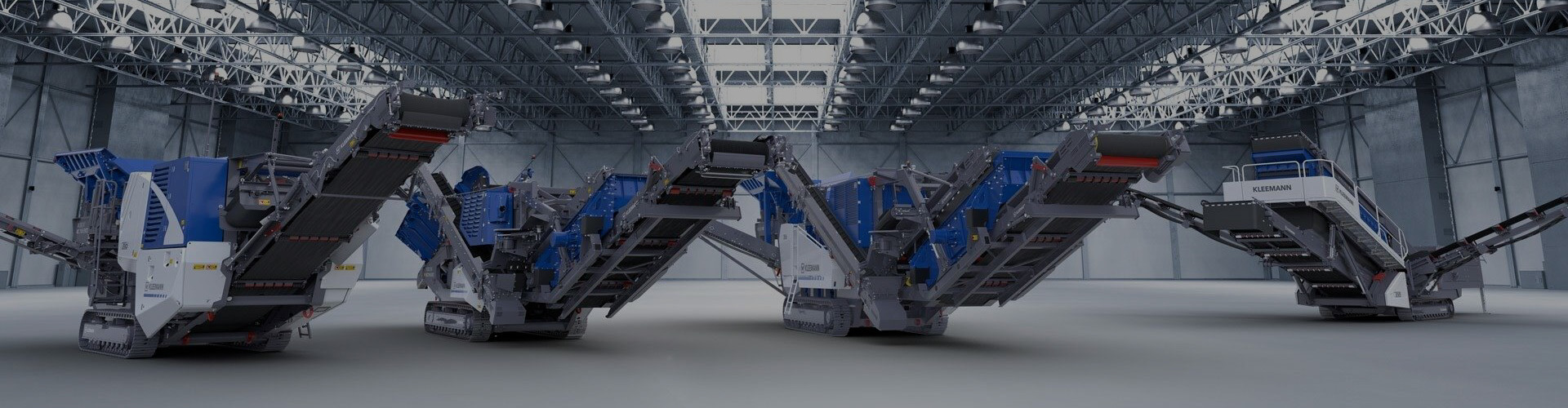
GENAVCO supplies Kleemann crushing and screening equipment in the UAE. Three MOBICAT jaw crushers cover primary duty from compact demolition work to high-output quarrying.
1. MOBICAT MC 100i EVO — compact primary for demolition and contract crushing

The smallest jaw crusher in the EVO line, built for operations that move frequently and handle varied material rather than a single consistent quarry feed.
- Feed opening: 855 mm x 530 mm x 320 mm
- Output: 220 t/h
- Drive: D-DRIVE (diesel-direct), economical in consumption
- Feed control: Continuous Feed System (CFS) for optimum crusher loading
- Blockage handling: Innovative crusher unblocking system for extremely short downtimes
- Control: Simple control with menu-guided touch panel
- Best for: Demolition companies and contract crushing across a wide variety of materials
For contract crushers the diesel-direct drive matters commercially: fuel is a direct cost against a fixed rate per tonne, and a machine that consumes less on the same tonnage protects the margin on every job.
2. MOBICAT MC 110i EVO2 — the general-purpose primary

The machine most operations will specify for general primary duty, used for pre-crushing of almost all natural stone and for recycling.
- Feed opening: 990 mm x 620 mm x 370 mm
- Output: 400 t/h
- Drive: D-DRIVE (diesel-direct)
- Prescreening: Independently vibrating double-deck prescreen
- Feed control: Continuous Feed System (CFS) for optimum crusher loading
- Protection: Innovative overload and control systems for protection of the crusher
- Blockage handling: Innovative crusher unblocking system for extremely short downtimes
- Control: SPECTIVE control concept
The independently vibrating double-deck prescreen is the feature that separates this machine from the MC 100i EVO in practice. Removing at-size material before the chamber means the crushing capacity goes entirely into rock that actually needs reducing, which raises effective output well beyond the difference in headline tonnage.
3. MOBICAT MC 120i PRO — high-output quarry primary

The first jaw crusher of the PRO Line, used for pre-crushing of almost all natural stone where sustained high output is the requirement.
- Feed opening: 1,080 mm x 680 mm x 410 mm
- Output: 650 t/h
- Drive: E-DRIVE (diesel-electric), with external power supply optional
- Construction: Extremely robust design
- Operation: Very high production output with low-maintenance operation
- Blockage handling: Crusher unblocking system via frequency converter (optional)
- Circuit pairing: Optimal combination with downstream cone crusher MOBICONE MCO 110i PRO
The external power supply option changes the operating economics on any site with a mains connection, since crushing at grid electricity rates rather than diesel materially lowers cost per tonne over a season. Kleemann specifies this machine as the matched upstream partner for the MOBICONE MCO 110i PRO cone crusher, which takes the guesswork out of balancing the two stages.
Not sure which primary your feed needs?
Send us your maximum lump size, material type and target tonnage — our team will size the primary and check it against the rest of your circuit.
Wear Parts and Running Cost
Jaw plates are the main consumable, and their consumption is the largest variable cost in primary crushing after fuel.
- Abrasiveness drives consumption: Hard, siliceous rock wears jaw plates far faster than softer material. Plate life is a function of the rock rather than the machine, so a supplier quoting expected life should be quoting it against your material.
- Uneven wear signals a feed problem: Wear concentrated at one point usually means material is consistently entering the same part of the chamber. Correcting the loading pattern extends plate life at no cost.
- Running at the wrong setting accelerates wear: Trying to achieve too much reduction in one pass increases both wear and the risk of blockage. The primary should hand off to the secondary rather than doing its work.
- Uncrushables are the main damage risk: Excavator teeth, ground engaging tools and steel from demolition material cause the most serious primary crusher damage. Overload protection limits it; feed inspection prevents it.
Primary Crushing in UAE Conditions
- Hard abrasive rock is the norm: Regional formations are generally well suited to compression crushing, which is why jaw primaries dominate here. It also means jaw plate consumption should be budgeted realistically rather than from temperate-climate benchmarks.
- Dust load is continuous and severe: Primary crushing generates the most dust in the circuit. Air filtration and cooling packs load quickly, and service intervals should follow the environment rather than the manual.
- Heat reduces cooling margin: Sustained ambient temperature raises hydraulic and engine temperatures. Positioning the machine where it draws cool air rather than recirculating its own heat is a genuine operational decision.
- Water for dust suppression is a planning item: Suppression consumes water continuously and evaporation is high, so supply logistics belong in the production plan.
Why Choose GENAVCO for Crushing Equipment in the UAE
Buying the machine is the easy part. What determines whether the investment performs is everything that happens afterwards.
- Part of Juma Al Majid Holding Group: Decades of established presence in the UAE market and the financial stability that comes with a major regional group — this matters when you are signing multi-year service agreements.
- Authorised Kleemann representation: Genuine equipment, factory-backed specification and full warranty integrity — not grey-market imports with uncertain parts availability.
- Jaw plates and wear parts held locally: Plate changes are scheduled events, and a plant waiting on a shipment is a plant producing nothing. Our genuine spare parts operation holds stock in-country.
- Certified service and maintenance: Scheduled servicing, preventive maintenance and on-site breakdown response through our repairs and maintenance division across Dubai, Abu Dhabi, Sharjah and the wider UAE.
- Operator training: Feed technique and gap setting decide throughput and wear as much as the machine does. Our operator training centre covers correct operation and daily checks.
- Circuit-level specification: We size the primary against what follows it rather than in isolation. The framework is set out in our guide to designing a crushing circuit.
- Depth across quarry and mining: Crushing and screening within our wider quarry and mining equipment range.
Common Jaw Crusher Problems
- Repeated bridging at the feed opening: Feed size too large for the opening, or slabby material that will not nip. A larger opening or breaking oversize at the face is the fix; more force is not.
- Throughput below rating: Usually surge feeding rather than machine capability. A chamber that alternates between full and empty produces well below what continuous feeding achieves.
- Jaw plates wearing unevenly: Material consistently entering the same part of the chamber. Adjusting the loading pattern costs nothing and extends plate life.
- Product top size drifting: Closed side setting has moved or plates have worn. Both are routine and both should be checked on schedule rather than when the product fails testing.
- Frequent overload trips: Either uncrushable material entering the chamber or the machine being asked for more reduction than it should deliver in one pass.
- Secondary stage starved or flooded: A balance problem rather than a primary fault. The primary should deliver what the next stage can absorb, no more and no less.
Frequently Asked Questions
How does a jaw crusher work?
Material is compressed between a fixed jaw and a moving jaw mounted on an eccentric shaft. As the moving jaw advances the material fractures, and as it retreats the material drops further down the tapering chamber. It is crushed repeatedly until small enough to pass through the closed side setting at the bottom.
What size jaw crusher do I need?
Start with the largest lump that will realistically reach the crusher, because that determines the feed opening required. Then check that the throughput matches what the next stage in the circuit can absorb, and set the closed side setting to deliver a top size the secondary crusher can accept.
Why does my jaw crusher keep blocking?
Most commonly the feed contains material too large for the opening, or slabby pieces that will not nip between the jaws. Uncrushable items such as steel from demolition material are the other frequent cause. Continuous feed control and a fast unblocking system reduce the downtime when it happens.
What is the closed side setting?
It is the gap between the jaws at their closest point, and it determines the largest piece of material that can discharge from the crusher. It should be set to suit what the next stage in the circuit can accept rather than to achieve maximum reduction in one pass.
How long do jaw plates last?
It depends almost entirely on the abrasiveness of the material rather than on the machine. Hard siliceous rock wears plates considerably faster than softer material, so expected life should be estimated against your specific feed and budgeted accordingly.
Does GENAVCO supply spare parts and servicing for the Kleemann plant in the UAE?
Yes. GENAVCO holds genuine parts in-country and operates a certified service network covering Dubai, Abu Dhabi, Sharjah and the wider UAE, with preventive maintenance programmes, operator training and on-site breakdown support.
Ready to Specify Your Primary Crusher?
Primary crushing is decided by feed opening and feed control far more than by headline tonnage. Size the opening for the rock that will actually arrive, feed it continuously, and the machine will deliver close to its rating instead of somewhere well below it.
GENAVCO supplies the full Kleemann MOBICAT range across the UAE, backed by genuine parts, certified service and operator training. For the secondary stage, see our guide to cone crushers for hard stone.
Tell us your maximum lump size and target tonnage. We will size the primary and price it properly.
ENQUIRE NOW — GET YOUR PRIMARY CRUSHING SPECIFICATION
Serving Dubai, Abu Dhabi, Sharjah and the wider UAE.