Once a jaw crusher has reduced quarried rock to a manageable size, something has to take it down to saleable gradings. In hard, abrasive stone — which describes most of what is quarried in this region — that machine is almost always a cone crusher.
The reason is economic rather than technical. An impact crusher would produce better-shaped aggregate from the same feed, but in abrasive rock it consumes blow bars at a rate that makes the cost per tonne uncompetitive. The cone crusher trades some product shape for wear part economics, and in hard stone that trade is decisively worth making.
This guide covers how a cone crusher reduces material, why choke feeding matters more than any other operating variable, how closed side setting controls product, and the Kleemann MOBICONE machines GENAVCO supplies.
How a Cone Crusher Works
A cone crusher reduces material between two conical surfaces. The outer one — the concave — is fixed. The inner one — the mantle — sits on a shaft that gyrates, so it sweeps toward and away from the concave continuously around the full circumference.
Material entering the top falls into the gap between them. As the mantle sweeps toward the concave at any given point the material is compressed and fractures; as it sweeps away the material drops further into the narrowing chamber. This repeats until the material passes the closed side setting at the discharge.
The important difference from a jaw crusher is that crushing happens continuously around the circumference rather than in a single reciprocating action. That means more crushing events per unit of time and a higher reduction ratio, which is why the cone sits second in the circuit rather than first.
It also means the machine depends on being kept full. A cone crusher does much of its work through particle-on-particle crushing, and that only happens when the chamber is packed.
Choke Feeding: The Single Most Important Operating Variable
More cone crusher performance is lost to feeding technique than to any other cause, and the mechanism is worth understanding properly.
- A full chamber crushes material against itself: When the chamber is packed, particles are compressed against each other as well as against the mantle and concave. This inter-particle crushing produces better reduction, better product shape and — critically — spreads wear across the whole liner surface.
- A partly full chamber does not: With insufficient material, particles are crushed only between mantle and concave. Reduction falls, shape worsens, and the wear concentrates in a narrow band where the material happens to sit.
- Uneven distribution wears one side: Material entering off-centre wears the liners asymmetrically. The machine then produces inconsistent products and the liners reach end of life with usable material remaining on the opposite side.
- Continuous feed control maintains it automatically: Systems that match the feed rate to actual crusher loading keep the chamber choke-fed without the operator having to manage it manually through the shift.
The practical test is straightforward: if the feed is visibly surging, or the chamber can be seen to empty between loads, the machine is producing below what it is rated to deliver and wearing unevenly while doing so.
Closed Side Setting and Product Control
The closed side setting — the smallest gap between mantle and concave during the gyration cycle — is the primary control over what the machine produces.
| Adjustment | Effect on product | Effect on operation |
|---|---|---|
| Tighter setting | Smaller top size, more fines | Lower throughput, higher wear rate |
| Wider setting | Larger top size, fewer fines | Higher throughput, lower wear rate |
| Setting drifts wider (wear) | Product top size creeps up | Recirculation rises, gradings fail testing |
Setting drift is the routine issue. As the mantle and concave wear, the effective gap widens and product top size creeps upward. Because it happens gradually, it is usually noticed when the product fails a grading test rather than when it starts. Checking and resetting on a schedule is considerably cheaper than reprocessing an out-of-specification stockpile.
Advantages of a Cone Crusher as Secondary
These are the characteristics that make it the standard second stage in hard rock circuits.
- Excellent economics in abrasive stone: Compression crushing consumes wear parts far more slowly than impact crushing in hard siliceous material, which dominates cost per tonne over a season.
- High reduction ratio: Continuous crushing around the full circumference achieves more reduction per pass than a reciprocating machine.
- Consistent product gradings: With a stable closed side setting and choke feeding, output gradings are repeatable shift to shift.
- High throughput for the footprint: Substantial tonnage from a machine that occupies comparatively little space in the circuit.
- Long liner life when fed correctly: Choke feeding spreads wear across the full liner surface rather than concentrating it in a band.
- Adjustable to changing specifications: Closed side setting can be changed to shift the product balance when demand moves between gradings.
- Overload protection as standard: Systems that release on uncrushable material protect the machine rather than requiring perfect feed screening.
- Designed to pair with a matched primary: Manufacturer-specified jaw and cone combinations remove the guesswork from balancing the two stages.
Kleemann MOBICONE Cone Crushers Available in the UAE
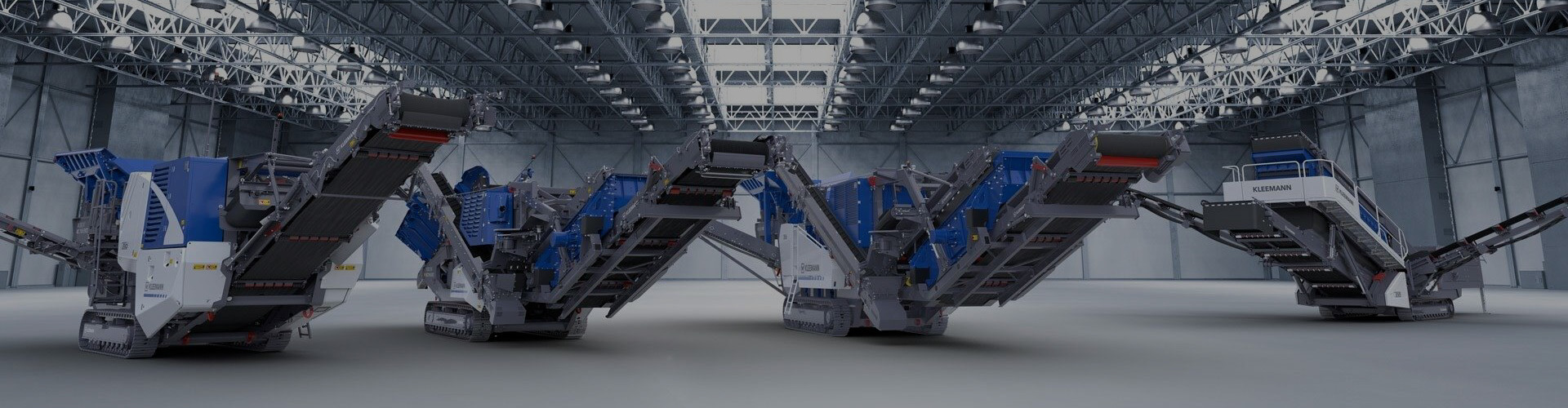
GENAVCO supplies Kleemann crushing and screening equipment in the UAE. Two MOBICONE machines cover secondary crushing duty.
1. MOBICONE MCO 90i EVO2 — hard stone secondary
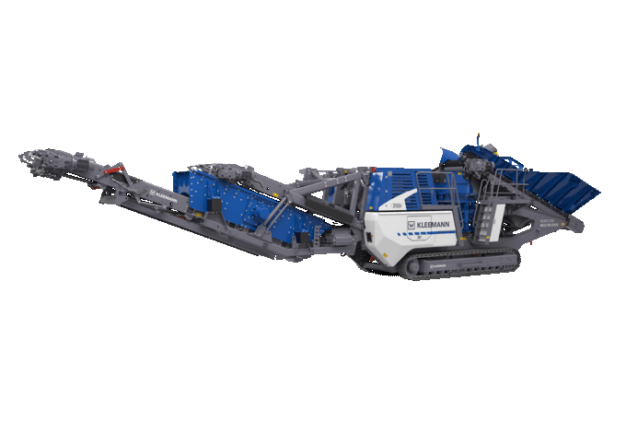
Built as a secondary in hard stone, combining the product quality expected from a cone crusher with high production output and straightforward operation.
- Feed size: 200 mm
- Output: 270 t/h
- Drive: D-DRIVE (diesel-direct)
- Feed control: Continuous Feed System (CFS) for optimum crusher loading
- Protection: Innovative overload systems for protecting the crusher
- Control: Simple and intuitive SPECTIVE control concept
- Circuit: Linkage option with other KLEEMANN plants
The Continuous Feed System is worth more on a cone crusher than on any other machine type, because choke feeding is what delivers inter-particle crushing. Automating it removes the largest source of variability between operators and between shifts.
View the MOBICONE MCO 90i EVO2
2. MOBICONE MCO 110i PRO — high-output secondary

The PRO Line secondary, characterised by extremely robust design and very high performance, with the option of running from an external power source.
- Feed size: 240 mm
- Output: 470 t/h
- Drive: E-DRIVE (diesel-electric), with option to connect an external power supply
- Construction: Extremely robust design
- Operation: Very high production output with low-maintenance operation
- Circuit pairing: Optimal combination with upstream jaw crusher MOBICAT MC 120i PRO
Kleemann specifies this machine as the matched partner to the MOBICAT MC 120i PRO jaw crusher, which removes the balancing calculation between primary and secondary. On sites with a mains connection, the external power option changes the cost per tonne materially, since the secondary typically runs the most hours of any machine in the circuit.
View the MOBICONE MCO 110i PRO
Not sure which secondary suits your rock?
Send us your material type and abrasiveness, the feed size from your primary and your target gradings - our team will size the secondary and check the circuit balance.
Mantle and Concave Wear
Liners are the main consumable in cone crushing, and their consumption is the largest single variable cost after fuel.
- Abrasiveness sets the baseline: Hard siliceous rock wears liners considerably faster than softer material. Liner life quoted without reference to material is not a useful figure.
- Choke feeding extends life substantially: Spreading wear across the full liner profile rather than concentrating it in a band is the single largest controllable factor in liner life.
- Uneven wear indicates a feed distribution problem: Liners worn asymmetrically mean material is entering off-centre. Correcting the feed arrangement recovers the wasted liner life at no equipment cost.
- Running too tight accelerates everything: Attempting excessive reduction in one pass raises wear rate, power draw and the risk of packing. The secondary should hand the remaining reduction to a tertiary stage or a screen rather than absorbing it all.
- Liner profile should match the duty: Coarse, medium and fine chamber configurations exist for a reason. A liner profile mismatched to the feed produces poor reduction regardless of how well the machine is operated.
Secondary Crushing in UAE Conditions
- Regional rock favours compression crushing: Hard abrasive formations are exactly where cone crushers earn their position over impact machines, and it is the main reason jaw-and-cone circuits dominate quarrying here.
- Dust accelerates wear beyond the liners: Fine abrasive dust reaches bearings and seals as well as the crushing chamber. Filtration and lubrication schedules should follow the environment rather than a manual written for temperate conditions.
- Heat raises hydraulic and lubrication temperatures: Cone crushers run a lubrication circuit that must stay within temperature. Sustained ambient heat reduces the cooling margin, so positioning and cooler cleanliness become production issues rather than maintenance details.
- Continuous operation compresses maintenance windows: Where a plant runs extended shifts to meet aggregate demand, liner changes have to be planned into the production schedule rather than fitted in when output drops.
Why Choose GENAVCO for Crushing Equipment in the UAE
Buying the machine is the easy part. What determines whether the investment performs is everything that happens afterwards.
- Part of Juma Al Majid Holding Group: Decades of established presence in the UAE market and the financial stability that comes with a major regional group — this matters when you are signing multi-year service agreements.
- Authorised Kleemann representation: Genuine equipment, factory-backed specification and full warranty integrity — not grey-market imports with uncertain parts availability.
- Liners and wear parts held locally: Liner changes are planned events and the secondary usually runs the most hours in the circuit. Our genuine spare parts operation holds stock in-country so a change does not become a shutdown.
- Certified service and maintenance: Scheduled servicing, preventive maintenance and on-site breakdown response through our repairs and maintenance division across Dubai, Abu Dhabi, Sharjah and the wider UAE.
- Operator training: Choke feeding and setting discipline decide output, product and liner life. Our operator training centre covers correct operation and daily checks.
- Matched circuit specification: We specify the secondary against the primary feeding it and the screens following it. The framework is set out in our guide to designing a crushing circuit.
- Depth across quarry and mining: Crushing and screening within our wider quarry and mining equipment range.
Common Cone Crusher Problems
- Product top size creeping upward: Closed side setting has drifted wider as liners wear. Routine checking and resetting prevents the out-of-specification stockpile that otherwise reveals it.
- Throughput below rating: Almost always insufficient feed rather than machine capability. A chamber that is not choke fed produces well below its rating and wears unevenly at the same time.
- Liners worn on one side only: Material entering the chamber off-centre. Correcting feed distribution recovers the linear life being wasted on the opposite side.
- Poor product shape: Under-fed chamber removing the inter-particle crushing that produces better shape. Choke feeding usually resolves it without changing machines.
- Frequent overload releases: Uncrushable material reaching the chamber, or feed top size exceeding what the machine should accept from the primary.
- Rising power draw at constant output: Often liner profile worn out of shape, or an attempt to take too much reduction in a single pass.
Frequently Asked Questions
How does a cone crusher work?
Material is compressed between a fixed outer concave and a gyrating inner mantle. As the mantle sweeps toward the concave the material fractures, and as it sweeps away the material drops further down the narrowing chamber. Crushing happens continuously around the full circumference, giving a higher reduction ratio than a jaw crusher.
What is choke feeding and why does it matter?
Choke feeding means keeping the crushing chamber consistently full. A full chamber crushes particles against each other as well as against the liners, which improves reduction and product shape and spreads wear across the whole liner surface. An under-fed chamber produces less, shapes worse and wears unevenly.
Should I choose a cone crusher or an impact crusher for secondary duty?
It depends mainly on the rock. Hard abrasive stone favours a cone crusher, because impact crushing consumes blow bars rapidly in that material and the cost per tonne becomes uncompetitive. Softer stone and recycled concrete favour impact crushing, which also produces better-shaped aggregate.
What is the closed side setting on a cone crusher?
It is the smallest gap between the mantle and the concave during the gyration cycle, and it is the main control over product top size. As liners wear the effective setting widens gradually, so it should be checked and reset on a schedule rather than when the product fails testing.
How long do cone crusher liners last?
It depends primarily on the abrasiveness of the material and on how consistently the machine is choke fed. Hard siliceous rock wears liners considerably faster, and an under-fed chamber concentrates wear in a narrow band that shortens usable life well before the full profile is consumed.
Does GENAVCO supply spare parts and servicing for the Kleemann plant in the UAE?
Yes. GENAVCO holds genuine parts in-country and operates a certified service network covering Dubai, Abu Dhabi, Sharjah and the wider UAE, with preventive maintenance programmes, operator training and on-site breakdown support.
Ready to Specify Your Secondary Crusher?
Cone crusher performance comes down to two things: keeping the chamber full and keeping the setting where it belongs. Both are operating disciplines rather than purchasing decisions, and both make more difference to cost per tonne than the choice between two comparable machines.
GENAVCO supplies the full Kleemann MOBICONE range across the UAE, backed by genuine parts, certified service and operator training. For the stage that feeds it, see our guide to jaw crushers for primary crushing.
Tell us your rock and your target gradings. We will size the secondary and price it properly.
ENQUIRE NOW — GET YOUR SECONDARY CRUSHING SPECIFICATION
Serving Dubai, Abu Dhabi, Sharjah and the wider UAE.