Compression crushers squeeze rock until it fails. An impact crusher does something fundamentally different — it hits the material hard enough that the rock fractures along its own internal weaknesses.
That difference in mechanism produces a difference in product. Material fractured by impact breaks into more cubical, better-proportioned pieces, while material squeezed between two surfaces tends to split into flatter, more elongated shapes. For concrete and asphalt mixes, where particle shape affects workability and strength, that matters commercially.
This guide covers how an impact crusher fractures material, when it outperforms compression crushing and when it does not, why blow bar economics govern the decision, and the Kleemann MOBIREX machines GENAVCO supplies.
How an Impact Crusher Works
A heavy rotor spins at high speed inside the crushing chamber, carrying replaceable blow bars around its circumference. Material fed into the chamber is struck by these bars and thrown against impact aprons — fixed plates positioned around the rotor.
The material fractures on the first strike, is thrown against the apron, fractures again on impact, and rebounds back into the rotor path for further strikes. This continues until the pieces are small enough to pass through the gap between the rotor and the lowest apron.
Because the rock is being struck rather than squeezed, it tends to break along its natural planes of weakness. The result is a more cubical particle and a higher reduction ratio in a single pass than compression crushing achieves.
The gap between rotor and apron controls product size, and on modern machines it is hydraulically adjustable — which means product size can be changed without dismantling anything.
When Impact Crushing Is the Right Choice
The decision comes down to what the material does to blow bars, weighed against what the product specification requires.
| Feed material | Impact crushing | Reason |
|---|---|---|
| Recycled concrete | Strongly suited | Softer than natural stone; reinforcement handled well |
| Demolition arisings | Strongly suited | Mixed material, and high reduction in one pass |
| Asphalt planings | Strongly suited | Breaks material apart without excessive fines |
| Limestone and softer stone | Well suited | Good shape at acceptable blow bar consumption |
| Hard abrasive natural stone | Usually not economical | Blow bar consumption dominates cost per tonne |
| Highly siliceous rock | Generally avoided | Wear rate makes compression crushing the better route |
This is why the UAE aggregate industry splits the way it does. Quarries working hard formations run jaw-and-cone circuits and accept the shape penalty; recycling and demolition operations run impact crushers and get better product shape as a result. Where the feed is hard and abrasive, the alternative is covered in our guide to cone crushers for hard stone.
Blow Bar Economics
Blow bars are the defining running cost of impact crushing, and understanding them is what separates a good specification from an expensive one.
- Material abrasiveness drives consumption directly: Blow bars strike rock at high velocity thousands of times per minute. In abrasive stone they wear rapidly, and the cost per tonne can exceed the fuel cost. In concrete and softer material, consumption is a fraction of that.
- Alloy selection is a genuine trade-off: Harder alloys resist abrasion but are more brittle and can fracture on tramp metal. Tougher alloys survive impact but wear faster. The correct choice follows the feed, and getting it wrong costs either bars or downtime.
- Bars are usually reversible: Most designs allow the bar to be turned once to present a fresh edge, which effectively doubles usable life. Turning them on schedule rather than running them to destruction is straightforward and frequently neglected.
- Tramp metal is the main failure risk: Reinforcing bar in recycled concrete, excavator teeth and site steel damage blow bars and aprons. Magnetic separation on the discharge conveyor protects the machine and improves the product at the same time.
- Uneven wear signals feed distribution: Bars worn more heavily at one end mean material is consistently entering the same part of the chamber. Correcting the feed arrangement recovers wasted life at no equipment cost.
Advantages of an Impact Crusher
These are the characteristics that make it the standard choice in recycling and shape-critical applications.
- Superior product shape: mpact fracture produces more cubical particles, which improves workability in concrete and stability in asphalt mixes.
- High reduction ratio in one pass: More reduction per stage than compression crushing, which can remove a stage from the circuit entirely.
- Excellent on recycled material: Concrete, demolition arisings and asphalt planings all process well, which is the foundation of construction and demolition recycling.
- Handles reinforcement: Reinforcing bar in crushed concrete is liberated rather than jamming the chamber, and can then be separated magnetically.
- Hydraulic gap adjustment: Product size changed from the control panel rather than by dismantling, so the machine adapts between jobs quickly.
- Good fines generation where wanted: Produces useful fine fractions for applications that need them, without a separate stage.
- Simpler circuit for the same product: Higher reduction per pass means fewer machines to achieve the same final gradings on suitable material.
- Effective as secondary or tertiary: The same machine type works in either position depending on how the circuit is arranged.
Kleemann MOBIREX Impact Crushers Available in the UAE
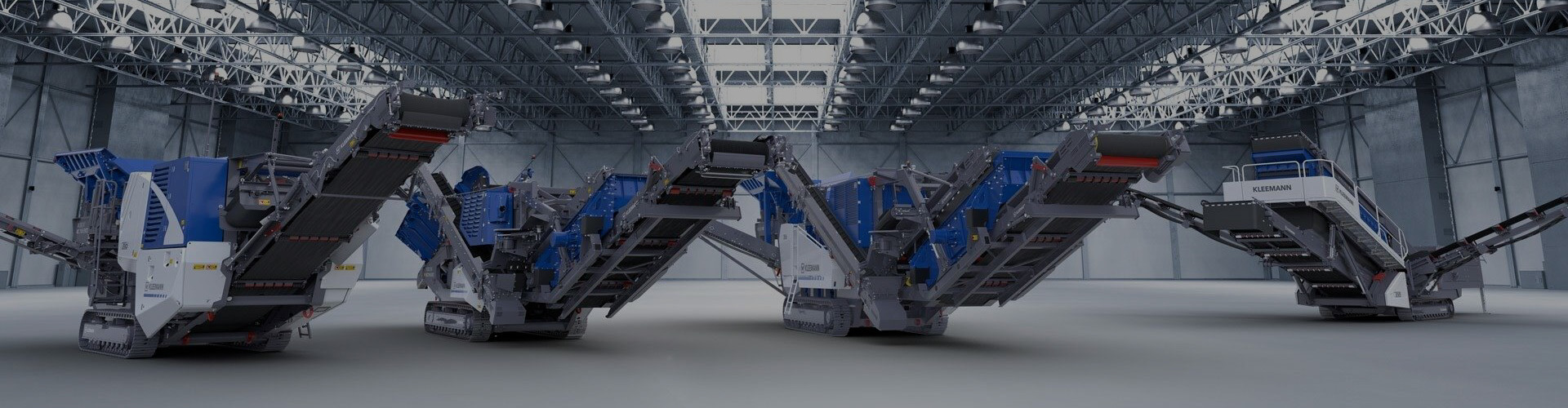
GENAVCO supplies Kleemann crushing and screening equipment in the UAE. Three MOBIREX machines cover impact crushing duty across natural stone and recycling.
1. MOBIREX MR 110i EVO2 — universally deployable impact crusher

A machine designed for universal deployment, producing first class final product quality across a wide range of applications.
- Feed opening: 880 mm x 550 mm x 330 mm
- Crusher inlet: 1,100 mm
- Drive: D-DRIVE (diesel-direct)
- Gap adjustment: Hydraulic gap setting
- Material flow: Optimised material flow as a result of extending system widths
- Control: Simple and intuitive SPECTIVE control concept
- Screening: High-performance post screening unit with oversize grain returning (option)
The post screening unit with oversize return is what turns this from a crusher into a closed-circuit plant. Oversize material goes straight back for another pass rather than into a stockpile that has to be rehandled, which raises the proportion of in-specification product from every tonne fed.
2. MOBIREX MR 130i EVO2 — the all-rounder

Designed as an all-rounder, achieving a production rate previously associated with a considerably larger crushing plant while remaining straightforward to transport.
- Feed opening: 1,040 mm x 650 mm x 390 mm
- Crusher inlet width: 1,300 mm
- Output: 450 t/h
- Drive: D-DRIVE (diesel-direct)
- Gap adjustment: Hydraulic gap setting
- Material flow: Optimised material flow as a result of extending system widths
- Screening: High-performance post screening unit with oversize grain returning (option)
The 1,300 mm inlet width is the figure that matters for recycling work. Demolition arisings arrive in irregular slabs rather than graded lumps, and inlet width determines whether they enter cleanly or have to be broken down first.
3. MOBIREX MR 130i PRO — all-electric drive with external power
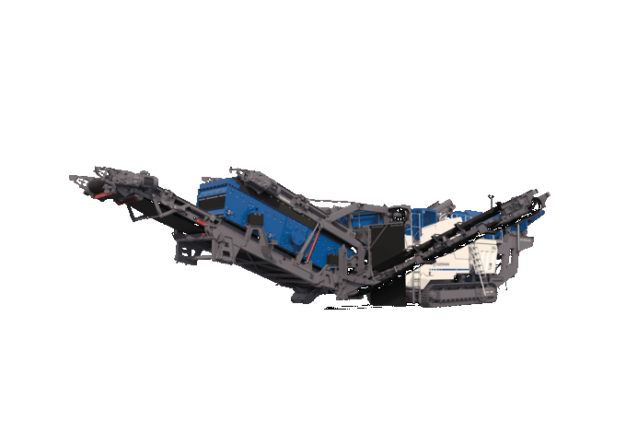
The PRO Line impact crusher, covering a very wide application range in natural stone and recycling, built around an all-electric drive concept.
- Feed opening: 1,040 mm x 650 mm x 390 mm
- Output: 600 t/h
- Drive: E-DRIVE (diesel-electric) with external power supply optional
- Energy: CO2-free operation on external power, with low energy consumption per tonne of final product
- Gap adjustment: Fully hydraulic gap adjustment and overload system
- Control: Simple and intuitive SPECTIVE control concept
- Screening: Powerful double-deck post screening unit — usable as single-deck or double-deck screen
On an established site with a mains connection, the external power option changes the operating economics substantially, and the energy consumption per tonne of final product becomes the number to compare rather than litres of diesel per hour. The double-deck post screen that can run as a single deck also means one machine covers two product configurations without additional plant.
Not sure whether impact crushing suits your feed?
Send us your material type and abrasiveness, your target gradings and shape requirement, and your tonnage — our team will advise on the crushing method and size the machine.
Impact Crushing for Construction and Demolition Recycling
Recycling is where impact crushing is not merely preferable but genuinely the correct technology.
- Concrete is softer than natural stone: Blow bar consumption on crushed concrete is a fraction of what the same machine would experience in hard quarried rock, which removes the main economic objection to impact crushing.
- Reinforcement is liberated rather than jamming: The impact action separates steel from concrete instead of wedging it in a compression chamber. Magnetic separation on the discharge conveyor then removes it cleanly.
- Product shape supports reuse: Recycled aggregate has to meet specification to be used in new construction rather than sent to fill. Cubical, well-graded material is far more likely to qualify.
- High reduction suits mixed feed: Demolition material arrives irregular and inconsistent. A machine that achieves substantial reduction in one pass simplifies the circuit considerably compared with a multi-stage compression arrangement.
With construction and demolition volumes rising across the region, this application is growing faster than quarrying, and it is where impact crushing has the strongest commercial case.
Impact Crushing in UAE Conditions
- Match the machine to the feed, not the region: Hard abrasive natural stone dominates local quarrying and generally favours compression crushing. Impact crushing earns its place on recycled and softer material, and specifying it for hard rock on the strength of product shape alone is how operations end up with unsustainable wear costs.
- Dust generation is high: mpact crushing produces more fines than compression crushing, which means more airborne dust. Suppression capacity and filtration service intervals should be planned accordingly.
- Heat affects hydraulics and electrics: Sustained ambient temperature reduces cooling margin on hydraulic gap adjustment systems and on electric drives. Positioning for airflow matters.
- Blow bar stock is a production requirement: Because consumption is the dominant variable cost, running out of bars stops production entirely. Stock levels should reflect actual consumption rate rather than a nominal reorder point.
Why Choose GENAVCO for Crushing Equipment in the UAE
Buying the machine is the easy part. What determines whether the investment performs is everything that happens afterwards.
- Part of Juma Al Majid Holding Group: Decades of established presence in the UAE market and the financial stability that comes with a major regional group — this matters when you are signing multi-year service agreements.
- Authorised Kleemann representation: Genuine equipment, factory-backed specification and full warranty integrity — not grey-market imports with uncertain parts availability.
- Blow bars held locally: Blow bar consumption is the dominant running cost in impact crushing, and a plant without bars produces nothing. Our genuine spare parts operation holds stock in-country.
- Certified service and maintenance: Scheduled servicing, preventive maintenance and on-site breakdown response through our repairs and maintenance division across Dubai, Abu Dhabi, Sharjah and the wider UAE.
- Operator training: Gap setting, feed distribution and bar turning schedules decide product and running cost. Our operator training centre covers correct operation and daily checks.
- Honest method advice: We will tell you when compression crushing is the better route for your material rather than selling the machine with the better product shape. The framework is set out in our guide to designing a crushing circuit.
- Depth across quarry and mining: Crushing and screening within our wider quarry and mining equipment range.
Common Impact Crusher Problems
- Blow bar consumption higher than expected: Usually the material is more abrasive than assumed, or the alloy is mismatched to the feed. Both are specification issues rather than machine faults.
- Product top size drifting upward: The gap between rotor and apron has widened as the bars wear. Hydraulic adjustment makes correction quick, but it has to be checked on schedule.
- Blow bars fracturing rather than wearing: Tramp metal in the feed, or an alloy too hard and brittle for the material arriving. Magnetic separation and alloy review address it.
- Excessive fines: Gap set too tight, or rotor speed higher than the product requires. Both are adjustable without changing machine.
- Uneven bar wear across the rotor: Feed entering the chamber off-centre. Correcting distribution recovers the life being wasted on the less loaded end.
- Reinforcement wrapping in the chamber: Long rebar in recycled concrete. Pre-sorting the feed and magnetic separation downstream both reduce it.
Frequently Asked Questions
How does an impact crusher work?
A high-speed rotor carrying replaceable blow bars strikes material fed into the chamber and throws it against fixed impact aprons. The material fractures on the strike and again on impact with the apron, rebounding for further strikes until it is small enough to pass through the gap between rotor and apron.
Why does an impact crusher produce better aggregate shape?
Because it fractures rock by striking it, material tends to break along its natural planes of weakness and produce more cubical particles. Compression crushers squeeze material between two surfaces, which tends to produce flatter, more elongated shapes.
Should I use an impact crusher on hard abrasive stone?
Usually not. Blow bars wear rapidly in hard siliceous material, and consumption can exceed fuel as a cost per tonne. Compression crushing with a jaw and cone circuit is normally the more economical route for hard rock, even though product shape is less cubical.
Are impact crushers suitable for recycled concrete?
Yes, and this is one of their strongest applications. Concrete is softer than natural stone so blow bar consumption is much lower, reinforcement is liberated rather than jamming the chamber, and the cubical product shape helps recycled aggregate meet specification for reuse.
How long do blow bars last?
t depends primarily on material abrasiveness and on the alloy selected. Most designs allow bars to be reversed once to present a fresh edge, which effectively doubles usable life. Tramp metal in the feed is the main cause of premature failure.
Does GENAVCO supply spare parts and servicing for the Kleemann plant in the UAE?
Yes. GENAVCO holds genuine parts in-country and operates a certified service network covering Dubai, Abu Dhabi, Sharjah and the wider UAE, with preventive maintenance programmes, operator training and on-site breakdown support.
Ready to Specify Your Impact Crusher?
mpact crushing produces the best aggregate shape available and the strongest results on recycled material — provided the feed is not so abrasive that blow bars become the dominant cost. Getting that judgement right is the whole decision.
GENAVCO supplies the full Kleemann MOBIREX range across the UAE, backed by genuine parts, certified service and operator training. For the stage that feeds it, see our guide to jaw crushers for primary crushing.
Tell us your material and your shape requirement. We will advise the method and size the machine.
ENQUIRE NOW — GET YOUR IMPACT CRUSHING SPECIFICATION
Serving Dubai, Abu Dhabi, Sharjah and the wider UAE.