Not everything in a warehouse arrives on a pallet. Cartons, bins, spare parts, apparel, components — items picked one at a time by a person rather than lifted whole by a machine. That is a different storage problem, and pallet racking solves it badly.
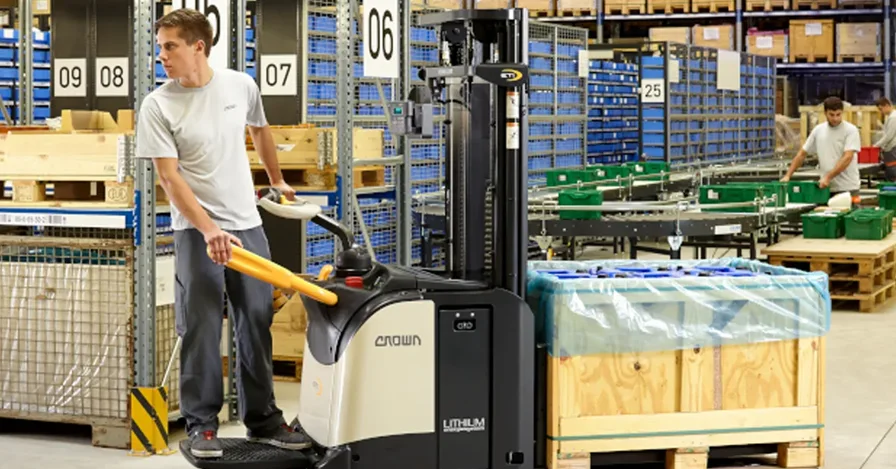
Shelving is built around human reach instead of forklift access. The levels are set at heights someone can work at, the decking supports individual items rather than a pallet base, and the whole structure is designed so a picker can find and retrieve one item quickly.
This guide covers how to specify heavy duty shelving by load per level and decking type, when to go multi-tier, why pick rate matters more than storage volume, and the Godrej shelving range GENAVCO supplies in the UAE.
Shelving or Racking: Getting the Distinction Right
The two look similar and serve genuinely different purposes, and specifying the wrong one is a common and expensive error.
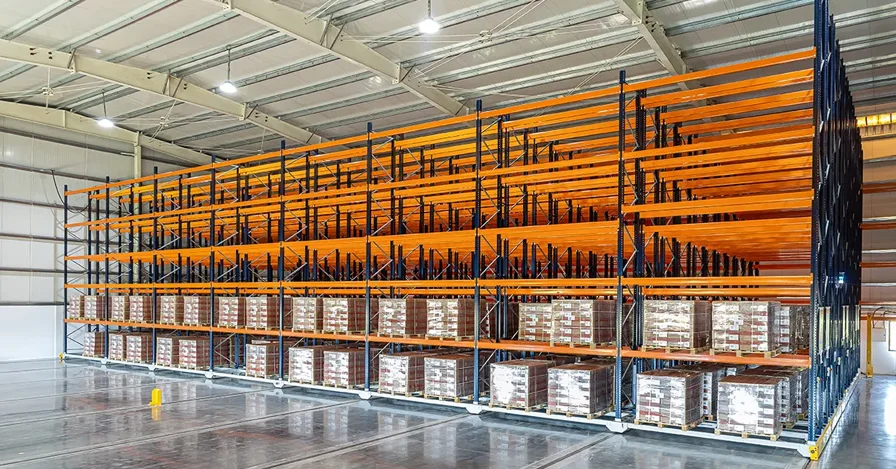
- Racking holds pallets, handled by machine: Levels are set for pallet heights and forklift access. A person cannot reach most positions, and is not meant to.
- Shelving holds individual items, handled by hand: Levels are set at working heights, and the load per level is what someone can safely place and retrieve rather than what a truck can lift.
- The load figure means something different: Racking is rated per pallet position. Shelving is rated as uniformly distributed load per level, because the weight is spread across the shelf rather than concentrated on a pallet footprint.
- Most warehouses need both: Bulk reserve on pallets, pick faces and small items on shelving. The two work together, and specifying only one leaves part of the operation poorly served.
The palletised side is covered in our guide to pallet racking systems compared.
Load Per Level: The Specification That Matters
Shelving is specified by uniformly distributed load per level, and this figure sorts the entire market into bands.
| Load band | System type | Typical stock |
|---|---|---|
| Light load | Boltless shelving | Small parts, apparel, light components |
| Light to medium, up to 350 kg/level | Panel-based shelving | Bins, cartons, general stores |
| Light to medium, voluminous | Longspan shelving | Bulky but light items |
| Medium to heavy, manual handling | Heavy duty shelving | Larger items handled manually |
| Heavy, 300 to 4,000 kg/level | Beam-based shelving | Heavier discrete SKUs in cartons, bins or direct |
Two things follow from this. Under-specifying load is a safety problem rather than an inconvenience — shelving carries weight above people working beneath it. And over-specifying wastes capital on steel that will never be loaded to capacity, which on a large installation is substantial.
Decking: The Component Buyers Overlook
The shelf surface is not a detail. It determines what can sit on it, how the installation behaves in a fire, and how easy stock is to find.
- Wire mesh: Allows sprinkler water through, which matters for fire protection design in high-bay installations. Also lets light through, improving visibility at lower levels, and does not collect dust the way solid decking does.
- Steel decking: Solid, durable and suited to heavier or smaller items that would fall through mesh. Available plain or perforated where some water penetration is required.
- Wooden decking: Economical and suited to general storage where fire design does not demand an open surface.
- The fire protection interaction is the critical one: Solid decking blocks sprinkler water from reaching lower levels, which can require in-rack sprinklers. Establishing the fire strategy before selecting decking avoids an expensive redesign.
Going Vertical: Multi-Tier and Walkways
Where floor area is constrained but height is available, shelving can be built upward with walkways giving access to upper levels.
- Catwalks and multi-tier systems extend upward: Rather than limiting shelving to what a person can reach from the floor, walkways create additional working levels within the same footprint.
- Walkway surface matters for the working environment: Gratings, plain steel, perforated steel and wooden decking each behave differently underfoot, and the choice affects noise, ventilation and comfort across a full shift.
- Loading gates handle stock movement between levels: Getting stock onto an upper tier safely requires a designed loading point rather than an improvised one.
- Trolley and pallet truck movement must be designed in: Walkways that will carry trolleys need to be rated and tested for it, not simply strong enough to walk on.
Multi-tier shelving is frequently the cheapest additional storage available to an operation with high ceilings, because it uses volume that is otherwise doing nothing.
Advantages of Correctly Specified Shelving
These returns come from matching the system to how stock is actually picked.
- Faster picking: Items at accessible heights in a logical sequence shorten every pick, and picking is usually the largest labour cost in a warehouse.
- Better use of vertical space: Multi-tier and walkway systems convert unused height into working storage within the existing footprint.
- Safer manual handling: Levels set at appropriate working heights reduce the lifting and stretching that cause injuries.
- Fewer picking errors: Clear visibility and logical layout mean the right item is found first time, which reduces returns and rework.
- Appropriate load capacity: Shelving rated for the actual stock is safe without paying for capacity that will never be used.
- Fire protection compliance: Decking chosen with the sprinkler strategy in mind avoids retrofitting in-rack protection later.
- Flexible reconfiguration: Modular systems adapt as stock profiles change, without replacing the installation.
- Higher storage density for small items: Shelving holds far more individual SKUs per square metre than pallet racking used for the same purpose.
Godrej Shelving Systems Available in the UAE
GENAVCO supplies Godrej storage solutions in the UAE. Five shelving systems cover hand-picked storage from light boltless assemblies through to heavy beam-based structures.
1. Heavy Duty Shelving — medium to large items, manually handled

A straightforward storage solution for non-palletised items, widely used in e-commerce and retail where product variety is high and everything is picked by hand.
- Designed for: Storage of non-palletised items
- Suits: Large variety of medium to big sized items that can be handled manually
- Vertical extension: Higher levels reached by providing catwalks and multi-tier systems
- Decking options: Wire mesh, wooden decking, steel decking
- Walkway options: Gratings, plain steel decking, perforated steel decking, wooden
- Accessories: Loading gate available
- Industries: Widely used by e-commerce and retail
The decking and walkway options are where the specification work sits. Wire mesh for sprinkler penetration, gratings for ventilation, solid steel for small items — these choices determine how the installation performs day to day and how it interacts with the building’s fire strategy.
View Godrej heavy duty shelving
2. Godrej Altius Titan — beam design, 300 to 4,000 kg per level
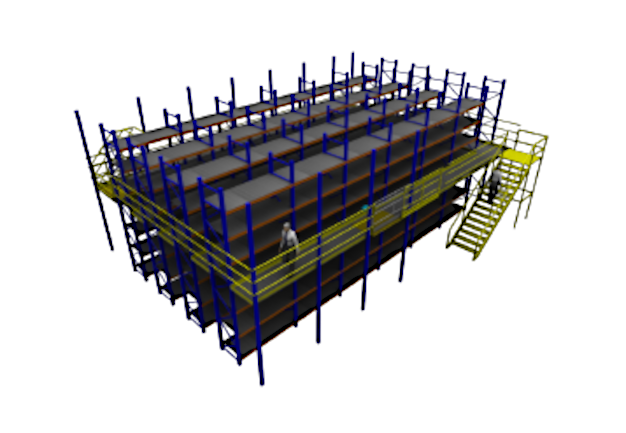
The heaviest shelving in the range, built on a beam design configuration for discrete SKUs that are too heavy for conventional shelving but not palletised.
- Configuration: Based on beam design configuration
- Load capacity: 300 kg to 4,000 kg UDL
- Stock format: Heavier discrete SKUs stored in cartons, bins or directly
- Multi-tier capability: Indigenously developed step beam and upright profiles configurable up to 10 levels
- Integration: Can be integrated with conveyors, VRCs and loading gates to improve throughput
- Walkways: Rigorously tested to handle trolley and hand pallet truck movement, providing a ventilated and noise-free working environment
- Modularity: Wide range of components enabling future expansion that fits the existing system
Ten levels with conveyor and vertical reciprocating conveyor integration puts this system close to a small automated facility. The walkway testing for trolley and hand pallet truck movement is what makes upper tiers genuinely workable rather than merely accessible.
View Godrej Altius Titan shelving
3. Godrej Altius Lite — panel design, up to 350 kg per level

A panel design configuration for light to medium stock, using a wide upright profile to build a sturdy system that makes full use of vertical space.
- Configuration: Based on panel design configuration
- Load capacity: Light to medium SKUs up to 350 kg per level
- Stock format: Stored in bins, cartons or directly
- Structure: Wide upright profile creating a strong and sturdy system, increasing storage efficiency through vertical space utilisation
- Fire compliance: Designed to comply with FM Global norms for fire safety
- Space utilisation: Optimised for effective cubic space utilisation
- Additional: Designed to deliver unmatched aesthetics; comprehensive accessory range
FM Global compliance is the specification detail worth leading with. Where a facility is insured to those standards, or where fire strategy is being reviewed, having the compliance stated on the product removes a question that otherwise requires separate verification.
View Godrej Altius Lite shelving
4. Longspan (X Span) — light to medium, voluminous items
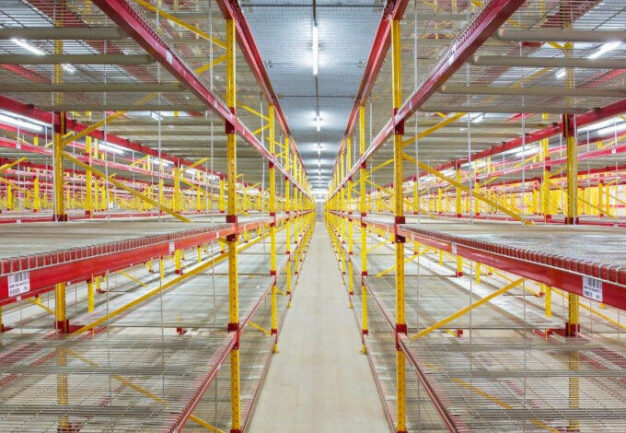
Long beam spans without intermediate uprights, suited to items that take up considerable space without weighing very much.
- Designed for: Items which are light or medium in weight and voluminous in nature
- Key characteristic: Long spans between uprights, giving unobstructed shelf width
- Applications: Auto, apparel and engineering sectors
- Best for: Bulky stock where shelf area matters more than load capacity
The reason this system exists is that bulky light items waste conventional shelving. Standard bays force awkward stacking around uprights; long spans let items sit as they naturally fit, which recovers usable shelf area on every level.
5. Bolt Free Shelving — boltless assembly for light loads

Contemporary boltless construction for light load applications, assembled and reconfigured without tools.
- Construction: Boltless
- Load class: Light load applications
- Accessories: User friendly accessories to suit various industry applications
- Applications: Automotive spares, light engineering components, apparel
- Best for: Stores and pick areas where layout changes frequently
Boltless construction earns its place where the layout changes. Reconfiguring a bolted installation is a job; reconfiguring a boltless one is an afternoon, which suits spares stores and pick faces where stock profiles shift regularly.
View Godrej bolt free shelving
Not sure which shelving suits your stock?
Send us your item weights and dimensions, pick rate, available clear height and any fire protection requirements — our team will design the system and return a costed proposal.
How to Specify Shelving
Step 1 - Weigh and measure the stock. Load per level is the primary specification, and it must reflect what will actually sit on the shelf rather than an estimate. Under-specifying is a safety issue.
Step 2 - Establish the pick rate. How often items are retrieved determines what should be at accessible heights. Fast-moving stock at waist height and slow-moving stock high or low is the simplest productivity gain available.
Step 3 - Choose decking against fire strategy and stock. Wire mesh where sprinkler penetration is needed, solid steel for small items, wooden where neither constraint applies. Confirm the fire strategy first.
Step 4 - Decide whether to go multi-tier. If clear height exceeds what a person can reach from the floor, walkways convert that unused volume into working storage.
Step 5 - Specify walkway surface and loading points. Grating, steel or wooden decking, plus designed loading gates for moving stock between levels safely.
Step 6 - Plan for reconfiguration. Stock profiles change. Modular or boltless systems adapt without replacement, which is worth more than a marginal saving at purchase.
Shelving in UAE Warehouses
- E-commerce growth is driving demand: Regional online retail expansion means more facilities handling large numbers of individually picked items, which is precisely what shelving is for rather than pallet racking.
- Land cost favours multi-tier: Where floor area is expensive, walkway systems that use full building height deliver better returns than extending the facility.
- Fire strategy must be settled before decking: Sprinkler design and decking type interact directly. In high-bay multi-tier installations this needs resolving at design stage, not after installation.
- Spares and distribution operations hold wide ranges: The region’s role in distribution and re-export means many facilities carry very large SKU counts in small quantities, which is shelving territory.
- Shelving is a structure carrying load above people: Load ratings and design sign-off matter as much here as on pallet racking, particularly on multi-tier systems where people work beneath and above.
Why Choose GENAVCO for Warehouse Shelving in the UAE
Buying the steel is the easy part. What determines whether the installation performs is the design work before it and the support after it.
- Part of Juma Al Majid Holding Group: Decades of established presence in the UAE market and the financial stability that comes with a major regional group — this matters when you are signing multi-year service agreements.
- Authorised Godrej representation: Genuine engineered components with factory-backed load ratings — not generic steel of uncertain provenance and unverified capacity.
- Design against stock profile and pick rate: We specify from item weights, dimensions and retrieval frequency rather than quoting a bay count, because picking productivity is worth more than the price per bay.
- Fire compliance considered at design stage: Decking and sprinkler strategy interact. We raise it during design rather than leaving it to be discovered at inspection.
- Installation and team training: We manage installation and train warehouse teams so the system is used as designed from the first shift.
- Scheduled inspection and structural audits: Multi-tier shelving carries load above working people. Our repairs and maintenance division provides inspections, structural audits and component replacement.
- Shelving and racking from one supplier: Most warehouses need both. Our material handling and racking solutions cover the whole facility rather than one part of it.
Common Shelving Mistakes
- Using pallet racking for hand-picked stock: Levels set for forklift access are the wrong heights for people, and the density for small items is poor. It stores the stock but picks badly.
- Under-specifying load per level: This is a safety issue rather than an inconvenience, because shelving carries weight above people working beneath it.
- Choosing decking before settling fire strategy: Solid decking blocks sprinkler water from lower levels and can require in-rack protection. Establishing the strategy first avoids expensive redesign.
- Ignoring pick rate in the layout: Fast-moving items in awkward positions cost time on every retrieval, and picking is usually the largest labour cost in the building.
- Leaving vertical space unused: Where clear height exceeds human reach, multi-tier walkways are typically the cheapest additional storage available.
- Treating walkways as merely strong enough to stand on: Walkways carrying trolleys or hand pallet trucks must be rated and tested for that loading, not just for foot traffic.
Frequently Asked Questions
What is the difference between shelving and pallet racking?
Racking holds palletised loads handled by forklift, with levels set for pallet heights and machine access. Shelving holds individual items picked by hand, with levels set at working heights and load rated as uniformly distributed weight per level rather than per pallet position. Most warehouses need both.
How much weight can heavy duty shelving hold?
It depends on the system. Panel-based shelving handles light to medium stock up to 350 kg per level, while beam-based systems carry heavier discrete SKUs from 300 kg to 4,000 kg UDL. The specification should reflect actual stock weights, since under-specifying load is a safety issue.
What decking should I choose for warehouse shelving?
Wire mesh allows sprinkler water and light through and does not collect dust. Steel decking suits heavier or smaller items that would fall through mesh, and is available plain or perforated. Wooden decking is economical for general storage. The fire protection strategy should be settled before choosing, since solid decking can block sprinkler water from lower levels.
Can shelving be built with multiple levels and walkways?
Yes. Catwalks and multi-tier systems allow higher levels to be reached and can be configured up to ten levels on beam-based systems. Walkways carrying trolleys or hand pallet trucks must be rated and tested for that loading rather than simply for foot traffic.
Is boltless shelving strong enough for warehouse use?
Boltless construction suits light load applications such as automotive spares, light engineering components and apparel. Where heavier loads are involved, panel-based or beam-based systems are the appropriate specification. The advantage of boltless is rapid assembly and reconfiguration where layouts change frequently.
Does GENAVCO install and maintain warehouse shelving in the UAE?
Yes. GENAVCO manages installation, trains warehouse teams, and provides scheduled inspections, structural audits and component replacement across Dubai, Abu Dhabi, Sharjah and the wider UAE.
Ready to Design Your Shelving?
Shelving is specified around people rather than machines. Weigh the stock, understand how often it is picked, settle the fire strategy before choosing decking, and use the height you already have — and the same floor area supports a considerably faster operation.
GENAVCO supplies the full Godrej shelving range across the UAE, with design, installation, team training and scheduled structural inspection. For the wider storage decision, see our guide to choosing a warehouse racking system.
Tell us your stock weights and pick rate. We will design the shelving and price it properly.
ENQUIRE NOW — GET YOUR SHELVING DESIGN
Serving Dubai, Abu Dhabi, Sharjah and the wider UAE.