A road's quality is decided well before the first roller ever touches the surface. It starts at the asphalt mixing plant, where mix design, temperature control, and material consistency set the ceiling for everything the paving crew can achieve afterward. Getting plant selection, road recycling strategy, and paver technology right across the full production-to-paving chain is what separates roads that perform reliably for decades from those needing early, costly intervention.
This guide walks through how to select asphalt plants matched to project scale, how road construction quality control has evolved with digital tools, and how to choose between concrete paver, slipform paver, and asphalt pavers depending on the pavement type being built.
Asphalt Mixing Plants and Road Recycling: Getting Plant Selection Right
The plant producing the asphalt mix has as much influence on final road quality as any equipment used during paving itself, making plant capacity and configuration a foundational decision rather than an afterthought.
Choosing the Right Asphalt Mixing Plant Capacity for Your Project
Plant capacity needs to be matched to paving rate and haul distance, since a plant that outproduces what the paving crew can place risks material cooling before it's laid, while an undersized plant creates gaps in supply that stall the paving operation. Getting this balance right keeps material moving continuously from production through to placement without either bottleneck slowing the project down.
Road Recycling: Reducing Material Costs on Large Projects
Milled asphalt from rehabilitation and resurfacing work can be processed and blended back into new mixes, reducing the cost of sourcing fresh aggregate and cutting disposal and hauling costs for the old material. On large infrastructure programmes, this kind of recycling can meaningfully reduce total material spend while also cutting the environmental footprint of the project.
Asphalt Plants and Road Construction: Matching Equipment to Project Scale
Project scale changes what equipment configuration actually makes sense, and quality control expectations have shifted significantly as digital monitoring tools have become standard across the industry.
What Determines the Right Asphalt Plant for a Road Construction Project
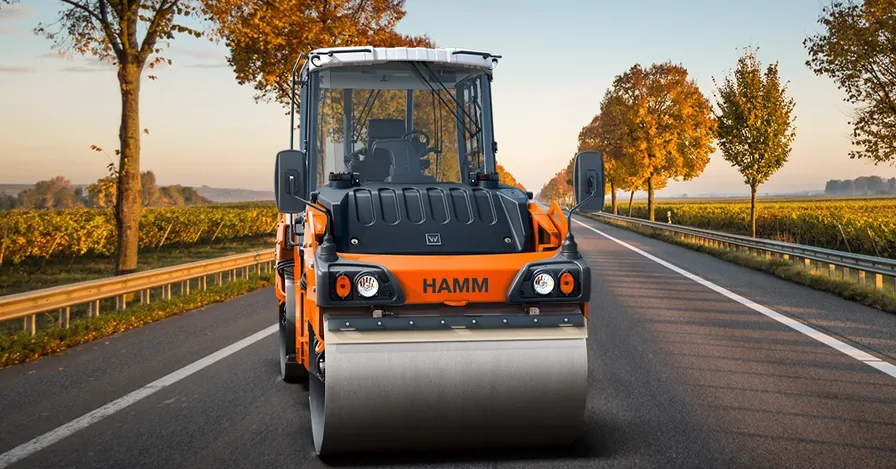
Project duration, expected total tonnage, and how far the plant sits from the paving site all shape whether a mobile or stationary plant configuration makes more sense. Our detailed guide to road construction equipment: pavers, rollers and milling machines covers this equipment range across every stage of the paving process.
Digital Quality Control Across Road Construction Projects
Modern plants and paving equipment increasingly report mix temperature, compaction density, and material consistency in real time, allowing quality issues to be caught and corrected during production rather than discovered after the road has already been laid. This shift toward continuous digital monitoring is quickly becoming standard practice on larger infrastructure projects where the cost of a quality shortfall is highest.
Concrete, Slipform and Asphalt Pavers: Precision Equipment for Lasting Roads
The final paving stage is where careful mix production either pays off or gets undermined, making paver selection one of the most consequential equipment decisions in the whole process. Material sourcing upstream matters too; our guide to aggregates processing equipment for the UAE covers how consistent aggregate quality supports better asphalt production before it ever reaches the paver.
Concrete Paver vs Asphalt Paver: Choosing the Right Machine
A concrete paver suits rigid pavement construction such as highways and airport aprons where long-term structural stiffness is the priority, while an asphalt paver offers the flexibility and speed needed for most standard road resurfacing and new bituminous construction. The choice ultimately comes down to the pavement type specified for the project rather than general preference between the two paving approaches.
Slipform and Asphalt Pavers: What Separates a Smooth Finish from a Failing One
A slipform paver extrudes concrete continuously without fixed formwork, and getting slab geometry and joint spacing right during this continuous process is what prevents early cracking under traffic load. For asphalt pavers, consistent mat thickness, accurate cross-slope, and steady forward speed all determine whether the finished surface rides smoothly or develops rutting and unevenness well before its design life is reached.
FAQs
How do I size an asphalt mixing plant correctly for a project?
Plant capacity should be matched to the paving crew's placement rate and the haul distance between plant and site, ensuring material arrives within its workable temperature window without creating supply gaps that stall the paving operation.
Can recycled asphalt match the performance of new material?
When properly processed and blended at the correct ratio, recycled asphalt can perform comparably to new material in many applications, though the exact blend ratio should be verified against project specification and traffic loading requirements.
What is the main difference between a concrete paver and a slipform paver?
The terms overlap significantly since most concrete road pavers use slipform technology. The key distinction is between slipform (formless, continuous extrusion) and traditional formed concrete placement, with slipform offering much higher production rates for large-scale rigid pavement work.
Conclusion
Long-lasting roads depend on a chain of decisions that starts at the asphalt plant and ends with the final paving pass, not any single stage in isolation. Matching plant capacity to project scale, using road recycling where it makes economic sense, and selecting the right paver technology for the pavement type all combine to determine whether road construction delivers decades of reliable performance or requires early, costly rework.
Industries This Guidance Applies To
The principles in this guide apply across the range of sectors GENAVCO supports with road construction and asphalt production equipment, including government and municipal road authorities, highway and expressway contractors, airport and aviation infrastructure projects, private infrastructure developers, and general civil contractors managing paving works as part of larger developments. While plant and paver configuration varies by project scale, the underlying approach, matching capacity to output, applying digital quality control, and selecting the right paving technology for the pavement type, holds across all of these environments.
Recommendations are informed by equipment supplied and supported across these sectors in the UAE, giving practical grounding in how asphalt production and paving decisions perform under real project conditions rather than only in theory. Any specific plant sizing, mix design, or paver selection should still be validated against an individual project's own specification and site constraints, since no general guide can substitute for a proper project-specific assessment.