Almost nothing built on top of poorly compacted ground stays right for long — foundations settle unevenly, pavements rut prematurely, and utility trenches sink years after backfill. Compaction is one of the least visible steps in construction, buried under everything that comes after it, which is exactly why it's so often under-specified and so consequential when it's done wrong. This guide looks at why ground compaction matters as much as it does, how to select the right equipment for the job, and the mistakes that undermine compaction quality even when the right machine is on site.
Why Ground Compaction Matters
Compaction increases soil density by mechanically forcing out air voids between particles, and that density increase is what gives the ground beneath a structure, road, or utility trench the strength to carry load without shifting over time.
Improving Load-Bearing Capacity
Loosely packed soil compresses under load after construction is complete, not before, which means any structure or pavement built on inadequately compacted ground continues settling long after the project has been handed over. Properly compacted subgrade distributes load across a much larger area of soil particles locked tightly against each other, giving foundations and pavements the stable base they need to carry design loads without the gradual settlement that undermined compaction allows.
Preventing Surface Failures
Rutting, cracking, and uneven settlement in a finished pavement or slab very often trace back to compaction quality in the layers beneath it, not a defect in the surface material itself. A perfectly designed asphalt mix or concrete slab still fails prematurely if the ground supporting it wasn't compacted to the density the design assumed, because the surface layer simply follows whatever movement happens in the layers underneath it.
Selecting the Right Compaction Equipment
Compaction equipment isn't one-size-fits-all — soil type, layer thickness, and site access all determine which machine actually achieves the required density, and using the wrong category of equipment can leave a site under-compacted even after multiple passes.
Plate Compactors
Plate compactors use a vibrating base plate to compact granular soils, backfill, and asphalt patches in confined spaces where larger rollers can't manoeuvre — trenches, foundation edges, and small repair areas. Plate compactor units are typically the right choice for cohesionless, granular material like sand and gravel, where their high-frequency vibration is particularly effective, but they're generally less suited to cohesive clay soils that respond better to impact or kneading compaction methods.
Vibratory Rollers
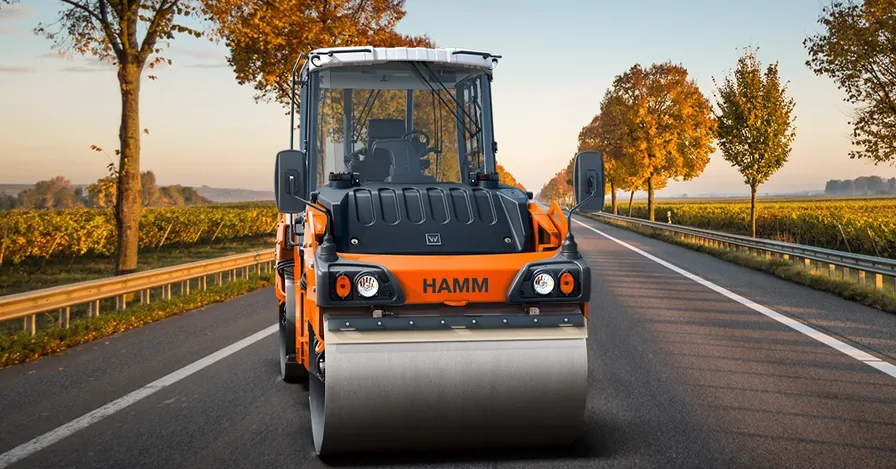
Vibratory rollers cover far larger areas per pass than plate compactors and are the standard choice for road subgrade, large fill areas, and asphalt compaction where production rate matters as much as density. Vibratory plate compactor and roller systems combine vibration frequency and amplitude settings that can be tuned to different soil types and lift thicknesses, giving operators the flexibility to compact everything from deep fill layers to thin asphalt lifts with the same base machine platform.
Common Compaction Mistakes to Avoid
Even the right equipment can't overcome fundamental compaction mistakes made during the process itself. Our road construction equipment guide covers compaction quality control in the specific context of road construction in more depth.
Incorrect Moisture Levels
Every soil type has an optimum moisture content at which it compacts to maximum density — too dry and the particles resist rearranging into a denser structure, too wet and the soil becomes plastic and simply displaces under the compactor rather than densifying. Skipping a moisture-density test before compaction begins is one of the most common and most consequential shortcuts on a site, since compacting outside the optimum moisture range can leave a layer under-compacted even after the correct equipment has made the specified number of passes.
Uneven Compaction
Inconsistent pass patterns, skipped overlap between passes, or varying operator speed across a lift all produce uneven density across what should be a uniform layer, and those inconsistencies compound as subsequent lifts are placed on top. Compaction testing at multiple points across a lift, rather than a single spot check, is the only reliable way to confirm that density targets have actually been met uniformly rather than just in the location that happened to get tested.
Frequently Asked Questions
How do I know if soil is properly compacted?
Field density testing, such as a nuclear density gauge or sand cone test, compares the achieved density against the maximum density determined in a laboratory proctor test for that specific soil. Visual inspection alone cannot reliably confirm compaction has met the required specification.
What's the difference between a plate compactor and a vibratory roller?
Plate compactors are smaller, manoeuvrable machines best suited to confined spaces like trenches and small repair areas, while vibratory rollers cover much larger areas per pass and are the standard choice for road subgrade and large-scale fill compaction where production rate matters.
Why does compaction fail even when the right equipment is used?
The most common cause is incorrect moisture content at the time of compaction — soil that's too dry or too wet won't reach maximum density regardless of how many passes the correct equipment makes. Inconsistent pass patterns and inadequate overlap between passes are the second most common cause.
Conclusion
Ground compaction rarely gets the attention given to the visible work that follows it, but very little of that visible work — foundations, pavements, structures — performs as designed if the ground beneath it wasn't properly compacted first. Matching the right equipment to the soil type and application, testing moisture content before compaction begins, and confirming density with proper field testing rather than assumption are what separate a stable, long-performing project from one that starts settling before it's even finished. Getting compaction right the first time is dramatically cheaper than remediating a settlement problem after construction is complete. If you're planning a project and want guidance on the right compaction equipment for your soil conditions, Genavco's equipment specialists can help match the right machine to your site.