A wheel loader looks like a simple machine: a bucket on the front, tyres underneath, drive it into a pile and lift. That simplicity is exactly why it is so often specified badly.
The loader is rarely working alone. It fills trucks, feeds hoppers, rehandles stockpiles — and its productivity is determined almost entirely by how well it matches whatever it is feeding. A loader sized without reference to the trucks it serves will either waste bucket capacity on every pass or keep those trucks waiting, and both cost money on every cycle of every shift.
This guide covers how to size a wheel loader by bucket and pass matching, what actually governs cycle time, why tyres are the running cost that surprises people, and the Shantui loaders GENAVCO supplies in the UAE.
What a Wheel Loader Is Built To Do
The defining characteristic is that the machine carries. Unlike an excavator, which digs from a fixed position and slews to discharge, a loader drives into material, lifts it and travels with it.
That distinction shapes everything. A loader excels on loose or already-broken material — stockpiles, blasted rock, aggregate bays, crushed product — where the bucket can penetrate without the machine having to break the ground first. It performs poorly digging undisturbed ground, because it has to push the whole machine forward to generate breakout force.
It also travels well. Rubber tyres and a road-capable travel speed mean a loader repositions across a site quickly, which is why it dominates yard and stockpile work where the machine moves constantly between piles, hoppers and trucks.
Where the material has not yet been broken out, an excavator is the correct machine. That comparison is covered in our guide to building an earthmoving fleet.
Pass Matching: The Sizing Decision That Matters
Bucket capacity should not be chosen in isolation. It should be chosen so that filling the truck takes a sensible whole number of passes.
- Three to five passes is the practical target: Fewer than three and the bucket is large relative to the truck, so capacity is wasted on the last partial pass. More than five and the truck waits too long, which is the more expensive of the two errors because trucks usually cost more per hour than the loader.
- Partial passes waste the whole cycle: A loader filling a truck in three and a half passes performs a complete cycle — approach, fill, reverse, travel, dump — for a half bucket. That half cycle is entirely lost productivity and it repeats on every truck.
- Match the fleet, not the biggest truck: Where several truck sizes work the site, size against the one that dominates the cycle count rather than the largest occasional vehicle.
- Bucket fill factor is not 100%: Rated bucket capacity assumes an ideal heaped load. Real fill depends on material — loose sand fills well, blasted rock with large fragments does not. Sizing from rated capacity alone overstates what the machine will actually move.
Working the calculation the other way round is also valid: if the truck fleet is fixed and cannot change, the truck size determines the correct bucket, and therefore the loader.
What Governs Cycle Time
Loader productivity is bucket capacity multiplied by cycles per hour. The second half is where most output is lost.
- Travel distance dominates: Every metre between the pile and the discharge point is travelled twice per cycle. Reducing the distance by positioning stockpiles and trucks well delivers more output than a larger machine would.
- Loading technique varies enormously between operators: The angle of approach, how the bucket enters the pile and whether the operator uses a V-pattern or a load-and-carry cycle can change output substantially on identical machines.
- Pile condition affects fill and penetration: A well-formed, tidy face lets the bucket fill in one clean pass. A collapsed or spread pile forces repeated attempts and wastes both time and fuel.
- Surface condition affects travel speed: Rutted, soft or uneven ground slows every cycle and increases tyre wear at the same time. Maintaining the working surface is one of the cheapest productivity measures available.
Tyres: The Running Cost Nobody Budgets Properly
On a tracked machine, undercarriage is the recurring consumable. On a wheel loader, tyres perform the same role — and they are frequently absent from the operating budget until the first set needs replacing.
- Abrasive surfaces destroy tyres: Sharp blasted rock, crushed aggregate and quarry floors cut and abrade tyres far faster than prepared surfaces. Where the loader works on rock, tyre cost can rival fuel as an operating expense.
- Site surface maintenance pays for itself: Clearing spillage from travel routes and maintaining the working area is the single most effective way to extend tyre life. It costs a machine hour and saves considerably more.
- Wheel spin accelerates wear disproportionately: Excessive tyre spin during pile penetration — usually a technique or pile condition issue — wears tyres rapidly. This is one of the clearest returns on operator training.
- Tyre specification should match the surface: Different compounds and tread patterns exist for rock, general site and sand conditions. A general-purpose tyre on a rock face is a false economy.
- Heat compounds everything: Sustained high ambient temperature raises tyre operating temperature, which accelerates wear and increases failure risk. Pressure monitoring matters more here than in temperate markets.
Advantages of a Wheel Loader
These are the characteristics that make it the standard machine for stockpile and yard work.
- Fast cycles on loose material: On already-broken material a loader out-produces an excavator of equivalent size for straightforward loading duties.
- Travels well between work points: Rubber tyres and road-capable travel speed mean the machine repositions across a site quickly rather than being tied to one position.
- Load and carry in one machine: Over short distances the loader can carry material itself, removing the need for haulage entirely.
- Versatile with attachments: Bucket changes and attachment options adapt the same machine to different materials and tasks.
- Good visibility to the bucket: The operator sees the load and the discharge point directly, which supports accurate placement into hoppers and trucks.
- Simple, well-understood machine: Widely operated and widely serviced, so operator availability and technician familiarity are rarely constraints.
- No undercarriage cost: Tyres are consumable but a tracked undercarriage is a considerably larger and less predictable replacement cost.
- Works on finished surfaces: Rubber tyres do not damage sealed or prepared ground the way tracks do, which suits yards and established plant areas.
Shantui Wheel Loaders Available in the UAE
GENAVCO supplies Shantui construction machinery in the UAE. Shantui has taken substantial market share in the loader segment on the strength of its manufacturing and quality control process, alongside the bulldozer line it is better known for.
1. Shantui Wheel Loaders — L68K and L76
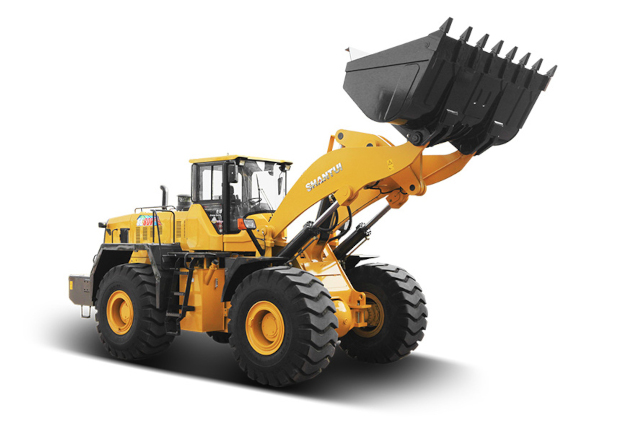
The loader range covers general site duties through to high-capacity quarry and stockpile work, with two larger models published in detail.
- L68K — total power: 178 kW
- L68K — operating weight: 22,500 kg
- L68K — bucket capacity: 4 m³
- L76 — total power: 209 kW
- L76 — operating weight: 24,800 kg
- L76 — bucket capacity: 5 m³
- Wider range: Loaders available from 1 m³ bucket capacity upward for lighter duties
The gap between these two models is the pass-matching decision in practice. A 4 m³ bucket and a 5 m³ bucket fill different truck sizes in a clean whole number of passes, and choosing between them should follow the haulage fleet rather than a preference for the larger machine. On a site where the trucks are fixed, the truck determines the loader.
2. Shantui Forklift Series — wheeled handling for finished product
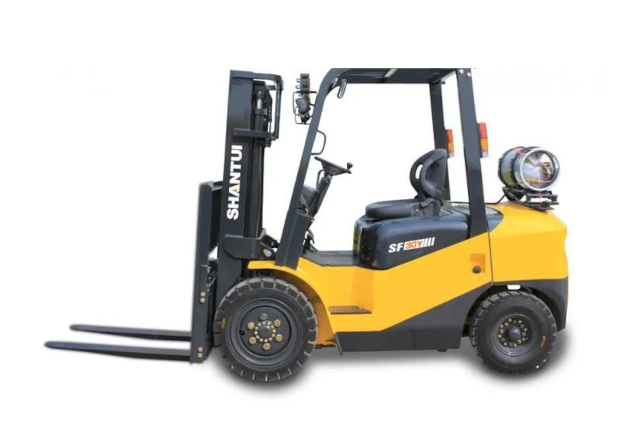
Where the material has already been processed and packaged, a forklift handles it more efficiently than a loader bucket. Shantui added the line in 2007, applying its construction machinery production to material handling.
- Introduced: 2007, built on Shantui’s construction machinery production capability
- Application: Handling palletised and packaged material rather than bulk loose product
- Position in the fleet: Complements a loader on sites producing bagged, palletised or unitised output
- Best for: Yards, dispatch areas and finished product handling
Using a loader bucket to move palletised products is a common yard inefficiency. Where a site produces bagged or packaged material, a forklift releases the loader for the bulk work it is actually built for. For warehouse and indoor handling specifically, the earthmoving and light construction equipment range sits alongside dedicated material handling equipment.
View the Shantui forklift series
Not sure which bucket size matches your trucks?
Send us your truck capacities, material type, haul distance and daily tonnage — our team will work the pass matching and specify the loader.
How to Specify a Wheel Loader
Step 1 - Start with what you are loading. Truck capacity, hopper size or whatever the loader feeds. This sets the bucket, and the bucket sets the machine.
Step 2 - Work the pass matching. Aim for a whole number of passes, ideally three to five. Adjust the bucket rather than accepting a partial pass on every cycle.
Step 3 - Apply a realistic fill factor. Rated capacity assumes ideal heaped loading. Loose sand fills well; coarse blasted rock does not. Size against realistic fill, not the datasheet figure.
Step 4 - Check breakout and lift at working height. The machine must handle the material at the height it discharges. Lift capacity falls as the arms extend, and a loader that can lift at ground level may not at truck height.
Step 5 - Specify tyres for the actual surface. Rock, general site and sand conditions call for different tyre specifications, and this decision affects running cost more than most buyers expect.
Step 6 - Specify the cab for UAE conditions. Air conditioning is a productivity requirement on sustained summer operation, not a comfort option.
Loader Operation in UAE Conditions
- Loose sand undermines traction: Wheel loaders depend on pushing the machine into the pile to fill the bucket, and loose sand under the tyres reduces the traction available to do it. A prepared, firm working surface at the pile face makes a measurable difference to fill and to fuel.
- Dust load shortens filter intervals: A loader works in its own dust cloud constantly. Air filters and cooling packs load far faster than temperate-climate schedules assume, and intervals should follow the environment.
- Heat affects tyres and operators together: Tyre operating temperature rises with ambient, accelerating wear, while operator concentration falls — and concentration is what governs technique, which governs both fuel and tyre life.
- Abrasive aggregate consumes edges and teeth: Bucket cutting edges and ground engaging tools wear faster in abrasive material and should be budgeted realistically rather than from baseline figures.
Why Choose GENAVCO for Wheel Loaders in the UAE
Buying the machine is the easy part. What determines whether the investment performs is everything that happens afterwards.
- Part of Juma Al Majid Holding Group: Decades of established presence in the UAE market and the financial stability that comes with a major regional group — this matters when you are signing multi-year service agreements.
- Authorised Shantui representation: Genuine equipment, factory-backed specification and full warranty integrity — not grey-market imports with uncertain parts availability.
- In-country spare parts inventory: Cutting edges, teeth and filters are consumed continuously on a loader working abrasive material. Our genuine spare parts operation holds stock locally.
- Certified service and maintenance: Scheduled servicing, preventive maintenance and on-site breakdown response through our repairs and maintenance division across Dubai, Abu Dhabi, Sharjah and the wider UAE.
- Operator training: Loading technique determines cycle time, fuel consumption and tyre life, and the variation between operators on identical machines is substantial. Our operator training centre covers correct operation and daily checks.
- Specification by pass matching: We size the bucket against what the loader is feeding rather than quoting on capacity alone, because a mismatched bucket wastes productivity on every single cycle.
- Depth across site and quarry equipment: Loading alongside our quarry and mining equipment range, so crushing, screening and loading are supported from one relationship.
Common Wheel Loader Problems
- Trucks waiting between loads: Too many passes per truck. The bucket is undersized relative to the haulage, and it costs truck time on every cycle.
- Bucket never filling completely: Pile condition or approach technique rather than machine capability. A well-formed face fills in one clean pass.
- Rapid tyre wear: Abrasive surface, spillage on travel routes or excessive wheel spin. All three are addressable without changing machines.
- High fuel consumption per tonne: Usually excessive travel distance per cycle or wheel spin during fill. Repositioning the stockpile often fixes more than a machine change would.
- Struggling to dig into the pile: The material has not been broken out sufficiently. A loader is not a digging machine, and forcing it to be one wears tyres and drivetrain.
- Cannot lift at discharge height: Lift capacity falls as the arms extend. A machine adequate at ground level may not be at truck height with a full bucket.
Frequently Asked Questions
What size wheel loader do I need?
Start with what the loader is feeding. Bucket capacity should fill the truck or hopper in a whole number of passes, ideally three to five, and the bucket then determines the machine size. Apply a realistic fill factor rather than rated capacity, since coarse material fills a bucket less completely than loose sand.
What is pass matching and why does it matter?
Pass matching means sizing the bucket so filling the truck takes a sensible whole number of passes. A partial pass means a complete loading cycle performed for half a bucket, and that lost productivity repeats on every truck. Too many passes leaves trucks waiting, which is usually the more expensive error.
Should I use a wheel loader or an excavator?
A wheel loader is faster on loose or already-broken material and travels well between work points, which suits stockpiles, yards and truck loading. An excavator digs undisturbed ground and works below its own level. Loaders carry; excavators dig.
Why do wheel loader tyres wear so quickly?
Abrasive surfaces such as blasted rock and crushed aggregate cut and abrade tyres rapidly, and wheel spin during pile penetration accelerates it further. Maintaining the working surface, clearing spillage from travel routes and correcting operator technique all extend tyre life substantially.
How can I improve loader productivity without a bigger machine?
Reduce travel distance by repositioning stockpiles and trucks, keep the pile face well formed so the bucket fills in one pass, maintain the working surface, and address loading technique. These typically deliver more output than moving up a machine size.
Does GENAVCO supply spare parts and servicing for Shantui loaders in the UAE?
Yes. GENAVCO holds genuine parts in-country and operates a certified service network covering Dubai, Abu Dhabi, Sharjah and the wider UAE, with preventive maintenance programmes, operator training and on-site breakdown support.
Ready to Specify Your Loader?
Wheel loader productivity comes down to pass matching and cycle time, and both are decided before the machine arrives. Size the bucket against what it feeds, shorten the travel, keep the pile face tidy, and the machine delivers what it was bought to deliver.
GENAVCO supplies Shantui wheel loaders across the UAE, backed by genuine parts, certified service and operator training. For how the loader fits alongside the rest of the site fleet, see our guide to building an earthmoving fleet.
Tell us your trucks, material and tonnage. We will work the pass matching and price it properly.
ENQUIRE NOW — GET YOUR LOADER SPECIFICATION
Serving Dubai, Abu Dhabi, Sharjah and the wider UAE.