Full-depth pavement replacement means excavating a failed road down to subgrade, trucking the material away, and rebuilding from the base up - expensive, slow, and generating a lot of waste for a problem that's often confined to the top few centimetres. Road recycling exists because most pavement failure is a surface and near-surface problem, not a structural one, and treating it that way saves time, material and cost.
This guide covers how road recycling works as a methodology, where cold milling fits into it, and the Wirtgen equipment GENAVCO supplies to support it across the UAE.
Road Recycling as a Methodology, Not Just a Machine
Road recycling covers a family of rehabilitation approaches that reuse existing pavement material rather than removing and replacing it wholesale. The starting point in almost every case is cold milling - removing the damaged surface layer to a controlled depth - after which the milled material (reclaimed asphalt pavement, or RAP) can be reused on-site, processed at a plant, or in some methods, recycled in place without ever leaving the road.
Why Recycling Wins Over Full Replacement in Most Cases
- Cost per square metre is lower: removing only the failed depth, rather than excavating to subgrade, cuts material handling and disposal cost significantly.
- Project timelines shrink: recycling and repaving a lane can often be completed in a fraction of the time a full reconstruction would take, reducing road closure duration.
- Reclaimed material has real value: milled asphalt is a usable input for new asphalt production or base layer construction, not simply waste to be trucked away.
- Structural condition, not surface condition, decides eligibility: recycling suits pavements with a sound base and a failed or worn surface layer - not pavements with genuine structural failure below the surface.
Where Milling Fits in the Recycling Process
| Stage | What happens | Equipment |
| Assessment | Confirm the failure is surface/near-surface, not structural, before committing to recycling | Core sampling, pavement condition survey |
| Cold milling | Removes the damaged layer to a controlled, precise depth | Wirtgen cold milling machines |
| Material handling | Reclaimed asphalt is loaded out for reuse or processing | Milling machine conveyor + haul trucks |
| Resurfacing | New asphalt is laid over the milled, prepared surface | Asphalt paver |
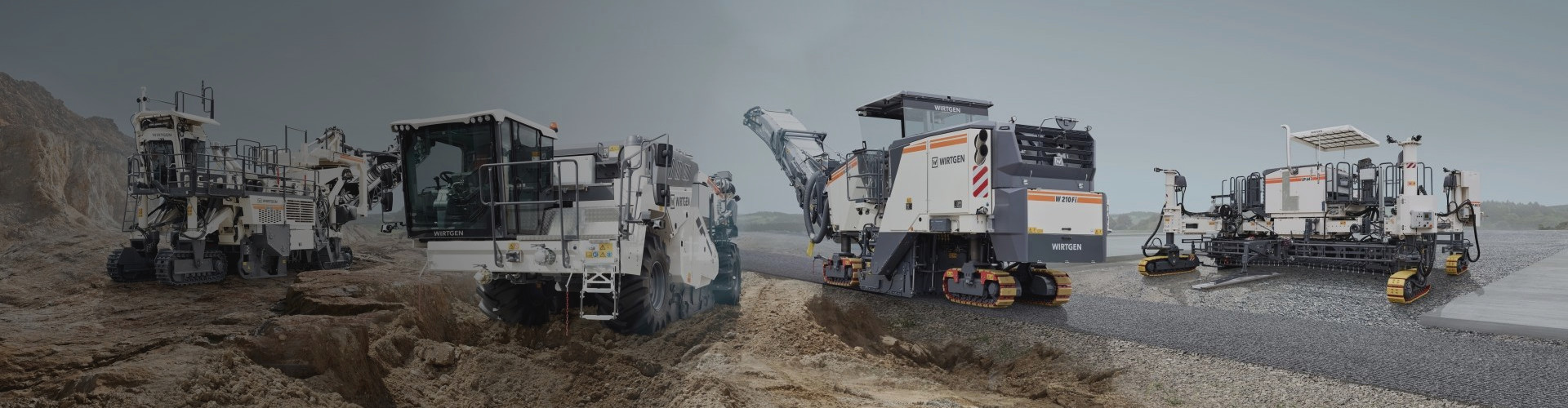
The Wirtgen Milling Range Supporting Road Recycling in the UAE
| Product | Type | Suited to |
| Cold Milling Machine W 35 DC | Small milling machine | Partial pavement repairs, milling around obstacles and utility covers |
| Cold Milling Machine W 100 Fi | Cold milling machine | Road rehabilitation projects, removing damaged road surface |
1. Wirtgen Cold Milling Machine W 100 Fi
- Used in: road rehabilitation projects to remove damaged road surface as the first stage of a recycling programme.
- Application fit: controlled-depth milling that leaves a prepared surface ready for resurfacing or reclaimed material processing.
View Wirtgen cold milling machines
Not sure whether your pavement failure is a good fit for recycling?
Send us your pavement condition survey or a description of the visible damage - our team will advise whether milling-based recycling or full reconstruction is the right approach.
How to Plan a Road Recycling Programme
- Step 1 - Confirm the failure depth via core sampling before committing equipment or budget to a recycling approach.
- Step 2 - Match milling depth to the actual damaged layer thickness, not a standard default depth.
- Step 3 - Plan reclaimed material handling - on-site reuse, off-site processing, or disposal, decided before milling starts.
- Step 4 - Sequence resurfacing immediately after milling where possible, to minimise the time a milled surface sits exposed to traffic or weather.
Road Recycling in UAE Infrastructure Programmes
- Large-scale road maintenance programmes favour recycling economics: the UAE's extensive road network maintenance schedule makes the cost and time savings of recycling significant at scale.
- Heat affects milled surface exposure time: minimising the window between milling and resurfacing matters more in sustained high temperatures.
- Night milling is common on active roads: reducing daytime heat exposure and traffic disruption both favour night-shift milling operations.
GENAVCO's Approach to Road Recycling Equipment
- Part of Juma Al Majid Holding Group: decades of established presence in the UAE market and the financial stability of a major regional group.
- Authorised Wirtgen representation: genuine German-engineered milling equipment with factory-backed specification and full warranty integrity.
- Coordinated milling-to-paving support: GENAVCO supplies the milling equipment that starts a recycling programme and the Vögele pavers that finish it, advising across the full sequence.
- In-country spare parts inventory: our genuine spare parts operation holds stock locally so servicing isn't delayed waiting on shipment.
Where Road Recycling Programmes Usually Go Wrong
- Recycling a pavement with genuine structural failure: milling and resurfacing doesn't fix a failed base layer - it just delays the same failure resurfacing again.
- Milling deeper or shallower than the actual damage: either wastes sound material or leaves damaged material behind under the new surface.
- Leaving a milled surface exposed too long: delays between milling and resurfacing expose the prepared surface to traffic damage and contamination.
Frequently Asked Questions
What is road recycling?
Road recycling is a pavement rehabilitation approach that reuses existing pavement material rather than fully excavating and replacing it, typically starting with cold milling to remove the damaged surface layer.
Is road recycling suitable for every type of pavement failure?
No. Recycling suits pavements with a sound structural base and a failed or worn surface layer. Genuine structural failure below the surface needs a different rehabilitation approach.
What Wirtgen equipment does GENAVCO supply for road recycling?
GENAVCO supplies the Wirtgen Cold Milling Machine W 35 DC and W 100 Fi, used to remove damaged asphalt layers as the first stage of a recycling programme.
Does GENAVCO supply genuine parts for Wirtgen milling equipment?
Yes. As the authorised Wirtgen distributor in the UAE, GENAVCO holds genuine parts in stock and provides certified technical support across our UAE-wide network.
Ready to Plan Your Road Recycling Programme?
The right recycling approach depends on failure depth and pavement condition, not a default methodology. GENAVCO supplies the Wirtgen milling range across the UAE, with specification support and after-sales service.
Tell us your pavement condition and project scope. We'll advise on the right recycling approach and price the equipment properly.
Serving Dubai, Abu Dhabi, Sharjah and the wider UAE.