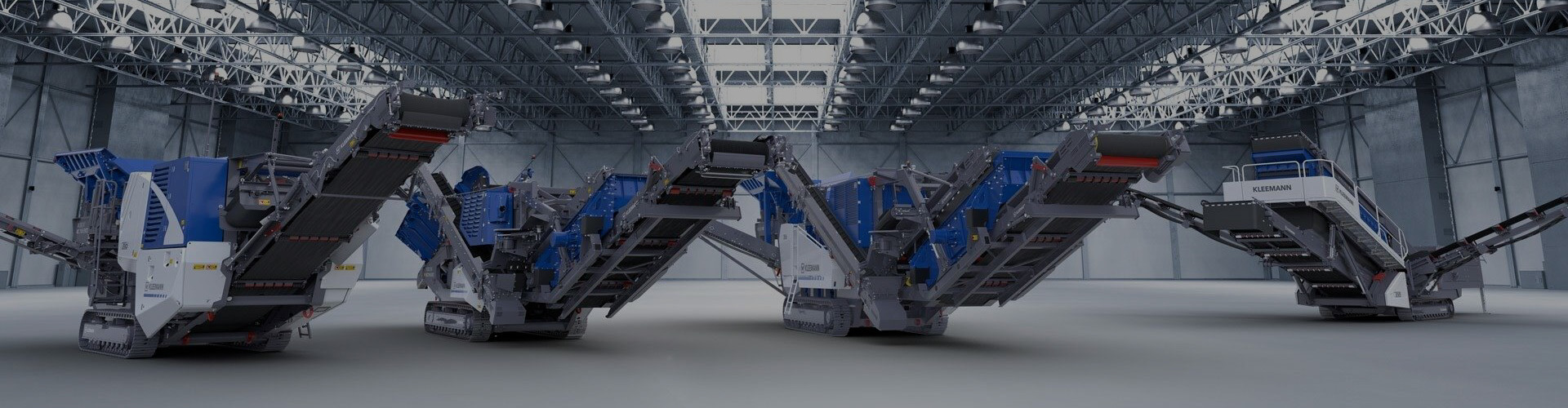
Every Kleemann crushing and screening machine in the GENAVCO range is track-mounted. That is not a detail of specification — it changes what a crushing operation is. Instead of hauling material to a fixed plant, the plant travels to the material.
For quarries working multiple faces, contractors crushing on client sites, and demolition operations processing arisings where they fall, that reversal removes the largest cost in the whole process: moving rock that has not been reduced yet.
This guide covers when a mobile crusher makes more sense than a fixed installation, what transport and setup actually involve, how machines link together into a mobile circuit, and the deployment characteristics of the Kleemann range.
Mobile or Fixed: The Real Comparison
| Factor | Mobile (tracked) plant | Fixed installation |
|---|---|---|
| Position | Moves to the material | Material is hauled to the plant |
| Haulage cost | Reduced — crushed material is hauled, not raw rock | Raw material haulage over the plant life |
| Setup | Hours to days | Civil works, foundations, commissioning |
| Site permanence | None required | Long-term commitment to one location |
| Multiple faces or sites | Relocates between them | Cannot follow the work |
| Throughput ceiling | High, but below large fixed plant | Highest available |
| Capital commitment | Machine only | Machine plus civils and infrastructure |
| Resale and redeployment | Retains value, moves to next project | Tied to the site |
The decision usually turns on one question: how long will the material be in one place? A single quarry face worked for twenty years justifies a fixed plant. Multiple faces, a contract of defined length, or work that moves with a project is mobile territory.
Where Mobile Crushing Earns Its Position in the UAE
- Contract crushing: Processing material on a client site for a fixed rate per tonne. The whole business model depends on plants that relocate efficiently between jobs.
- Multi-face quarrying: Working several faces or benches without hauling raw rock across the site to a single fixed plant.
- Construction and demolition recycling: Crushing arisings where the building came down, so material never leaves the site as waste and returns as aggregate.
- Infrastructure and road projects: Producing base material along the alignment rather than importing it, moving forward as the works advance.
- Temporary and project-length works: Where the crushing requirement has a defined end date and a permanent installation could never be justified.
- Remote sites: Locations where importing aggregate is expensive and processing local material is the practical alternative.
Transport, Setup and Site Access
Mobile does not mean effortless. Four practical considerations determine whether relocation is a half-day operation or a week.
- Transport dimensions and weight decide the trailer: Machine weight and travel dimensions determine what trailer is needed, what permits apply, and which routes are viable. Compact machines transport on standard equipment; larger plants need specialist arrangements and planning lead time.
- Setup time varies enormously between machines: Some plants are craned into position and hydraulically unfold; others need substantial assembly. Machines designed for quick assembly and disassembly are worth a premium to any operation relocating frequently — the difference compounds across every move.
- Site access constrains the whole plan: Gradients, ground bearing capacity, overhead clearances and turning space all affect whether a tracked plant can reach the working position. This should be surveyed before purchase, not on delivery day.
- Tracks move the machine on site, not between sites: Tracked undercarriage repositions plant within a working area — following a face, adjusting to a stockpile, moving between benches. Travel between sites is by trailer.
Linking Machines into a Mobile Circuit
A single mobile crusher produces one product. Linking machines produce a plant, and this is where mobile crushing becomes genuinely competitive with fixed installations.
- Direct feeding between machines: The discharge conveyor of one machine feeds the next, so a primary, a secondary and a screen operate as a continuous circuit without intermediate stockpiling or loader rehandling.
- Linkage control coordinates the plant: Machines that communicate can match feed rates automatically, so the primary slows when the secondary is loaded rather than surging material into it. This is what prevents the alternating overload and starvation that limits unlinked mobile plants.
- Stacking conveyors extend stockpile capacity: Discharge conveyors on the machines themselves build only modest piles. Track-mounted stackers extend reach so the plant runs longer before a loader has to intervene.
- Matched machine pairs simplify the design: Where a manufacturer specifies a primary and secondary as a matched combination, the balancing calculation is already done. That is a meaningful advantage for operations without in-house plant engineering.
The circuit design principles behind all of this are set out in our guide to designing a crushing circuit.
Advantages of Mobile Crushing Plant
These are the benefits that show up in project economics rather than in machine specifications.
- Haulage cost falls immediately: Crushing at the face means hauling reduced material rather than raw rock, which is the single largest saving mobile plant delivers.
- No civil works or foundations: The machine arrives and works. There is no groundworks programme, no commissioning phase and no capital tied up in infrastructure.
- Follows the work: Plant relocates between faces, phases and projects instead of dictating where material has to be brought.
- Deployable across multiple contracts: One asset serves several projects over its life, which changes the return calculation entirely compared with a site-tied installation.
- Fast to bring into production: Machines designed for quick assembly reach working condition in a fraction of the time a fixed plant requires.
- Scalable by adding machines: Capacity grows by linking another unit rather than redesigning an installation.
- Retains asset value: Mobile plant leaves with the operator at project end and holds value in an active secondary market.
- Enables on-site recycling: Processing demolition material where it falls avoids both disposal cost and imported aggregate cost.
Deployment Characteristics Across the Kleemann Range
GENAVCO supplies Kleemann crushing and screening equipment in the UAE. The machines below are described here purely by how they transport, deploy and link — their crushing action is covered in the type guides.
1. MOBICAT MC 100i EVO — the most relocatable primary

The smallest jaw crusher in the EVO line, and the primary best suited to operations that move frequently between short jobs.
- Deployment class: Compact primary — relocates between jobs regularly
- Design: Compactness and reliability across a wide variety of materials
- Drive: D-DRIVE diesel-direct — self-contained, no external power required
- Fuel: Economical in consumption, which matters on fixed-rate contract work
- Operation: Simple control with menu-guided touch panel, so crews change without retraining
- Best for: Demolition companies and contract crushing companies working multiple sites
For contract crushers, transport and setup time is unbillable. A machine that moves on standard equipment and reaches production quickly protects margin on every mobilisation.
2. MOBIREX MR 110i EVO2 — compact design, fast assembly

An impact crusher explicitly designed around transportability, which makes it a natural fit for work that changes location regularly.
- Deployment class: Universally deployable — designed for frequent relocation
- Transport: Compact design makes the machine easy to transport
- Setup: Can be assembled and disassembled again quickly
- Drive: D-DRIVE diesel-direct — no site power connection required
- Control: SPECTIVE control concept, simple and intuitive
- Circuit: Post screening unit with oversize grain returning available as an option
The closed-circuit post screening option matters for mobile work specifically: it means the machine can produce a finished product on its own, without a separate screening unit to transport and set up alongside it.
3. MOBIREX MR 130i EVO2 — large plant output, transportable footprint

Designed as an all-rounder, achieving a production rate previously associated with a considerably larger crushing plant while remaining straightforward to move.
- Deployment class: High-output mobile — relocates between phases rather than daily
- Transport: Compact design makes the plant easy to transport
- Setup: Can be assembled and disassembled again quickly
- Output positioning: Production rate previously associated with considerably larger crushing plant
- Drive: D-DRIVE diesel-direct — fully self-contained
- Circuit: Post screening unit with oversize grain returning available as an option
This is the machine that most directly challenges the case for a fixed installation. Where output was previously the reason to build a permanent plant, a transportable machine at this production rate removes that argument for many operations.
4. MOBICONE MCO 90i EVO2 — built to link with other plants
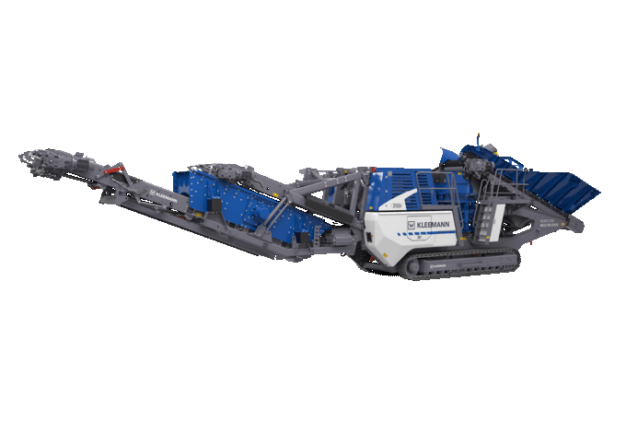
A secondary specified with plant-to-plant linkage as a stated capability, which is what turns a set of individual machines into a mobile circuit.
- Deployment class: Linked secondary — operates as part of a multi-machine circuit
- Circuit capability: Linkage option with other KLEEMANN plants
- Feed coordination: Continuous Feed System for optimum crusher loading
- Drive: D-DRIVE diesel-direct — no external power dependency
- Control: Simple and intuitive SPECTIVE control concept
- Protection: Innovative overload systems for protecting the crusher
Linkage is the feature that makes a mobile circuit behave like a plant rather than three machines working near each other. Feed rates coordinate automatically, which removes the surging that otherwise limits unlinked mobile installations.
View the MOBICONE MCO 90i EVO2
Planning a mobile crushing operation?
Send us your material, target tonnage, how often the plant needs to relocate and your site access constraints — our team will configure the circuit and return a cost proposal.
Drive Concepts and Site Power
How a machine is driven affects both running cost and where it can practically work.
- Diesel-direct (D-DRIVE): Fully self-contained. The machine needs nothing but fuel, which suits sites with no power infrastructure and operations that relocate frequently. Simplest to deploy and the most common choice for contract crushing.
- Diesel-electric (E-DRIVE): Runs from its own engine or, where a mains connection exists, from external power. On an established site this lowers energy cost per tonne substantially. It requires a power supply to realise that benefit, so it suits longer deployments.
- Diesel-hydraulic (H-DRIVE): Used on screening and stacking plants, frequently with an external power supply option on the same basis.
The practical rule: frequent relocation and no site power favours diesel-direct; longer deployment on a serviced site favours diesel-electric with an external supply.
Operating Mobile Plant in UAE Conditions
- Positioning determines cooling: A plant sited against a face or between stockpiles recirculates its own hot air and loses cooling margin. Clearance for airflow is a production decision in summer, not a preference.
- Dust load is severe and self-generated: A crushing plant works inside its own dust cloud. Filtration and cooling packs load rapidly, and service intervals should follow the environment rather than the manual.
- Ground conditions affect tracked movement: Soft or uneven ground limits where tracked plant can reposition. Preparing a working platform is usually faster than recovering a machine that has sunk.
- Water for suppression is a logistics item: Suppression consumes water continuously with high evaporation, so supply planning belongs in the production schedule.
Why Choose GENAVCO for Mobile Crushing Plant in the UAE
Buying the machine is the easy part. What determines whether the investment performs is everything that happens afterwards.
- Part of Juma Al Majid Holding Group: Decades of established presence in the UAE market and the financial stability that comes with a major regional group — this matters when you are signing multi-year service agreements.
- Authorised Kleemann representation: Genuine equipment, factory-backed specification and full warranty integrity — not grey-market imports with uncertain parts availability.
- In-country spare parts inventory: Mobile plants often work far from a depot, and wear parts are consumed continuously. Our genuine spare parts operation holds stock locally so a remote site is not waiting on a shipment.
- On-site service across the Emirates: Scheduled servicing, preventive maintenance and breakdown response through our repairs and maintenance division covering Dubai, Abu Dhabi, Sharjah and the wider UAE.
- Circuit configuration, not single machines: We configure linked mobile plants against your material and tonnage, including how the machines feed each other, rather than quoting one crusher in isolation.
- Deployment planning: Transport dimensions, site access and setup requirements assessed before purchase rather than discovered on delivery day.
- Depth across quarry and mining: Crushing, screening and stacking within our wider quarry and mining equipment range.
Common Mobile Crushing Problems
- Circuit surging between machines: Unlinked plant with no feed coordination. The primary discharges in bursts and the secondary alternates between flooded and starved.
- Plant stopping on full stockpiles: Discharge conveyor reach exhausted and no loader available. A stacking conveyor usually costs less than the lost production it prevents.
- Relocation taking longer than planned: Transport dimensions, permits or site access not assessed in advance. This is a planning failure rather than a machine limitation.
- Machines running hot in summer: Positioning that recirculates exhaust heat, or dust-blocked cooling packs. Both are site decisions rather than equipment faults.
- Tracked plant bogging on soft ground: Repositioning attempted without preparing a working platform. Prevention is considerably cheaper than recovery.
- Higher fuel cost than expected: Diesel-direct plant on a site that has mains power available. A diesel-electric machine with external supply would have lowered cost per tonne materially.
Frequently Asked Questions
What is a mobile crusher?
A mobile crusher is a crushing plant mounted on a tracked undercarriage so it can be positioned at the material rather than requiring material to be hauled to a fixed installation. All Kleemann crushing and screening machines in the GENAVCO range are track-mounted.
When is a mobile crusher better than a fixed plant?
When the material is not in one place for the long term. Multiple quarry faces, contract crushing on client sites, demolition recycling and project-length works all favour mobile plant, because relocating the machine costs far less than hauling unprocessed rock.
How are mobile crushers transported between sites?
By trailer. The tracked undercarriage repositions the machine within a working area but travel between sites is by road transport, with the trailer type, permits and route determined by machine weight and travel dimensions.
Can mobile crushers be linked together?
Yes. Machines can feed each other directly and, where linkage is supported, coordinate their feed rates automatically so the primary matches what the secondary can absorb. This is what allows mobile plant to operate as a continuous circuit rather than as separate machines.
What is the difference between D-DRIVE, E-DRIVE and H-DRIVE?
D-DRIVE is diesel-direct and fully self-contained, suiting sites without power. E-DRIVE is diesel-electric and can run from an external power supply where one exists, which lowers energy cost per tonne. H-DRIVE is diesel-hydraulic, used on screening and stacking plants, also with an external supply option.
Does GENAVCO service mobile crushing plants on site in the UAE?
Yes. GENAVCO holds genuine parts in-country and operates a certified service network covering Dubai, Abu Dhabi, Sharjah and the wider UAE, with preventive maintenance programmes and on-site breakdown support.
Ready to Plan Your Mobile Crushing Operation?
Mobile crushing is a logistics decision as much as an equipment one. How often the plant moves, how it links together and how far it sits from the material determine cost per tonne more than the rating on any single machine.
GENAVCO supplies the full tracked Kleemann range across the UAE — jaw, cone and impact crushers, scalping screens and stackers — backed by genuine parts, on-site service and deployment planning. For how the machines themselves reduce material, see our guides to jaw crushers for primary crushing and impact crushers for shaping and recycling.
Tell us your material, tonnage and how often you relocate. We will configure the plant and price it properly.
ENQUIRE NOW — GET YOUR MOBILE PLANT SPECIFICATION
Serving Dubai, Abu Dhabi, Sharjah and the wider UAE.