Every construction project runs on two clocks: the one on the schedule and the one ticking inside every piece of machinery on site. When equipment planning is treated as an afterthought, both clocks start working against each other. Site managers across the UAE know the pattern well — a project looks fine on paper until a loader breaks down mid-shift, or the wrong machine shows up for a job it was never built to handle.
This guide looks at where equipment strategy actually goes wrong on construction sites, and what a stronger approach looks like in practice — from machine selection to long-term fleet planning.
Why Equipment Selection Impacts Project Timelines
Construction equipment is not interchangeable. A backhoe loader and a dedicated excavator can both dig, but they behave very differently under sustained load, and picking the wrong one changes the math on an entire project phase. The same goes for choosing between a compact wheel loader and a mini articulated loader on a confined urban site — one fits through a standard gate, the other doesn't. Equipment selection is a planning decision, not a procurement afterthought, and its effects show up in the schedule long before anyone notices them in the budget.
How Equipment Downtime Delays Construction Projects
Downtime rarely announces itself in advance. A hydraulic fault, a worn undercarriage, or a transmission issue can pull a machine off a site for days, and every dependent task behind it slides accordingly. On a linear schedule — foundation, structure, finishing — a single idle excavator can stall a crew of a dozen workers who have nothing left to do until the digging resumes. The direct cost of downtime is usually smaller than its ripple effect: subcontractor delays, remobilisation costs, and penalty clauses tied to handover dates. This is why contractors increasingly plan around preventive transmission and powertrain care rather than reacting once a machine has already stopped.
The Impact of Poor Equipment Planning
Poor planning usually shows up as a mismatch — a machine that is too small, too large, or simply the wrong category for the task. Assigning a full-size excavator to a job better suited to a compact loader wastes fuel and site space; assigning a light machine to heavy grading work burns out components faster than expected. Poor planning also shows up in access: equipment that can't reach a work area because nobody checked site dimensions before ordering it. A wheel loader, backhoe, and excavator comparison done at the planning stage, rather than the mobilisation stage, avoids most of these mismatches before they cost a single working day.
Common Equipment Planning Mistakes
Most delays trace back to a small set of recurring mistakes, repeated across projects of very different scale. Recognising them early is far cheaper than fixing them mid-project.
Choosing Equipment Based Only on Price
The lowest quote on a machine rarely reflects its total cost over a project's life. Cheaper equipment often comes with weaker after-sales support, harder-to-source parts, and shorter service intervals before major repairs are needed. On a multi-month contract, a marginally higher upfront cost on a well-supported machine — backed by genuine parts availability and trained technicians — typically works out cheaper once fuel efficiency, uptime, and resale value are factored in. Price matters, but it should be weighed against total cost of ownership, not treated as the only variable.
Ignoring Preventive Maintenance
Reactive maintenance — fixing a machine only once it fails — is one of the most expensive habits in construction. Skipped fluid changes, delayed filter replacements, and postponed inspections don't save money; they defer it, usually with interest, in the form of a bigger repair bill and a longer stoppage. A structured maintenance calendar, aligned with each manufacturer's service intervals, keeps machines predictable instead of unpredictable. This is especially true for equipment working long shifts in UAE heat, where components are already under more strain than in temperate climates.
Building a High-Performance Equipment Fleet
A resilient fleet isn't built by buying more machines — it's built by matching the right machines to the right applications and planning for their full working life, not just their delivery date.
Selecting Equipment for Long-Term ROI
Return on investment for construction equipment plays out over years, not weeks. A machine that's slightly more expensive but engineered for higher duty cycles, better fuel economy, and lower parts consumption will usually outperform a cheaper alternative once total operating hours are counted. Fleet planners should weigh resale value, parts availability, and manufacturer support alongside the sticker price. Brands like Liebherr for excavators and material handlers, Bull for backhoe and wheel loaders, and Avant for compact articulated loaders each serve different points on this ROI curve — the right pick depends on application, not brand preference alone.
Working with Reliable Equipment Suppliers
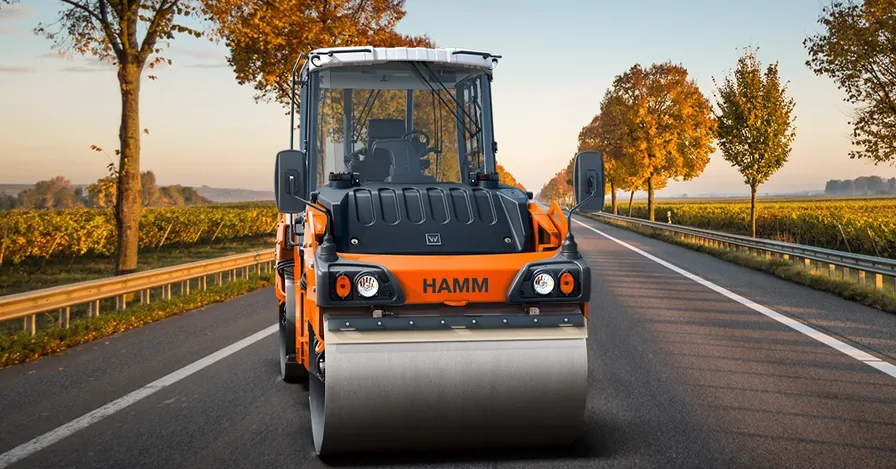
A fleet is only as strong as the supplier standing behind it. Reliable partners provide more than a purchase order — they offer application guidance, site demonstrations, operator training, and consistent access to genuine parts. This matters most when a machine needs support quickly; a supplier with local stock and trained technicians keeps a stalled project moving instead of waiting weeks for a part to clear customs. For road-focused projects, the same principle applies to pavers, rollers, and milling equipment, where compaction quality directly determines pavement lifespan.
Frequently Asked Questions
How can I tell if my project delays are caused by equipment issues?
Look for a pattern: repeated downtime on the same machine category, tasks stalling behind a single piece of equipment, or crews waiting on machinery that hasn't arrived or hasn't been serviced. If delays consistently trace back to the same equipment type, the root cause is usually planning, not labour.
What's the difference between a compact wheel loader and a mini articulated loader?
A compact wheel loader suits open yard handling and aggregate loading with familiar controls, while a mini articulated loader is built for tight turning radii and confined-access sites, supporting a much wider range of quick-attach implements.
How often should construction equipment be serviced to avoid delays?
Service intervals vary by machine and manufacturer, but most heavy equipment needs inspection at fixed operating-hour milestones rather than calendar dates. Following the manufacturer's schedule, rather than waiting for a visible fault, is the single biggest factor in avoiding unplanned downtime.
Conclusion
Construction delays are rarely a single bad day — they're the accumulated cost of small planning gaps: the wrong machine for the job, a skipped service interval, a supplier who can't move fast enough when something breaks. None of this requires a bigger budget to fix, just a more deliberate equipment strategy built around application fit, preventive care, and dependable partners. Contractors who treat equipment planning as part of project design, rather than a purchasing task, consistently see fewer surprises and steadier timelines. If you're planning a project and want guidance on matching the right machines to your site conditions, Genavco's equipment specialists can walk through your requirements and recommend a fleet built for your specific application.