A forklift bought on capacity alone often turns out wrong within the first year - not because the number was wrong, but because capacity was the only question asked. Where it operates, how many shifts it runs, and what it costs to run per hour matter just as much as how much it lifts.
Electric, diesel, LPG and heavy-duty forklifts each answer a different combination of those questions, and none of them is a universal choice. Picking the wrong type means either restricted indoor use, higher running costs than necessary, or a machine that can't handle the load.
This guide covers how to choose between electric, diesel and LPG forklifts, when heavy-duty and articulated/VNA types apply, and the Crown forklift range GENAVCO supplies across the UAE.
The Fuel-Type Decision
- Electric forklifts: zero exhaust emissions, quiet operation, and lower running cost per hour than diesel or LPG — the standard for enclosed UAE warehouses running multiple shifts.
- Diesel forklifts: highest torque and lifting power, built for outdoor yards and heavy, continuous-duty operation where exhaust isn't a constraint.
- LPG forklifts: a middle ground — cleaner combustion than diesel with quick refuelling, suited to mixed indoor/outdoor use.
The environment decides this before capacity does. An indoor warehouse with multi-shift operation should default to electric; an outdoor yard running heavy, continuous loads is where diesel earns its running cost.
Electric vs Diesel vs LPG: Key Differences
| Factor | Electric | Diesel | LPG |
| Best for | Indoor, multi-shift warehouses | Outdoor yards, heavy continuous loads | Mixed indoor/outdoor use |
| Running cost | Lowest — electricity + low maintenance | Highest fuel cost, more service parts | Mid-range |
| Emissions | Zero exhaust emissions | Highest — outdoor use only | Lower than diesel |
| Typical capacity | 1.5 – 5.0 tonnes | 2.5 – 10+ tonnes | 1.5 – 5.0 tonnes |
| Refuelling | Battery charge or swap | Fuel tank, fast refill | Cylinder swap, fast refill |
Heavy-Duty and Articulated (VNA) Forklifts
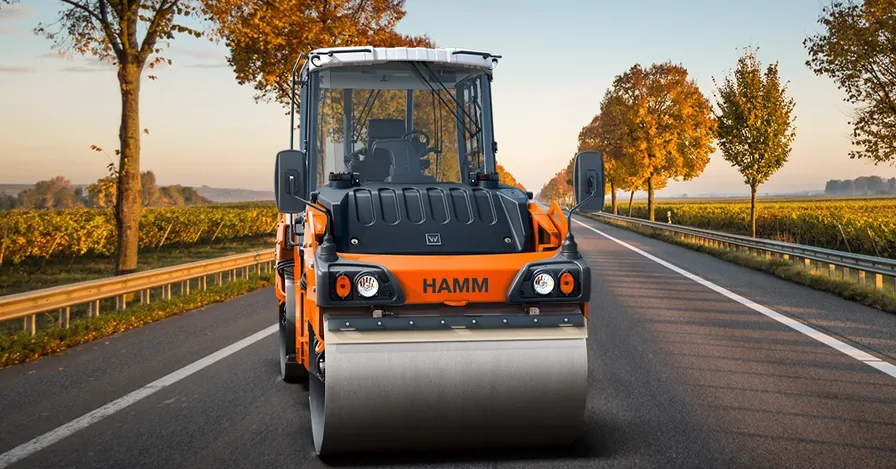
Heavy-duty forklifts serve ports, steel and precast yards, and industrial sites handling loads beyond standard warehouse capacities — where the deciding factor is raw lifting capacity rather than fuel type.
Articulated (VNA) forklifts solve a different problem: aisle width. An articulating chassis lets a single truck travel down narrow aisles and turn to place a pallet, combining the role of a reach truck and a counterbalance forklift without needing a dedicated VNA-only layout.
Genavco's Electric Forklift Range — Crown
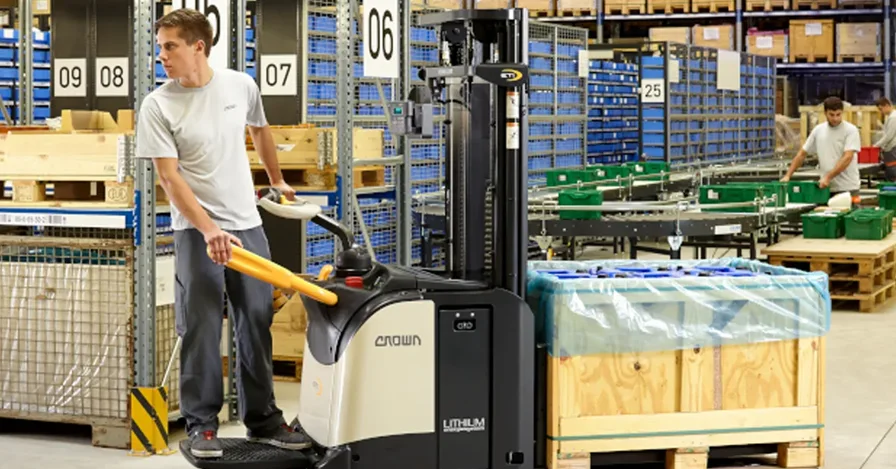
GENAVCO is the authorised UAE distributor for Crown Equipment Corporation, one of the world's largest forklift manufacturers. The Crown electric forklift range covers capacities from 1.5 to 5.0 tonnes.
- AC motor technology: delivers regenerative braking that extends battery life across multi-shift operation.
- InfoLink fleet management: real-time monitoring of operator performance, forklift utilisation, and impact detection.
- Fast-charge and opportunity-charge battery systems: eliminate the need for dedicated battery swap rooms on multi-shift sites.
The Crown Forklift Range Available in the UAE
| Product | Type | Suited to |
| Crown FC Series | Electric counterbalance forklift | General pallet handling, 2.0–3.0 tonne capacity |
| Crown RC 5700 Series | Electric counterbalance forklift | Dock work, transport, aisle retrieval |
| Crown SCT6200 / SCF6200 Series | Electric sit-down forklift | 3-wheel/4-wheel, cab-forward design, front-wheel drive |
| Crown ESR Series | Reach truck | High-level pallet storage and retrieval in narrow aisles |
| Flexi Articulated Forklift | Articulated / VNA forklift | Very narrow aisle warehouses, full electric drive |
1. Crown Counterbalanced Trucks
- Load Capacity: Up to 3,000 kg
- Lift Height: Up to 7,925 mm
- Drive System: Front-Wheel Drive
- Power System: 48-Volt
- Truck Type: Three-Wheel / Four-Wheel
- Design: Sit-Down, Cab-Forward Design
- Series: Crown SCT6200 / SCF6200 / FC5700
- Key Features: Superior Control, Visibility & Maneuverability
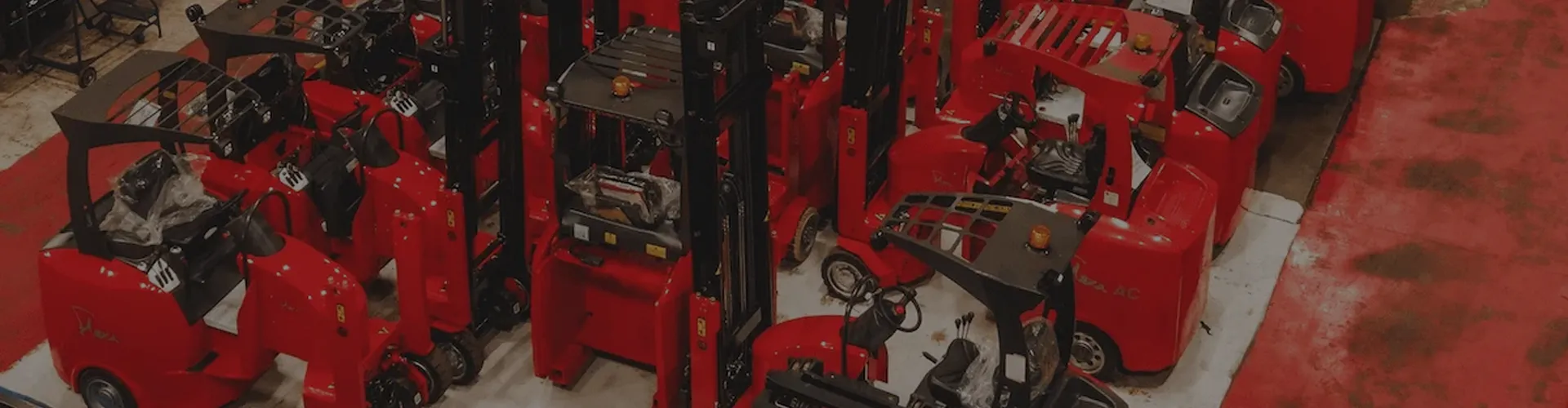
2. Flexi Articulated Forklift
- Designed for: very narrow aisle (VNA) warehouses, combining reach-truck and counterbalance roles in one machine.
- Drive type: full electric drive, suited to indoor air-quality compliance.
- Layout benefit: removes the need for a dedicated VNA-only aisle layout, unlike fixed turret trucks.
Attachments and Configuration
A forklift's base specification is only half the decision — the attachment fitted to it determines what it can actually handle beyond a standard pallet.
- Fork positioners: adjust fork spacing from the seat, useful where pallet widths vary across a mixed SKU range.
- Side-shifters: let the operator align forks with a pallet without repositioning the whole truck, reducing cycle time on tight docks.
- Load clamps and rotators: handle non-palletised loads such as drums, bales or cartons, common in manufacturing and distribution settings.
- Extended tines: support double-pallet handling or oversized loads, at the cost of some manoeuvrability in tight aisles.
Attachment choice affects the base truck specification, not just an accessory added afterward — heavier attachments reduce usable lifting capacity and should be accounted for at the sizing stage.
Sector-Specific Forklift Applications
- Warehousing and distribution: electric counterbalance and reach trucks dominate, sized to aisle width and racking height rather than raw capacity.
- Manufacturing and production: forklifts often run continuously across shifts, making duty cycle and charging strategy as important as capacity.
- Ports, yards and heavy industry: diesel and heavy-duty forklifts handle larger, irregular loads in outdoor, unsealed-floor conditions.
- Retail and cold storage: electric equipment with cold-rated batteries and sealed components suits chilled and frozen environments.
Operator Safety and Compliance
A correctly specified forklift still depends on how it's operated day to day. Safety systems and operator discipline together determine incident rates more than any single equipment feature.
- Operator certification: UAE sites increasingly require documented forklift operator training before a driver is authorised on a given class of truck.
- Impact and utilisation monitoring: systems such as Crown's InfoLink flag hard impacts and unauthorised use, turning a paper policy into a monitored one.
- Pedestrian separation: warehouse layout and traffic routing reduce forklift-pedestrian incidents more reliably than equipment features alone.
- Pre-shift inspection discipline: a short daily check catches developing faults — brakes, forks, hydraulic leaks — before they become breakdowns or incidents.
Cost of Ownership: Electric vs Diesel Over Time
The purchase price gap between electric and diesel forklifts narrows or reverses once running costs are counted over a typical multi-year ownership period.
- Electricity vs diesel cost per hour: electric running cost per hour is consistently lower where grid electricity is available, though the gap depends on local tariffs and duty cycle.
- Maintenance parts count: electric drivetrains have fewer wearing parts than a diesel engine and transmission, typically reducing scheduled maintenance cost.
- Battery replacement cycle: batteries are a scheduled replacement cost across a forklift's life and should be budgeted as part of total ownership cost, not treated as a surprise.
- Resale and duty cycle match: a forklift matched correctly to its duty cycle from day one holds its condition - and resale value - better than one mismatched to the job.
Not sure which fuel type or capacity your operation needs?
Send us your typical load weight, shift pattern and whether operation is indoor, outdoor or mixed — our team will recommend the right forklift type and specification.
REQUEST A FORKLIFT FLEET REVIEW — genavco.com/contact/#enquire-section
Advantages of Getting the Forklift Type Right
- Lower running cost over the fleet's life: matching fuel type to the environment avoids paying for capability the operation never uses.
- Fewer restricted-use situations: electric equipment specified for indoor work avoids the ventilation and emissions issues that come with running diesel indoors.
- Better uptime: a forklift matched to its duty cycle experiences less accelerated wear than one consistently pushed outside its intended use case.
- Simpler compliance: correctly specified equipment is easier to align with UAE workplace safety and emissions expectations than a mismatched fleet.
How to Specify a Forklift
Step 1 - Confirm the environment. Indoor, outdoor, or mixed use determines the fuel-type shortlist before capacity is even discussed.
Step 2 - Set capacity from typical load, not maximum load. Running at or near rated capacity accelerates wear and increases tipping risk.
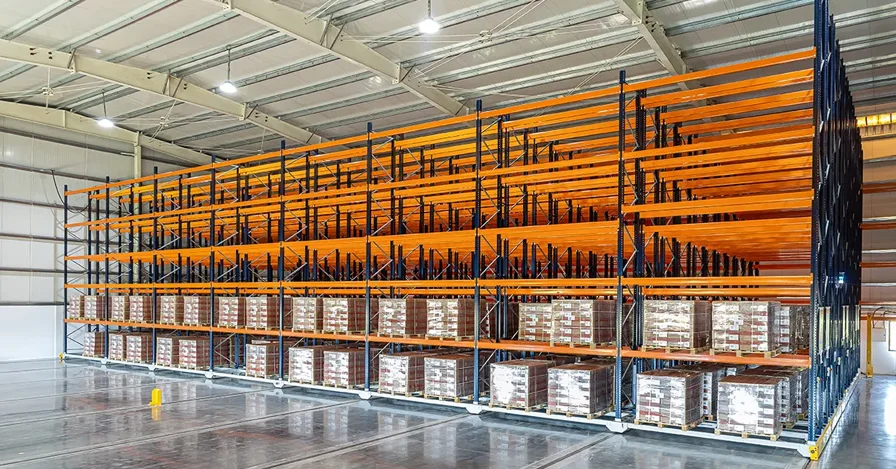
Step 3 - Check aisle width against the racking. Counterbalance forklifts need wide aisles; reach trucks and VNA equipment need far less.
Step 4 - Plan the charging or refuelling strategy for multi-shift operation before the fleet arrives, not after.
Step 5 - Confirm attachment requirements. Clamps, rotators and side-shifters affect the base specification, not just an add-on.
Forklifts in UAE Operations
- Multi-shift operation is common: fast-charge electric fleets suit UAE warehouses better than single-shift markets where battery swap rooms were once standard.
- Outdoor heat affects diesel duty cycles: continuous high-temperature operation makes cooling system specification as important as engine output.
- Port and yard work favours heavy-duty capacity: the UAE's logistics and re-export role means larger, continuous-duty loads are common outside the warehouse.
- Dust and sand affect filtration needs: outdoor diesel and LPG forklifts need sealed air filtration specified for the environment, not the standard configuration.
Why Choose GENAVCO for Forklifts in the UAE
- Part of Juma Al Majid Holding Group: decades of established presence in the UAE market and the financial stability of a major regional group.
- Authorised Crown representation: genuine equipment with factory-backed specification and full warranty integrity.
- Fleet specification support: we work from your load, shift pattern and environment rather than quoting a single model off a price list.
- In-country spare parts inventory: our genuine spare parts operation holds stock locally so servicing isn't delayed waiting on shipment.
- Certified service and maintenance: scheduled servicing and breakdown response through our repairs and maintenance division across the UAE.
- Operator training: our training centre supports safe, productive operation from the first shift.
Battery and Charging Infrastructure Planning
Electric fleets are only as productive as the charging infrastructure behind them. This is a facility planning decision, not an afterthought once the forklifts arrive.
- Charger count vs fleet size: under-provisioning chargers creates a queue at shift change that erodes the productivity gains electric equipment is meant to deliver.
- Opportunity charging during breaks: fast-charge systems let batteries top up during scheduled breaks rather than requiring a dedicated swap, reducing the electrical infrastructure needed.
- Charging bay location: positioning charging points close to where shifts start and end reduces unproductive travel time at changeover.
- Electrical capacity: a facility's power supply needs to be checked against total simultaneous charging load before a fleet expansion, not after.
Common Forklift Specification Mistakes
- Choosing capacity before confirming the environment: an indoor-suited electric forklift specified for outdoor yard work underperforms regardless of capacity.
- Sizing to the heaviest load rather than the typical load: running near rated capacity for routine work accelerates wear across the fleet's life.
- Specifying the forklift before the aisle width: buying a counterbalance truck before checking racking aisle width locks in a mismatch.
- Ignoring the charging strategy: a multi-shift electric fleet without a fast-charge plan loses productive hours to battery swaps.
Fleet Sizing and Right-Sizing an Existing Fleet
Fleet size is as much a specification decision as the individual truck's capacity, and it's one that changes as an operation grows or seasonal demand shifts.
- Peak vs average demand: sizing a fleet to average daily volume and supplementing with short-term rental at peak often costs less than owning for peak year-round.
- Utilisation data before expansion: fleet management systems like InfoLink show actual utilisation per truck, which frequently reveals spare capacity before a purchase decision is made.
- Mixed fleet age: staggering replacement across a fleet avoids a single large capital outlay and keeps a consistent mix of warranty-covered units.
Frequently Asked Questions
Which forklift is best for a UAE warehouse?
For enclosed indoor warehouses, electric forklifts are the standard choice — zero exhaust emissions, quiet operation, and lower running costs than diesel or LPG across multiple shifts.
What is the difference between a diesel and an LPG forklift?
Diesel forklifts deliver higher torque for heavy, continuous outdoor use. LPG forklifts offer cleaner combustion and quicker refuelling than diesel, suiting mixed indoor/outdoor environments.
What forklift capacity do I need?
Capacity should be set from your typical load weight, not your heaviest single load — running at or near rated capacity accelerates wear and increases tipping risk.
What is an articulated or VNA forklift used for?
Articulated (VNA) forklifts are built for very narrow aisle warehouses, combining the reach of a reach truck with the manoeuvrability of a counterbalance forklift in one machine.
Does GENAVCO supply genuine parts and after-sales support for Crown forklifts?
Yes. As the authorised Crown distributor in the UAE, GENAVCO holds genuine parts in stock and provides certified technical support across our UAE-wide network.
Can attachments reduce a forklift's lifting capacity?
Yes. Attachments such as clamps, rotators and extended tines add weight ahead of the load centre, which reduces the truck's effective capacity compared with its standard-fork rating. This should be accounted for when specifying the base truck, not discovered after purchase.
How long does a forklift battery last per shift?
Runtime depends on battery capacity, duty cycle and attachment load, but Crown's fast-charge and opportunity-charge systems are designed to let a fleet run multiple shifts without a dedicated battery swap room.
Ready to Specify Your Forklift Fleet?
The right forklift depends on the environment, shift pattern and load profile, not capacity alone. GENAVCO supplies the Crown electric range across the UAE, with specification support, installation, training and after-sales service.
Tell us your environment, shift pattern and typical load. We'll recommend the right forklift type and price it properly.
Serving Dubai, Abu Dhabi, Sharjah and the wider UAE.
REQUEST A FORKLIFT FLEET REVIEW — genavco.com/contact/#enquire-section