Working at height comes down to answering three questions correctly: how high, how far over an obstacle, and how much floor space the machine can occupy while it works. Get any one wrong and the job either can't be reached safely or the site grinds to a halt working around equipment that doesn't fit.
Aerial work platform (AWP) is the umbrella term for powered equipment that lifts people to a working height - boom lifts, scissor lifts and vertical mast lifts each answer the reach, obstacle-clearance and footprint questions differently, and no single type is the right answer for every job.
This guide covers how to choose between the main AWP types, when each one applies, and the JLG aerial work platform range GENAVCO supplies across the UAE.
The Main Aerial Work Platform Types
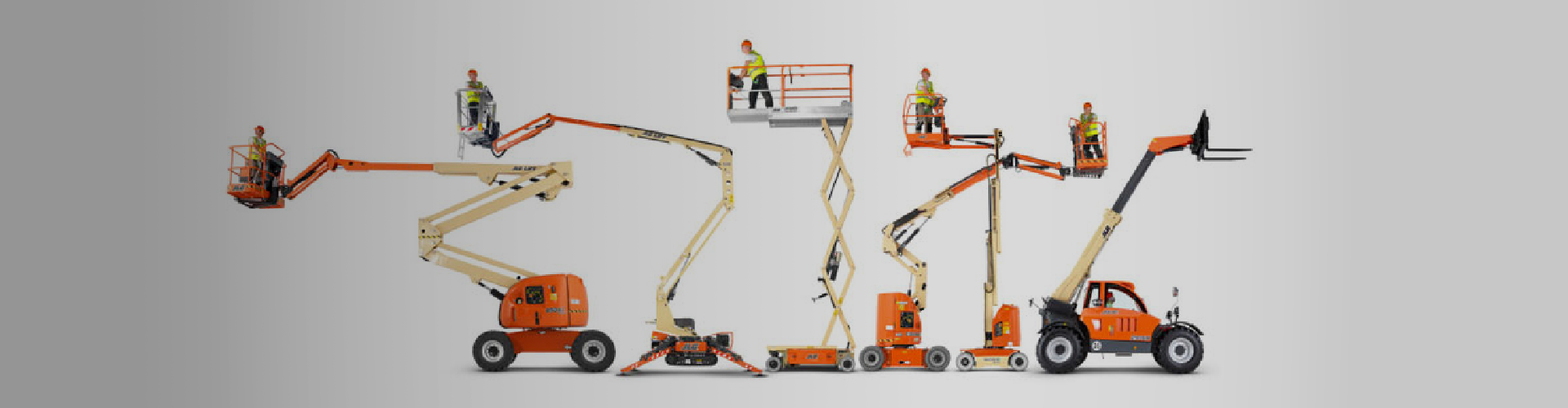
- Boom lifts: reach up and over obstacles using an articulating or telescopic arm, with the platform offset from the base - the choice where you need to get over or around something, not just straight up.
- Scissor lifts: rise straight up on a crossed-brace mechanism, offering more platform space and lifting capacity where reach and offset aren't required.
- Vertical mast lifts: a platform on an extending mast, compact and manoeuvrable, suited to indoor work in tight aisles and low-clearance areas.
- Spider lifts (tracked lifts): a compact, tracked, outrigger-supported platform designed to access uneven or confined ground that wheeled machines can't reach — see our dedicated guide for what this means for a UAE buyer specifically.
"Cherry picker" is a widely used informal term that in most markets refers to a boom lift - see our dedicated guide on that terminology for buyers searching under that name.
Matching AWP Type to the Job
| Job requirement | Best-suited type | Why |
| Reaching over machinery or obstacles | Boom lift (articulating or telescopic) | Offset platform clears obstacles a straight-up lift can't |
| Maximum platform space, straight vertical reach | Scissor lift | Larger platform and higher capacity for material and crew |
| Indoor work, narrow aisles, low clearance | Vertical mast lift | Compact footprint fits tight indoor spaces |
| Uneven ground, confined or sloped access | Spider lift (tracked) | Tracked base and outriggers stabilise on terrain wheeled lifts can't handle |
| Façade, maintenance and general height access | Boom lift (commonly called a cherry picker) | Flexible reach for varied access points around a building |
The JLG Range Available in the UAE
| Product | Type | Suited to |
| Articulating Boom Lift | Boom lift | Reaching up and over machinery, equipment and obstacles |
| Telescopic Boom Lifts | Boom lift | Applications requiring high, straight-line outreach |
| Scissor Lift | Scissor lift | Less reach, more workspace and lifting capacity |
| Vertical Mast Lift | Mast lift | Compact indoor access on an extending aluminium mast |
1. JLG Telescopic Boom Lif
- Built for: applications requiring high, straight-line outreach beyond what an articulating arm covers.
- Best suited to: open sites where a straight-boom reach pattern covers the working area without needing to clear close obstacles.
View JLG telescopic boom lifts
2. JLG Scissor Lift
- Built for: work needing less reach but more workspace and lifting capacity than a boom lift platform offers.
- Best suited to: ceiling work, installation and maintenance tasks where crew need room to move materials on the platform.
Not sure which aerial work platform type suits your site?
Send us your typical working height, reach requirements and ground conditions — our team will recommend the right AWP type and model.
Power Source: Electric vs Diesel/Hybrid Platforms
- Electric platforms: zero exhaust emissions and quieter operation, the standard choice for indoor work and noise-sensitive sites.
- Diesel and hybrid platforms: higher outdoor performance and rough-terrain capability, suited to unfinished sites and larger outdoor infrastructure work.
- Duty cycle matching: multi-shift indoor work favours electric platforms with a charging plan; intermittent outdoor use often favours diesel or hybrid for range and terrain capability.
Platform Capacity and Attachments
- Platform capacity: confirm rated capacity against typical crew size plus tools and materials carried, not just crew headcount alone.
- Materials handling attachments: some boom and scissor lifts accept material trays or winches, useful where the platform needs to carry supplies as well as people.
- Non-marking tyres: specified for indoor work on finished floors to avoid surface damage.
How to Specify an Aerial Work Platform
- Step 1 - Confirm working height and horizontal reach needed - this decides boom vs scissor vs mast before anything else.
- Step 2 - Check ground conditions - uneven, sloped or confined ground points toward tracked (spider) options over standard wheeled platforms.
- Step 3 - Confirm indoor vs outdoor use and floor loading limits, especially for indoor mast and scissor lift work.
- Step 4 - Plan operator certification — most UAE sites require documented AWP operator training before authorised use.
- Step 5 - Decide between rental and purchase based on project duration and expected utilisation across future projects.
Aerial Work Platforms in UAE Conditions
- Heat affects battery and hydraulic performance: electric AWPs specified for UAE outdoor summer use need components rated for sustained high ambient temperature.
- Dust affects sensor and control reliability: sealed electronics reduce false fault readings on sites with heavy dust exposure.
- High-rise and infrastructure projects drive boom lift demand: the UAE's construction scale means outreach capability is often the deciding factor over platform space.
- Confined urban sites favour compact types: vertical mast and smaller footprint machines suit dense urban worksites where a large boom lift can't manoeuvre.
Rental vs Purchase for Aerial Work Platforms
- Short-term or one-off projects: rental avoids capital outlay for equipment needed for a defined, limited period.
- Ongoing, frequent utilisation: purchase is typically more cost-effective once a project pipeline justifies year-round use across multiple sites.
- Fleet mix flexibility: many UAE contractors own a core fleet for standard jobs and rent specialised types (such as tracked platforms) only when a specific project needs them.
Why Choose GENAVCO for Aerial Work Platforms in the UAE
- Part of Juma Al Majid Holding Group: decades of established presence in the UAE market and the financial stability of a major regional group.
- Authorised JLG representation: genuine equipment with factory-backed specification and full warranty integrity.
- Selection support: GENAVCO helps customers select the right machine for their needs rather than defaulting to a single product line.
- In-country spare parts inventory: our genuine spare parts operation holds stock locally so servicing isn't delayed waiting on shipment.
- Certified service and maintenance: scheduled servicing, troubleshooting and breakdown response through our repairs and maintenance division across the UAE.
- Operator training: our training centre supports safe, certified operation from the first shift.
Common Aerial Work Platform Mistakes
- Choosing by height alone, ignoring reach: a scissor lift matched on working height may not clear the obstacle a boom lift's offset reach handles easily.
- Overlooking ground conditions: a standard wheeled platform specified for uneven or sloped ground can be unsafe or simply unusable where a tracked option was needed.
- Underestimating indoor floor loading limits: heavier platforms on upper floors need floor load capacity checked before specification, not after delivery.
- Skipping operator certification planning: equipment sitting idle because no certified operator is available costs more than the training would have.
Frequently Asked Questions
What is an aerial work platform?
An aerial work platform (AWP) is powered equipment that lifts people to a working height, covering boom lifts, scissor lifts, vertical mast lifts and tracked (spider) lifts as the main types.
What is the difference between a boom lift and a scissor lift?
A boom lift uses an articulating or telescopic arm to reach up and over obstacles with an offset platform. A scissor lift rises straight up, offering more platform space and lifting capacity but no horizontal offset reach.
What does GENAVCO supply in the JLG aerial work platform range?
GENAVCO supplies JLG articulating and telescopic boom lifts, scissor lifts, and vertical mast lifts, with genuine parts and UAE-wide after-sales support.
Does GENAVCO provide operator training for aerial work platforms?
Yes. GENAVCO's training centre supports operator training alongside equipment supply, helping ensure certified, confident operation from the first shift.
How do I decide between renting and buying an aerial work platform?
Rental typically suits short-term or one-off project needs, while purchase suits ongoing, frequent utilisation across multiple projects. GENAVCO's team can help assess which makes sense for your project pipeline.
What certification does an aerial work platform operator need in the UAE?
Most UAE sites require documented operator training and certification specific to the platform category (boom, scissor, mast or tracked) before authorised use, and GENAVCO's training centre supports this alongside equipment supply.
Can one machine cover both indoor and outdoor work?
Some platforms are rated for both, but indoor floor loading and non-marking tyre requirements often differ from outdoor rough-terrain specifications, so it's worth confirming both use cases at specification stage rather than assuming one machine covers everything.
Ready to Specify Your Aerial Work Platform?
The right aerial work platform depends on working height, reach and ground conditions together, not any single factor alone. GENAVCO supplies the JLG range across the UAE, with selection support, training and after-sales service.
Tell us your working height, reach and ground conditions. We'll recommend the right AWP type and price it properly.
Serving Dubai, Abu Dhabi, Sharjah and the wider UAE.