Warehouse operations continue to evolve as businesses manage larger inventories within limited floor space. Expanding a facility is not always the most practical solution, making efficient storage and material movement increasingly important. A narrow aisle forklift enables warehouses to maximize storage density without compromising accessibility. Combined with an articulated forklift, optimized warehouse storage, and modern material handling equipment, businesses can improve inventory flow while making better use of every square metre.
What Makes Narrow Aisle Forklifts Different?
Understanding Articulated Steering
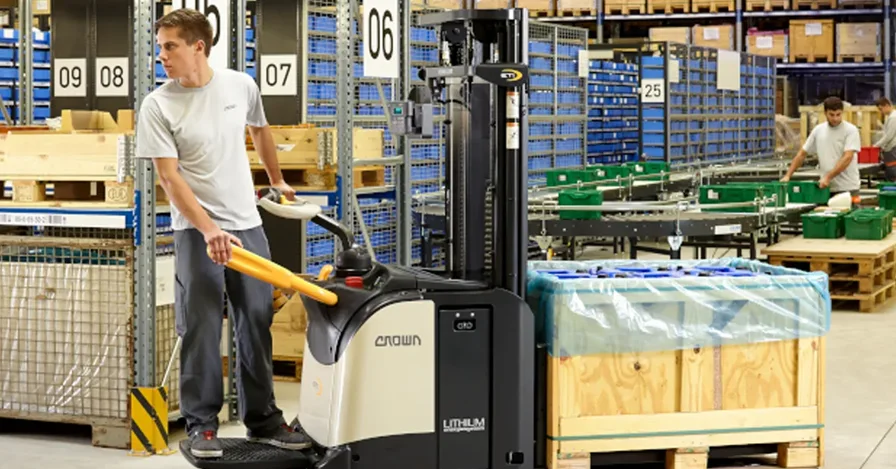
Unlike conventional forklifts, an articulated forklift features a pivoting mast that allows the machine to turn independently of the chassis. This design enables operators to retrieve and place pallets while working in significantly narrower aisles.
The ability to operate in confined spaces reduces the aisle width required between storage racks, allowing warehouses to increase storage capacity without changing the building footprint. Businesses with high inventory volumes often adopt articulated forklifts to improve operational flexibility while maintaining safe handling practices.
Space-Saving Warehouse Operations
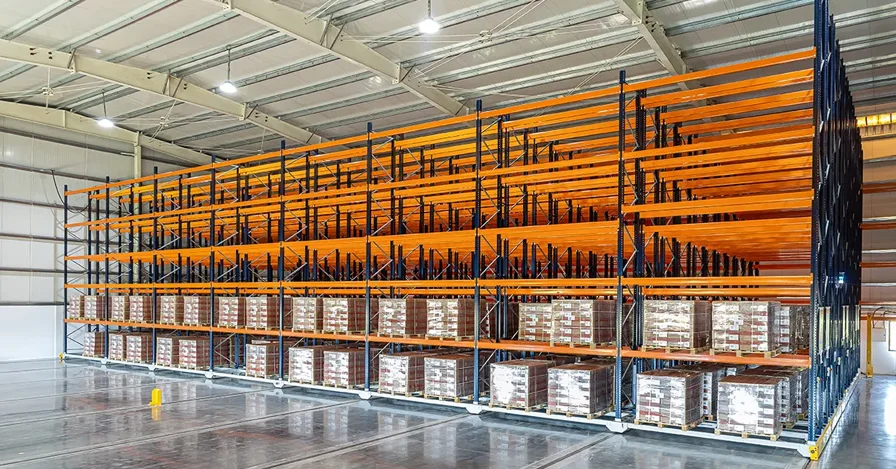
Warehouse space is one of the most valuable operational assets. A narrow aisle forklift allows businesses to install additional racking by reducing the space normally required for vehicle movement.
This approach delivers several operational benefits:
- Increased pallet positions within the same warehouse
- Improved inventory accessibility
- Shorter travel distances
- Better warehouse organization
When combined with efficient warehouse layouts, narrow aisle operations contribute to higher storage density and smoother material movement.
Benefits of Articulated Forklifts in Warehouse Operations
Faster Picking and Storage
Efficient storage and retrieval directly influence warehouse productivity. An articulated forklift enables operators to move through narrow aisles quickly while maintaining precise load positioning at different lift heights.
Reduced travel distances and improved maneuverability help accelerate picking cycles, particularly in warehouses handling high stock turnover. This contributes to shorter order processing times and improved inventory management.
Increased Rack Accessibility
Modern storage facilities often utilize taller racking systems to maximize vertical capacity. A narrow aisle forklift provides reliable access to these storage locations while maintaining stability and operator visibility.
Improved accessibility enables businesses to:
- Utilize vertical warehouse space effectively
- Improve stock rotation
- Reduce product handling delays
- Maintain organized storage locations
As inventory volumes grow, efficient rack access becomes essential for maintaining operational performance.
How to Improve Warehouse Productivity
Warehouse Layout Planning
Warehouse productivity begins with thoughtful layout planning. Storage racks, receiving areas, dispatch zones, and traffic routes should work together to support continuous material flow.
Businesses planning warehouse improvements should evaluate:
- Aisle width requirements
- Rack configuration
- Product movement frequency
- Storage height
- Equipment turning radius
An optimized layout reduces unnecessary travel while improving the efficiency of both operators and equipment.
Choosing the Right Material Handling Equipment
Selecting the appropriate material handling equipment depends on warehouse design, inventory characteristics, and operational goals.
An articulated forklift is well suited to warehouses seeking maximum storage density, while a reach truck may be preferable for facilities with high-level pallet storage and dedicated aisle configurations.
Matching equipment with warehouse requirements improves workflow, increases storage efficiency, and supports long-term operational growth.
Why Businesses Are Investing in Narrow Aisle Warehouse Solutions
Warehouses today must balance storage capacity, operational speed, and inventory accuracy. Investing in a narrow aisle forklift allows businesses to maximize available space while improving material movement and reducing handling time.
Solutions from Flexi, Crown, and Godrej Storage Solutions support warehouses seeking higher storage density through intelligent equipment and optimized storage systems. Combining specialized forklifts with efficient warehouse layouts enables businesses to improve productivity while adapting to changing supply chain demands.
FAQs
What is a narrow aisle forklift?
A narrow aisle forklift is designed to operate within reduced aisle widths, allowing warehouses to increase storage capacity while maintaining safe and efficient pallet handling.
What is the advantage of an articulated forklift?
An articulated forklift uses a pivoting mast that improves maneuverability, enabling operators to work efficiently in narrow aisles without sacrificing load stability.
How do narrow aisle forklifts improve warehouse productivity?
By reducing aisle width, improving rack accessibility, and supporting faster inventory movement, narrow aisle forklifts help businesses maximize warehouse space and improve operational efficiency.
Conclusion
A narrow aisle forklift offers an effective solution for warehouses looking to increase storage capacity without expanding their facilities. Combined with an articulated forklift, efficient warehouse storage, and suitable material handling equipment, these machines help businesses improve inventory accessibility, optimize warehouse layouts, and streamline daily operations. Investing in the right warehouse equipment supports long-term productivity while preparing facilities for future growth.