Ask a struggling warehouse manager why throughput is slipping, and the first answer is often "we need more forklifts." In reality, fleet size is rarely the real constraint. The warehouses that consistently hit their numbers track a very different metric: how much of each shift their forklifts actually spend doing productive work, rather than how many machines sit on the floor. This measure, forklift utilisation, is one of the clearest indicators of true warehouse efficiency available to operations teams.
Understanding how to calculate utilisation, why bigger fleets don't automatically fix performance problems, and what practical steps improve utilisation, gives warehouse management teams a far more reliable lever for improving warehouse productivity than simply adding more equipment to the floor.
What Is Forklift Utilisation and Why Does It Matter?
Forklift utilisation measures the proportion of available operating time a machine spends performing productive work, as opposed to sitting idle, waiting for tasks, or travelling empty. It is one of the few metrics that connects fleet size, labour planning, and throughput into a single, comparable number.
How to Calculate Forklift Utilisation Rate
Utilisation rate is typically calculated by dividing productive operating hours by total available hours in a shift, then expressing the result as a percentage. Telematics systems fitted to modern forklifts can capture this automatically, tracking lift cycles, travel time, and idle periods without relying on manual logs or operator estimates, which are prone to both error and bias.
What Is a Good Forklift Utilisation Rate for Warehouses?
Most well-run warehouses target utilisation rates between 65 and 85 percent, depending on the nature of the operation. Rates significantly below this range usually point to fleet oversizing or workflow inefficiencies, while rates pushing close to 100 percent can indicate a fleet that is stretched too thin, with little buffer capacity to absorb demand spikes without delays.
Why Bigger Fleets Don't Always Mean Better Performance
It's a natural instinct to add equipment when a warehouse feels stretched, but extra forklifts without addressing underlying workflow issues often make performance worse rather than better.
When Adding More Forklifts Creates Warehouse Bottlenecks
More forklifts operating in the same aisles and dock areas increases the chance of congestion, waiting, and near-miss incidents, particularly during peak periods. Beyond a certain density, additional machines compete for the same limited space and racking access, slowing everyone down rather than increasing total throughput.
Signs Your Warehouse Has More Forklifts Than It Needs
Persistently low utilisation rates, forklifts frequently parked idle between tasks, and operators regularly waiting for work are all signs of an oversized fleet. Reviewing warehouse operations data over several weeks, rather than reacting to a single busy day, gives a far more accurate picture of whether the fleet is genuinely undersized or simply poorly deployed.
How to Improve Forklift Utilisation
Improving utilisation is usually a matter of better organisation rather than better equipment. Our guide to how to choose the right forklift for warehouse operations is a useful starting point for matching machine type to actual task demand before addressing utilisation directly.
How Warehouse Slotting Improves Forklift Productivity
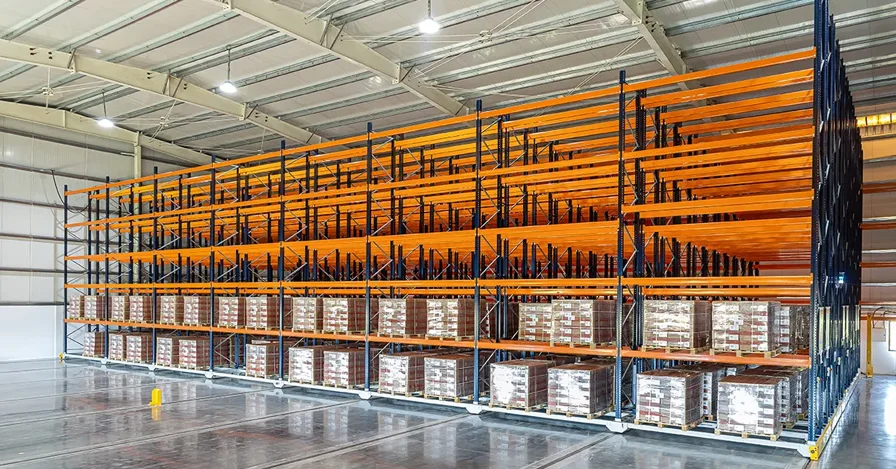
Slotting, placing high-turnover inventory closer to primary aisles and dispatch points, reduces the distance forklifts travel per task, directly improving how much of each shift is spent on productive work rather than transit. Storage layout has a compounding effect here; our comparison of material handling equipment and racking approaches in why pallet racking systems are essential for modern warehouses explains how storage design supports this kind of improvement.
Using Fleet Data to Reduce Empty Travel
A significant share of unproductive forklift time comes from empty travel, moving without a load between tasks. Fleet data can reveal recurring empty-travel patterns, such as forklifts consistently returning from one zone without picking up a return load, allowing dispatch and task sequencing to be adjusted to close these gaps and lift overall utilisation without adding a single machine.
FAQs
What is a healthy forklift utilisation rate?
Most efficient warehouses operate between 65 and 85 percent utilisation. Rates well below this suggest an oversized fleet or workflow issues, while rates near 100 percent often mean there is little spare capacity to absorb sudden demand increases.
How do I measure forklift utilisation without expensive telematics?
Manual time studies over a representative sample of shifts can approximate utilisation, though they are more labour-intensive and less accurate than automated tracking. Many modern forklifts now include built-in usage tracking as a standard feature, making telematics far more accessible than it once was.
Should I add more forklifts if utilisation is high?
Not necessarily. High utilisation combined with delays or missed targets can indicate a genuine capacity shortfall, but it's worth first reviewing whether better slotting, scheduling, or task sequencing could close the gap before committing to additional equipment.
Conclusion
Fleet size is an easy number to point to, but it rarely tells the full story of why a warehouse is or isn't performing. High-performing operations look past headcount and measure how effectively their warehouse forklift fleet is actually being used, then address slotting, scheduling, and travel patterns before considering new equipment. Businesses that adopt this data-driven approach to warehouse management consistently get more throughput from the fleet they already have, improving warehouse productivity without the added cost of expanding it.