Many warehouse managers assume that a faster forklift automatically means a more productive operation. In reality, speed is only one small piece of the productivity equation. A forklift that moves quickly but travels inefficient routes, waits idle between tasks, or handles loads incorrectly can still leave a warehouse underperforming. True warehouse productivity is measured by how efficiently a forklift completes full work cycles, not by how fast it can drive from point A to point B.
This distinction matters because businesses that chase speed alone often overlook the real drivers of efficiency: cycle time, travel patterns, layout design, and operator behaviour. Understanding these factors helps warehouses select the right material handling equipment and build operations that are genuinely productive, not just fast on paper.
Measuring Forklift Productivity Beyond Speed
Forklift productivity is best measured by output per hour, not top speed. A machine that completes more full, accurate cycles in a shift is more valuable than one that simply moves quickly between stops.
Understanding Load Cycle Time
Load cycle time refers to the total time a forklift takes to pick up a load, transport it, place it, and return for the next task. This includes acceleration, lifting, travel, lowering, and repositioning. A forklift with a high top speed but long pauses for lifting or awkward positioning will still post a slow cycle time overall.
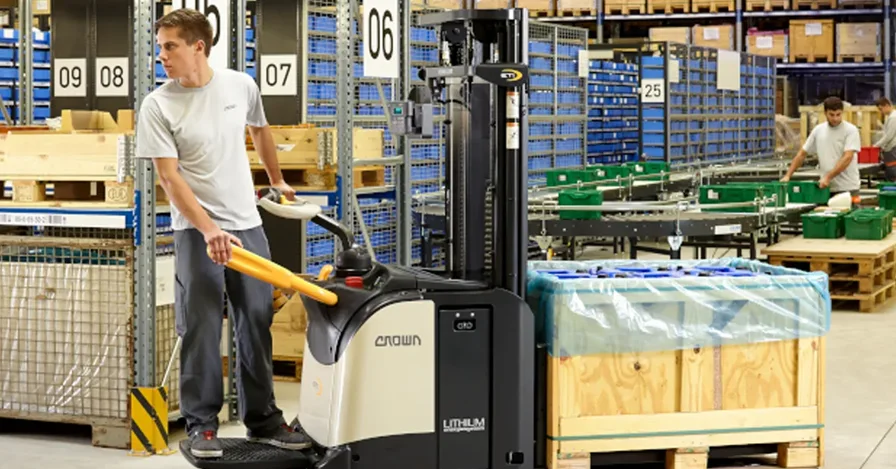
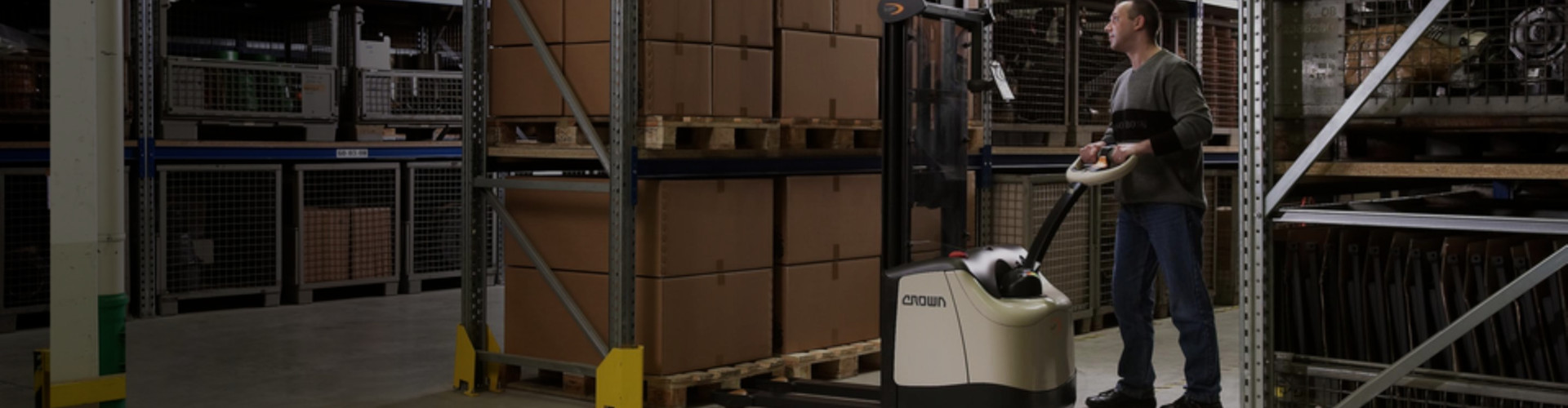
Reducing cycle time depends on matching lift height, mast type, and load capacity to the actual warehouse operations being performed. An electric forklift with responsive lift controls and precise positioning often completes cycles faster than a larger, more powerful machine that isn't suited to the task.
Travel Distance vs Productive Movement
Not all forklift movement adds value. Productive movement means the forklift is carrying a load toward a purposeful destination. Unproductive movement includes unnecessary repositioning, searching for storage locations, or navigating around obstacles.
Warehouses that map travel distance against actual output often discover that a large share of forklift hours goes toward non-productive travel. Shortening travel distance through better racking placement and clearer aisle paths directly improves the return on every hour a forklift is in operation.
Factors That Reduce Forklift Efficiency
Even well-maintained equipment underperforms when the surrounding operation isn't optimised. Several recurring issues quietly erode efficiency across warehouses of every size.
Poor Warehouse Layout
Layout is one of the biggest hidden costs in material handling. Narrow, poorly planned aisles force forklifts to slow down, reverse, or take longer routes. Storage zones placed far from receiving or dispatch areas add unnecessary travel to nearly every cycle.
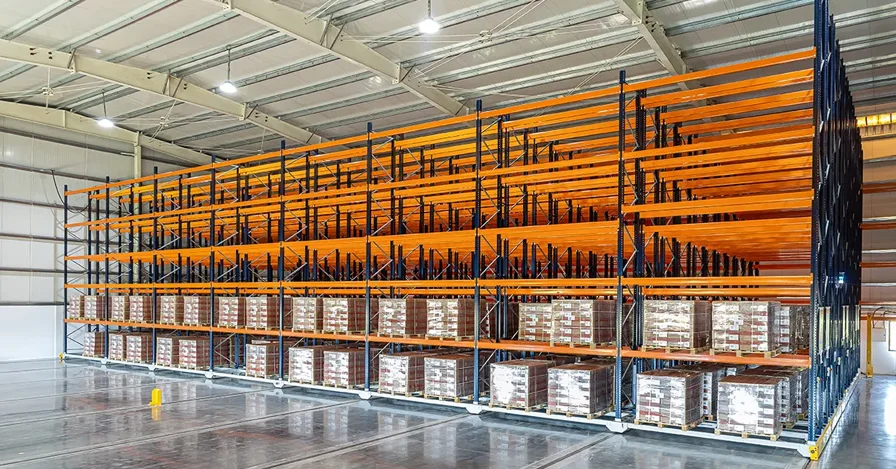
A well-designed layout groups high-turnover inventory closer to primary aisles and dispatch points, reducing travel distance and improving throughput without any change to the equipment itself. Pairing the right storage configuration with the right forklift, such as a warehouse racking system suited to your racking height and aisle width, has a direct impact on daily output.
Operator Behaviour
Even the best-equipped warehouse loses efficiency if operating habits are inconsistent. Unnecessary idling, inefficient routing choices, and inconsistent load handling all extend cycle times. Operator training that focuses on smooth acceleration, efficient turning, and consistent load placement can improve productivity as much as, or more than, equipment upgrades alone.
Strategies to Increase Forklift Performance
Once the root causes of inefficiency are identified, warehouses can apply targeted strategies to lift overall performance without necessarily investing in new equipment.
Fleet Optimisation
Fleet optimisation means matching the right number and type of forklifts to actual workload rather than defaulting to a one-size-fits-all fleet. Businesses handling high-density storage may benefit from rich trucks or articulated models, while general pallet movement may be better served by standard electric forklifts. Right-sizing the fleet reduces idle equipment, lowers operating costs, and ensures each machine is used where it performs best.
For guidance on selecting equipment that matches specific warehouse needs, see our detailed guide on how to choose the right forklift for warehouse operations.
Smart Routing
Smart routing involves planning forklift paths to minimise backtracking and unnecessary travel. This can be achieved through clearer aisle signage, zone-based picking strategies, and layout adjustments that shorten the distance between frequently accessed storage locations. Combined with the right pallet racking configuration, smart routing significantly reduces non-productive travel time.
Our article on why pallet racking systems are essential for modern warehouses explains how storage design supports faster, more efficient forklift movement.
FAQs
Does a faster forklift always mean better productivity?
No. Productivity depends on complete cycle time, travel efficiency, and consistent operator handling, not just top speed. A slower forklift operating in an optimised layout can outperform a faster one in a poorly planned warehouse.
What is the biggest factor affecting forklift efficiency?
Warehouse layout and travel distance typically have the greatest impact, since unnecessary travel adds directly to cycle time regardless of how fast the forklift can move.
How can businesses improve forklift productivity without buying new equipment?
Optimising warehouse layout, improving operator training, and refining travel routes are effective ways to increase output using existing equipment.
Where can I find a reliable forklift supplier in the UAE?
GENAVCO is a trusted forklift supplier UAE, offering electric forklifts, reach trucks, and warehouse forklifts from globally recognised brands such as Crown, Flexi, and Godrej storage solutions.
Conclusion
Forklift speed is easy to notice but rarely tells the full story. Genuine warehouse productivity comes from shorter load cycle times, efficient travel patterns, well-planned layouts, and consistent operator practices. Businesses that focus on these fundamentals get more value from their fleet than those chasing speed alone. GENAVCO supports UAE warehouses with dependable material handling equipment, including Crown electric forklifts, Flexi articulated forklifts, and Godrej storage solutions, helping operations move beyond speed and toward measurable, lasting productivity.