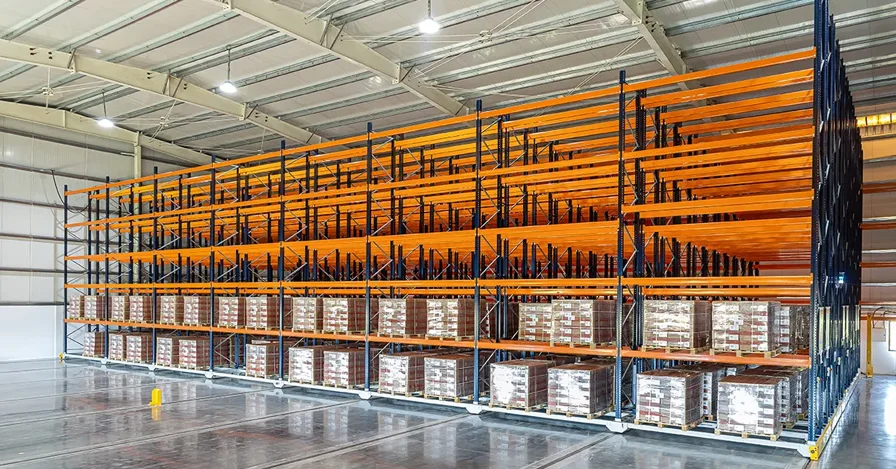
A warehouse racking systems setup that worked well three years ago often struggles to keep pace with a growing business today. Order volumes rise, SKU counts multiply, and inventory turns faster than the original racking layout was ever designed to support. Businesses that keep scaling operations without revisiting their storage strategy typically discover the constraint only once it's already limiting growth, rather than while there's still time to plan around it.
This guide looks at why traditional racking setups fall behind as businesses grow, how industrial warehouse racking needs to scale for high-volume, fast-moving inventory, and how to plan warehouse storage capacity ahead of demand rather than reacting once space has already run out.
Warehouse Racking Systems: Why Traditional Setups Are Falling Behind
Racking installed for a business at one stage of growth rarely accounts for how quickly demands can shift once volume, SKU variety, and order frequency all increase together.
What's Changed in Warehouse Racking System Requirements
Faster order cycles, smaller and more frequent shipments, and a wider product range than most facilities were originally designed around have all shifted what a well-performing racking system actually needs to deliver. A layout optimised for slow-moving bulk pallets performs very differently under today's mixed-SKU, fast-turn demand, even if the racking itself hasn't physically changed.
Pallet Racking System Options for Modern Storage Demands
A pallet racking system chosen today needs to accommodate more frequent restocking and a broader product mix than a comparable system specified even five years ago. Our broader look at why pallet racking systems are essential for modern warehouses covers the range of configurations available to meet these evolving demands.
Industrial Warehouse Racking for High-Volume, Fast-Moving Inventory
As inventory velocity increases, racking needs to support faster replenishment cycles and more frequent handling without the structural fatigue or bottlenecks that come from pushing a system beyond what it was designed for.
Industrial Warehouse Racking: Built for Speed and Density
High-volume operations need industrial warehouse racking engineered for both structural durability under frequent forklift contact and layout density that keeps travel distances short as pick frequency rises. Systems built for occasional access simply aren't rated for the sustained cycle rates that fast-moving inventory demands.
Warehouse Racking Choices That Scale With Inventory Growth
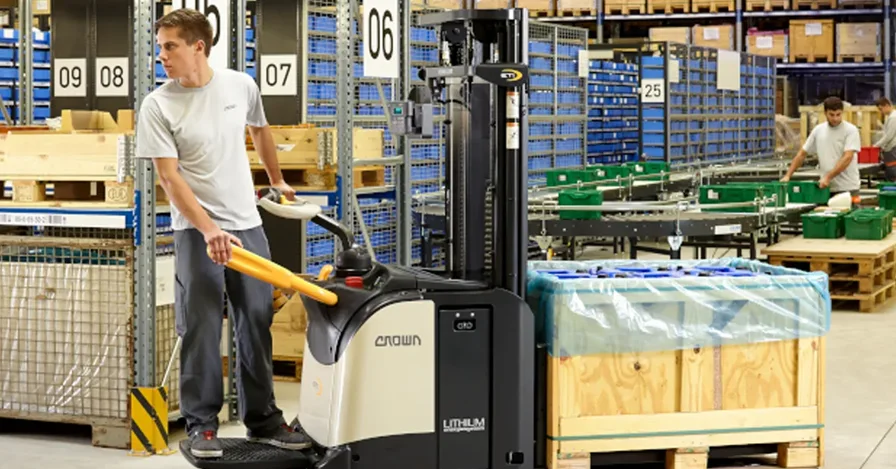
Modular warehouse racking configurations that can be reconfigured or extended without a full teardown give growing businesses room to adjust as inventory profiles shift, rather than locking a facility into a fixed layout from day one. Our guide to how to choose the right forklift for warehouse operations explains how equipment choice needs to stay aligned with racking as both evolve together over time.
Heavy Duty Shelving and Warehouse Storage for the Next Five Years
Planning storage capacity for where a business is headed, rather than only where it is today, is what separates warehouses that scale smoothly from those forced into a disruptive mid-growth overhaul.
When Heavy Duty Shelving Isn't Enough
Heavy duty shelving works well for individually picked items at moderate volume, but growing businesses often reach a point where order frequency and SKU count outpace what shelving alone can efficiently support. Recognising this transition point before it becomes a bottleneck, rather than after fulfilment delays start appearing, gives a business time to plan a proper upgrade path.
Planning Warehouse Storage Capacity Before You Run Out of Space
Reviewing storage capacity against projected growth, not just current inventory, allows businesses to plan a racking upgrade on their own timeline rather than being forced into a rushed decision once space has already run out. Working with experienced racking system suppliers in UAE during this planning stage helps ensure the next racking investment is sized for where the business is heading, not just where it stands today.
FAQs
How do I know if my warehouse racking has fallen behind my business's growth?
Overflow storage in aisles, picking delays during peak periods, and inventory that no longer fits the original layout's turnover assumptions are all signs that racking capacity and configuration have fallen behind actual business growth.
Should racking be planned for current inventory or future growth?
Racking should ideally be planned with a growth buffer in mind, since sizing purely for current inventory often means facing another disruptive upgrade sooner than a business would like once volume increases.
Is modular racking worth the extra cost for a growing business?
For businesses expecting continued growth, modular systems that can be reconfigured or extended without a full teardown often justify their cost by avoiding the disruption and expense of a complete racking replacement later.
Conclusion
Warehouse racking that fit a business perfectly at one stage of growth can become its biggest operational constraint at the next. Reviewing warehouse racking systems against where a business is actually heading, not just where it stands today, and choosing industrial warehouse racking built for speed and density where growth demands it, gives fast-growing UAE businesses the storage foundation to scale without a disruptive mid-growth overhaul.
Industries This Guidance Applies To
The principles in this guide apply across the range of industries GENAVCO supports with warehouse racking and storage systems, including e-commerce and fast-growing retail operations, third-party logistics providers, manufacturing and industrial storage, FMCG distribution, and building materials and bulky goods storage. While growth patterns vary by sector, the underlying approach, planning racking capacity ahead of demand rather than reacting to it, holds across all of these operating environments.
Recommendations are informed by racking systems supplied and supported across these sectors in the UAE, giving practical grounding in how storage decisions perform as businesses scale under real operating conditions rather than only in theory. Any specific racking configuration or capacity plan should still be validated against an individual facility's own growth trajectory and inventory data, since no general guide can substitute for a proper site-specific assessment.