A quarry can run at full tonnage and still lose money on every load if the aggregate coming off the line doesn't meet spec. Rejected batches, reworked concrete mixes, and asphalt that fails a gradation test all trace back to the same root cause: aggregate processing that wasn't set up to produce a consistent, correctly shaped product. This guide looks at why processing quality matters more than raw output, the equipment that gets it right, and the practices that keep a crushing circuit running the way it was designed to.
Why Aggregate Quality Determines Project Success
Aggregate isn't a commodity in the way it's sometimes treated — its particle size, shape, and cleanliness directly determine whether the concrete or asphalt built from it performs to specification. A quarry producing high tonnage but inconsistent product is really producing rework, not revenue.
The Importance of Consistent Material Size
Concrete and asphalt mix designs are engineered around a specific particle size distribution. When crushed material drifts outside that gradation — too much fines, too many oversize particles — the finished mix loses strength, workability, or both. Screening plants exist precisely to catch this drift before it reaches the batching plant, returning undersized and oversized material for reprocessing rather than letting it slip into a load that will later fail a quality test on site.
Impact on Concrete and Asphalt Performance
Particle shape matters as much as size. Flaky or elongated particles from poorly configured crushing create weak points in a concrete matrix and reduce compaction density in asphalt courses, even when the gradation numbers look acceptable on paper. Structural concrete and wearing-course asphalt specifications increasingly call out cubical particle shape explicitly, which means the crushing stage — not just the mix design — has to be engineered to deliver it.
Equipment That Improves Aggregate Processing
Getting from quarried rock to specification-grade aggregate is a sequential process, and each stage of equipment has a specific job in shaping the final product. Our complete aggregates processing guide covers the full chain from primary crushing through washing in more depth than this article can, but the two stages below are where most quality problems either get solved or get created.
Primary Crushing Equipment
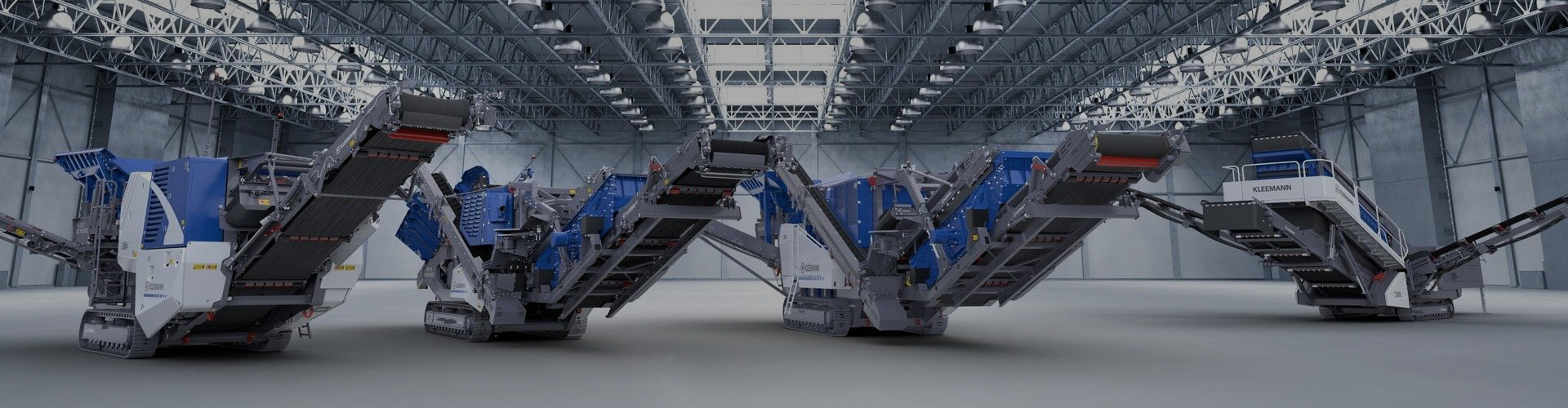
Primary crushing sets the ceiling for everything downstream — a poorly performing jaw crusher creates an inconsistent feed that no amount of secondary processing can fully correct. Kleemann mobile jaw crushers handle the initial reduction of quarried rock with steady force and minimal vibration, producing a consistent feed size for the secondary stage. Where the application calls for higher-capacity secondary and tertiary crushing, stone crusher ranges add cone and impact crushing options engineered for medium-hard to hard rock, giving operators the reduction ratio needed to hit target gradations without excessive wear on crushing components.
Vertical Shaft Impactors for Better Particle Shape
Where cubical particle shape is a hard specification requirement — manufactured sand, high-performance asphalt, structural concrete aggregate — a vertical shaft impactor is the equipment built for the job. A VSI uses rock-on-rock impact rather than compression to shape particles, producing a more uniform, cubical output than a cone crusher alone can achieve. Paired with a sand washing plant, the combination removes fines, clay, and silt contamination from the finished product, which is frequently the deciding factor between aggregate that passes a specification test and aggregate that gets rejected at the batching plant.
Best Practices to Improve Aggregate Production
Equipment selection solves half the problem. The other half comes down to how the circuit is run day to day.
Optimising Crushing Circuits
A crushing circuit is only as efficient as its slowest stage — if the primary crusher outpaces the screening plant behind it, material backs up and throughput drops regardless of how capable the crusher itself is. Matching the throughput of primary, secondary, and screening stages, and adjusting closed-side settings to respond to feed variation, keeps the whole circuit running at its designed capacity instead of bottlenecking at whichever stage was sized incorrectly.
Preventive Equipment Maintenance
Manganese liners, blow bars, and screen media wear continuously under abrasive rock, and delaying their replacement doesn't just risk a breakdown — it degrades product quality gradually, often before anyone notices output has drifted out of spec. A scheduled maintenance programme built around wear-part inspection intervals catches this drift early, keeping both uptime and product quality where they need to be.
Frequently Asked Questions
What causes aggregate to fail a graduation test?
Most gradation failures trace back to worn crusher liners or screen media that have drifted out of their designed closed-side setting or aperture size, letting oversized or undersized material slip through. Regular calibration and wear-part inspection catch this before it affects a delivered batch.
Do I need a vertical shaft impactor if I already have a cone crusher?
It depends on the specification you're producing. A cone crusher alone can hit size targets, but if your project calls for strictly cubical particle shape — common in manufactured sand and high-performance asphalt — a VSI stage after the cone typically delivers the shape consistency a cone alone cannot.
How often should crusher wear parts be inspected?
Inspection frequency depends on material abrasiveness and tonnage processed, but most operators check liners, blow bars, and screen media on a set operating-hour interval rather than waiting for a visible performance drop, since gradual wear affects product quality well before it causes an outright failure.
Conclusion
Poor aggregate processing rarely shows up as a dramatic failure — it shows up as a slow accumulation of rejected loads, reworked mixes, and customers who quietly start sourcing elsewhere. The fix isn't necessarily more tonnage; it's a crushing and screening circuit engineered to produce consistent size and shape from the first stage through the last, backed by a maintenance routine that catches wear before it becomes a specification problem. Operators who treat aggregate quality as a process to manage, rather than an output to hope for, consistently spend less on rework and more time producing material that ships the first time. If you're reviewing your crushing circuit and want help specifying the right combination of primary, secondary, and washing equipment, Genavco's aggregates team can help design a setup built for your material and your specification requirements.