Both machines do essentially the same job — lift and place a pallet in a narrow aisle — and both get chosen wrong often enough that it's worth understanding exactly where they differ before specifying either. A reach truck and an articulated forklift solve the narrow-aisle problem through genuinely different mechanisms, and that difference in approach has real consequences for aisle width, versatility, and cost. This guide compares the two directly, so the choice comes down to your warehouse's actual requirements rather than whichever machine happened to be quoted first.
Understanding Reach Trucks and Articulated Forklifts
Both machine types were developed to solve the same core problem — handling pallets in aisles too narrow for a standard counterbalance forklift to turn in — but they arrive at that solution through different mechanical designs.
Design Differences
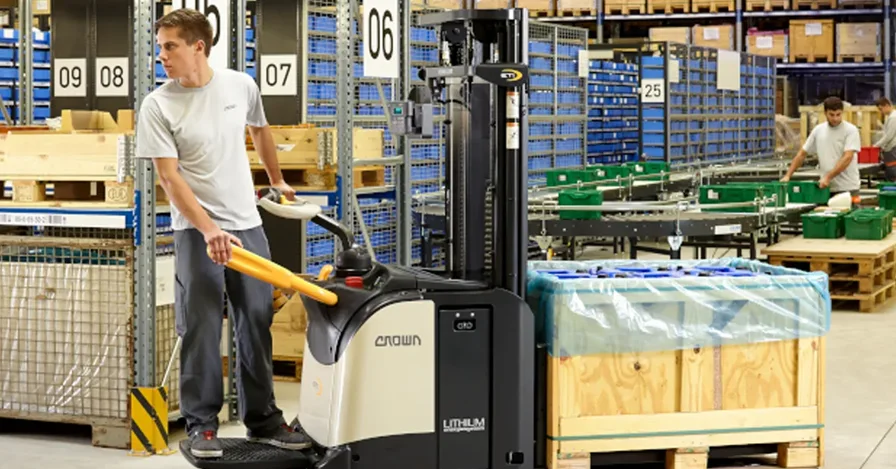
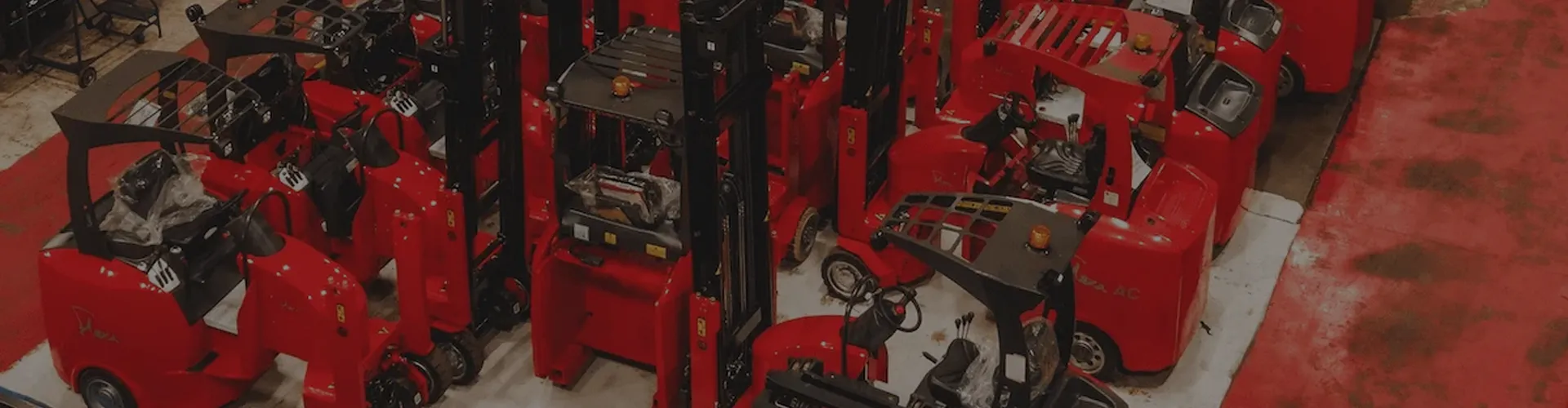
A reach truck uses a pantograph or scissor mechanism to extend the forks forward to reach into a rack, while the truck itself remains stationary and doesn't need to turn within the aisle at all. An articulated forklift instead uses an articulating mast that pivots relative to the chassis, allowing the entire truck to turn its load 90 degrees within a standard aisle rather than reaching forward from a fixed position — fundamentally different mechanisms that lead to different strengths depending on the application.
Warehouse Applications
Reach trucks are the standard choice in dedicated, single-purpose warehouses where the same very narrow aisle configuration is used consistently and the truck rarely needs to leave that specific racking environment. Articulated forklifts suit operations needing more flexibility — handling pallets in narrow racking aisles but also working in a yard, loading dock, or wider general storage area within the same shift, since their design allows them to operate outside narrow aisles in a way a reach truck's forward-reach mechanism doesn't accommodate as naturally.
Comparing Performance and Applications
Beyond the mechanical difference, the practical comparison comes down to space efficiency and total operating cost across the machine's working life. Our forklift, reach truck, and VNA guide compares both machine types against the full range of warehouse material handling equipment in more depth.
Space Utilisation
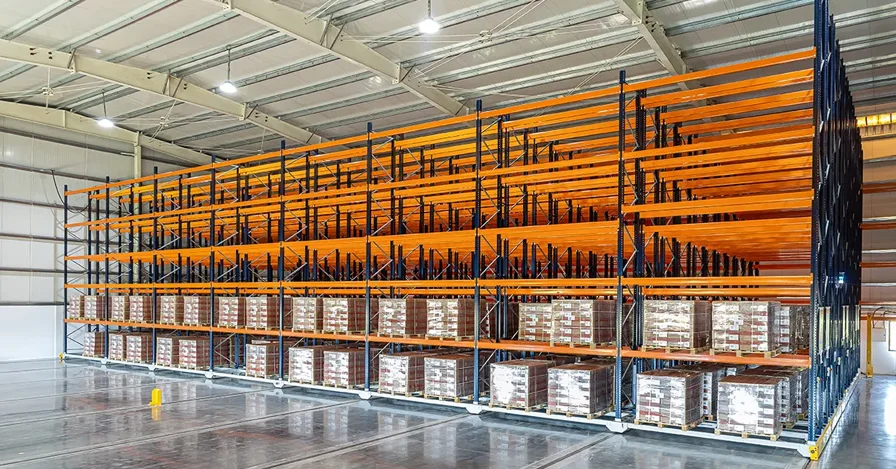
Reach trucks generally achieve the narrowest aisle widths of the two, since the truck never needs turning clearance within the aisle itself — only enough width for the chassis and the extending forks. This makes reach trucks the stronger choice when maximum storage density in a dedicated aisle is the primary goal, an approach that pairs directly with narrow aisle forklift -compatible racking systems engineered specifically for the tightest aisle configurations a warehouse can practically operate. Our warehouse space optimisation guide covers how narrow-aisle configurations translate into measurable capacity gains in more depth.
Operating Costs
Articulated forklifts typically carry a higher purchase price than an equivalent-capacity reach truck, reflecting the added mechanical complexity of the articulating mast, but that cost can be offset by the versatility of using one machine across multiple tasks rather than needing a reach truck for racking work and a separate counterbalance unit for yard and dock work. Facilities should compare total fleet cost across all the tasks a machine needs to cover, not just the purchase price of the narrow-aisle unit in isolation.
Which Forklift Should You Choose?
The right choice depends less on which machine is objectively "better" and more on which specific combination of warehouse size, layout, and load profile it needs to serve.
Based on Warehouse Size
Larger, dedicated distribution centres with consistent, high-density narrow-aisle racking throughout tend to favour reach trucks, since the facility's scale justifies a machine optimised purely for that one racking environment. Smaller or mixed-use warehouses, where the same truck might need to move between narrow racking, a loading dock, and open yard space within a single shift, generally get more value from an articulated forklift's broader operational flexibility.
Based on Load Requirements
Reach trucks typically handle a wider range of lift heights and heavier loads at height more efficiently, given their design is purpose-built around vertical reach into racking. Articulated forklifts remain highly capable for standard pallet loads but the specific capacity and lift height requirements of the heaviest routine load in your operation should be checked against each machine's rated specification before deciding, since capacity can vary meaningfully between models within each category.
FAQs
Can a reach truck operate outside narrow aisle racking, like in a yard?
Reach trucks are generally designed and optimised for indoor, hard-floor racking environments rather than outdoor yard conditions, and their reach mechanism doesn't offer the same operational flexibility outside a narrow-aisle setting that an articulated forklift does.
Which is cheaper to buy, a reach truck or an articulated forklift?
Reach trucks are typically less expensive to purchase than an equivalent-capacity articulated forklift, since the articulating mast mechanism adds cost. However, total value should be judged against how many separate tasks a single articulated unit can replace compared to needing multiple dedicated machines.
How narrow can a warehouse aisle be with each type of forklift?
Reach trucks generally achieve the narrowest aisle widths of the two categories, since the chassis never needs turning clearance within the aisle. Articulated forklifts still operate well below standard counterbalance aisle widths, though typically require slightly more clearance than a dedicated reach truck configuration.
Conclusion
Neither machine is universally better — a reach truck wins on maximum storage density within a dedicated racking environment, while an articulated forklift wins on flexibility across mixed tasks and varied working areas. The right choice comes down to matching the machine's design strengths to your warehouse's actual layout, task mix, and load profile, rather than defaulting to whichever category happens to be more familiar. Getting this decision right at the specification stage avoids the common mistake of buying flexibility you don't need or sacrificing density you actually do. If you're comparing forklift options for a narrow-aisle warehouse and want help matching the right machine to your operation, Genavco's material handling team can help evaluate both options against your specific requirements.