Wheelbarrows and manual carrying still show up on sites where a dumper would do the job faster, safer, and at a fraction of the labour cost — usually because the machine is thought of as a luxury rather than the basic productivity tool it actually is. Site dumpers exist specifically to move loose material short distances across broken, sloped, or confined ground where a full-size truck can't go and manual handling is too slow to keep a project moving. This guide explains what a site dumper is, the benefits it brings to a project, and how to choose the right one for your site conditions.
What Is a Site Dumper?
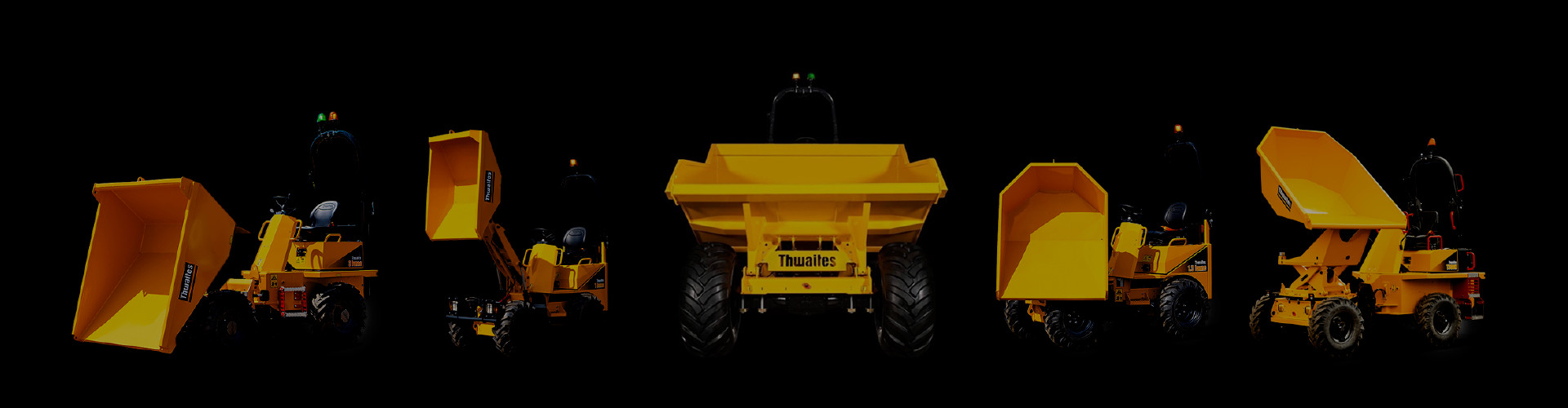
A site dumper is a compact, self-loading or manually loaded vehicle designed to transport loose materials — soil, aggregate, concrete, debris — across short distances on uneven construction terrain that standard trucks can't navigate. Its low centre of gravity, high ground clearance, and rugged tyres or tracks are purpose-built for exactly the rough, unfinished ground found on active construction sites.
Types of Site Dumpers
Straight skip dumpers tip their load directly forward and suit simple, high-volume material movement on relatively open ground, while swivel skip dumpers rotate the load body to discharge to the side or rear, which is invaluable in confined sites where forward tipping isn't possible. Track-mounted dumpers trade speed for stability on soft or steep ground where wheeled models would struggle for traction, making the choice between types less about preference and more about matching the machine to the specific ground conditions and site layout it will actually operate in.
Key Features of Modern Dumpers
Modern site dumpers increasingly include features like automatic load-levelling skips that keep the load centred regardless of ground slope, rollover protection structures, and improved operator visibility over the skip when reversing — all addressing the specific risks of operating a loaded vehicle on uneven, changing terrain. Hydrostatic transmission has also become standard on most models, giving operators smoother speed control on slopes than a mechanical gearbox would allow, which matters directly for stability when carrying a full load downhill.
Benefits of Using Site Dumpers
Once a site reaches even a modest scale, the case for a dedicated dumper over manual material movement becomes difficult to ignore on both time and cost grounds. Our multi-purpose loaders guide covers how dumpers fit alongside loaders in a broader material handling fleet strategy.
Faster Material Transportation
A loaded dumpers can move volumes of material in minutes that would take a manual crew significantly longer to shift by wheelbarrow, and that speed advantage compounds across every trip made in a working day. On sites moving spoil from excavation to stockpile, or aggregate from delivery point to placement, the cumulative time saved over a project's duration often justifies the machine's cost within the first few weeks of use.
Reduced Labour Costs
Manual material movement is labour-intensive in a way that scales poorly — doubling the volume to move roughly doubles the labour hours required, while a site dumper moving the same volume needs only its operator regardless of load size. This shift from labour-scaling to machine-scaling is what makes dumpers a direct lever on overall project labour cost, particularly on projects involving large volumes of excavation, demolition debris, or bulk material delivery.
Choosing the Right Dumper for Your Project
Site dumpers range considerably in size and configuration, and matching the right one to a project depends on both the volume of material being moved and the ground it has to cross to get there.
Load Capacity
Capacity should be sized to the actual volume and weight of material being moved per cycle, not simply the largest dumper available on a supplier's list — an oversized machine on a confined site struggles for manoeuvring room, while an undersized one requires more trips than necessary to move the same total volume. Articulated dumper configurations that combine load capacity with tighter turning radii suit sites where space constraints matter as much as raw carrying capacity.
Terrain and Site Conditions
Ground conditions should drive the choice between wheeled and tracked models as much as, or more than, load capacity — a wheeled dumper is faster on firm, established ground, while a tracked model handles soft, muddy, or steeply sloped terrain that would leave a wheeled machine stuck or unstable. Site conditions also change as a project progresses, so it's worth considering whether the dumper needed during early groundworks, when terrain is roughest, is the same specification needed once hardstanding is in place later in the project.
FAQs
What's the difference between a straight skip and swivel skip dumper?
A straight skip tips its load directly forward and suits open sites with clear discharge space ahead of the machine. A swivel skip rotates to discharge to the side or rear, making it far more practical on confined sites where forward tipping space isn't available.
Can site dumpers operate safely on steep or sloped ground?
Yes, provided the machine is correctly specified for the terrain — tracked dumpers and models with automatic load-levelling skips are designed specifically for sloped and uneven ground, and hydrostatic transmission gives operators finer speed control than a mechanical gearbox when descending with a loaded skip.
How much can a typical site dumper carry?
Capacity varies considerably by model, from smaller machines suited to confined residential sites up to larger units built for high-volume commercial groundworks. Matching capacity to actual daily material volume, rather than defaulting to the largest available unit, generally delivers better site efficiency.
Conclusion
Site dumpers earn their place on a project by doing something manual labour and full-size trucks both struggle with: moving loose material quickly and safely across the rough, changing ground typical of an active construction site. Matching skip type, capacity, and wheeled or tracked configuration to the actual terrain and material volume on a given project is what turns a dumper from a generic piece of equipment into a genuine productivity gain. Getting that specification right early in a project avoids the common mistake of under- or over-machining the material handling task relative to what the site actually needs. If you're planning groundworks and want help specifying the right dumper for your site conditions, Genavco's equipment specialists can help match the right machine to your project. If your project also involves excavation and loading alongside material transport, our earthmoving equipment guide covers how wheel loaders, backhoes, and excavators fit alongside dumpers in a complete fleet.