Warehouse managers spend a lot of time thinking about mast height, load capacity, and turning radius when specifying an electric forklift. Far less attention usually goes to the forklift battery powering it, even though battery performance has just as much influence on daily output as the machine itself. A forklift with a struggling battery can look perfectly healthy on the outside while quietly losing lift speed, travel speed, and runtime throughout a shift.
Understanding how battery condition affects a warehouse forklift's real-world performance, and how to choose and manage power systems properly, helps operations teams avoid the kind of slow, invisible productivity loss that battery issues typically cause.
Why Battery Performance Matters More Than Most Warehouses Realise
Battery condition rarely fails all at once. Instead, it degrades gradually, which means its impact on productivity often goes unnoticed until performance has already dropped noticeably from where it started.
How Battery Downtime Affects Warehouse Operations
A forklift waiting on charge, or pulled from service for battery maintenance, is a forklift not moving product. On sites running multiple shifts with a limited fleet, even short, repeated battery-related stoppages add up to meaningful lost operating time across a month, often without ever being tracked as a distinct cause of downtime.
Signs Your Forklift Battery Is Losing Efficiency
Reduced runtime between charges, slower lift speed under load, and batteries that run hotter than usual during operation are all early signs of declining battery health. Operators are often the first to notice these changes, which makes it worth actively asking for this feedback rather than waiting for a battery to fail completely before investigating.
Choosing the Right Power Solution for Electric Forklifts
Not all battery systems suit every operation, and the wrong choice can create avoidable downtime regardless of how well it's maintained afterward. Our guide to how to choose the right forklift for warehouse operations covers how power system choice fits into the broader selection process.
Lithium-Ion vs Conventional Battery Systems
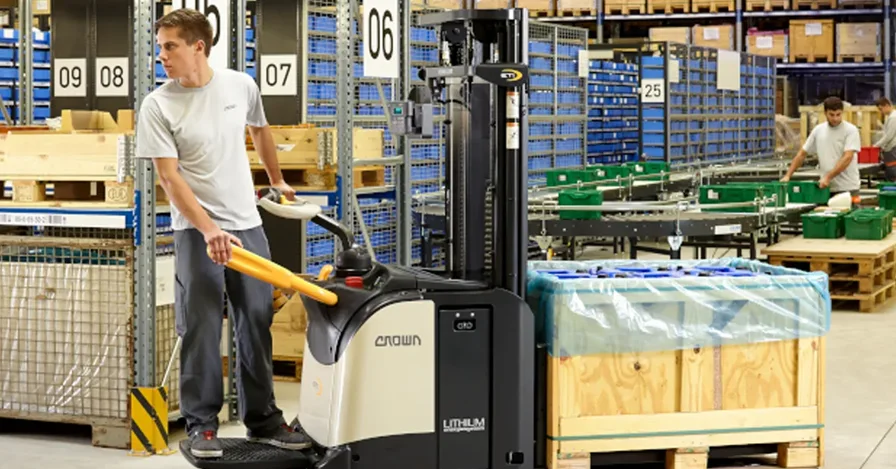
A lithium-ion battery typically offers faster charging, longer overall lifespan, and more consistent power delivery throughout a discharge cycle compared with conventional lead-acid systems. Conventional batteries remain a lower upfront cost option, but often require dedicated charging rooms and more careful maintenance to reach a comparable service life, which needs to be weighed against the lithium-ion premium.
Opportunity Charging vs Scheduled Charging
Opportunity charging, topping up during short breaks in operation, suits lithium-ion systems well and can keep a forklift available almost continuously across multiple shifts. Scheduled charging, where a battery is charged fully during a dedicated window such as a shift change, remains the standard approach for conventional batteries and requires enough spare batteries or downtime to avoid gaps in equipment availability.
Maximising Forklift Availability Through Better Battery Management
Good equipment choices only pay off if they're supported by disciplined day-to-day management. This applies to the wider category of electric material handling equipment as much as it does to forklifts specifically; our guide to warehouse equipment for storage and material handling covers how power management fits into broader equipment planning.
Battery Monitoring Best Practices
Tracking charge cycles, temperature, and voltage over time makes it possible to catch declining warehouse equipment performance before it turns into an unplanned failure. Many modern battery systems now report this data automatically, removing the need for manual logs and giving maintenance teams a much clearer picture of which units are approaching the end of their useful life.
Reducing Unplanned Downtime
Rotating batteries on a planned schedule, avoiding deep discharges that accelerate wear, and replacing units proactively once performance drops below an acceptable threshold all reduce the chance of a battery failing mid-shift. For any material handling operation running tight schedules, this kind of proactive management is usually far cheaper than the lost productivity caused by reactive battery replacement.
FAQs
How do I know when a forklift battery needs replacing?
Noticeably shorter runtime between charges, slower lift performance under load, and batteries running hotter than usual are all signs a battery is nearing the end of its useful life and should be assessed for replacement.
Is lithium-ion always better than lead-acid for forklifts?
Not necessarily. Lithium-ion offers faster charging and longer lifespan, but lead-acid remains a practical, lower-cost option for operations with predictable single-shift patterns and existing charging infrastructure already in place.
What is opportunity charging and when should it be used?
Opportunity charging tops up a battery during short breaks in operation rather than waiting for a full charge cycle. It works best with lithium-ion systems and suits multi-shift operations that need forklifts available almost continuously.
Conclusion
Battery performance deserves the same attention warehouses give to mast height and load capacity, since it has just as much influence on how productive a fleet actually is day to day. Choosing the right power system for the operation, then managing it with proper monitoring and proactive replacement, keeps electric material handling equipment available when it's needed rather than sidelined by preventable charging and battery issues. Warehouses that treat battery management as seriously as equipment selection consistently get more reliable output from every electric forklift on the floor.