Project managers track cost, schedule, and safety obsessively, yet the number that connects all three, how much of the available time construction equipment actually spends working, rarely gets the same attention. Utilisation is one of the clearest predictors of project profitability available, because idle heavy equipment still costs money in fuel, financing, and depreciation whether or not it's actually producing anything.
This guide covers why utilisation deserves treatment as a critical KPI, how fleet management scheduling improves equipment utilisation across a project, and how to build a high-performance fleet of earth moving equipment, excavators, and wheel loader units around real performance data.
Construction Equipment and Heavy Equipment: Why Utilisation Is a Critical KPI
Fleet size gets reported in every project update, but how much of that fleet's available time is spent doing productive work rarely gets the same visibility, despite having a more direct link to profitability.
What Is Construction Equipment Utilisation Rate?
Utilisation rate measures the proportion of available operating hours a machine spends performing productive work, as opposed to sitting idle, waiting for tasks, or undergoing maintenance. Tracking this figure consistently across a fleet reveals patterns that raw fleet count never will, such as specific machines that sit idle far more than comparable units doing the same job.
Why Idle Heavy Equipment Reduces Profit Margins
An idle machine still accrues financing costs, depreciation, and often standing rental charges regardless of whether it's producing anything, making idle time a direct drain on project margin rather than a neutral cost. Because this cost rarely shows up as its own line item, it's frequently underestimated until a proper utilisation review reveals just how much idle time has actually accumulated across a project.
Fleet Management and Equipment Utilisation: Improving Productivity Across Projects
Improving utilisation is rarely about buying less equipment, it's about scheduling and coordinating what's already on site more deliberately. Our guide to the best earthmoving equipment for UAE construction and infrastructure projects covers how equipment mix and project planning connect to this kind of productivity.
Fleet Management: Scheduling Equipment More Effectively
Coordinating equipment schedules with upstream and downstream tasks keeps machines moving from one productive job directly to the next, rather than sitting idle while waiting on work that isn't ready yet. This kind of scheduling discipline often delivers utilisation gains that would otherwise require adding equipment to the fleet, at a fraction of the cost.
Equipment Utilisation: Reducing Idle Time with Better Planning
Sequencing tasks so equipment transitions directly between assignments, and reviewing utilisation data regularly rather than only at project completion, catches idle time patterns early enough to correct them mid-project. Reactive planning, by contrast, only reveals these patterns once the final numbers are already locked in and the opportunity to fix them has passed.
Earth Moving Equipment and Excavators: Building a High-Performance Fleet
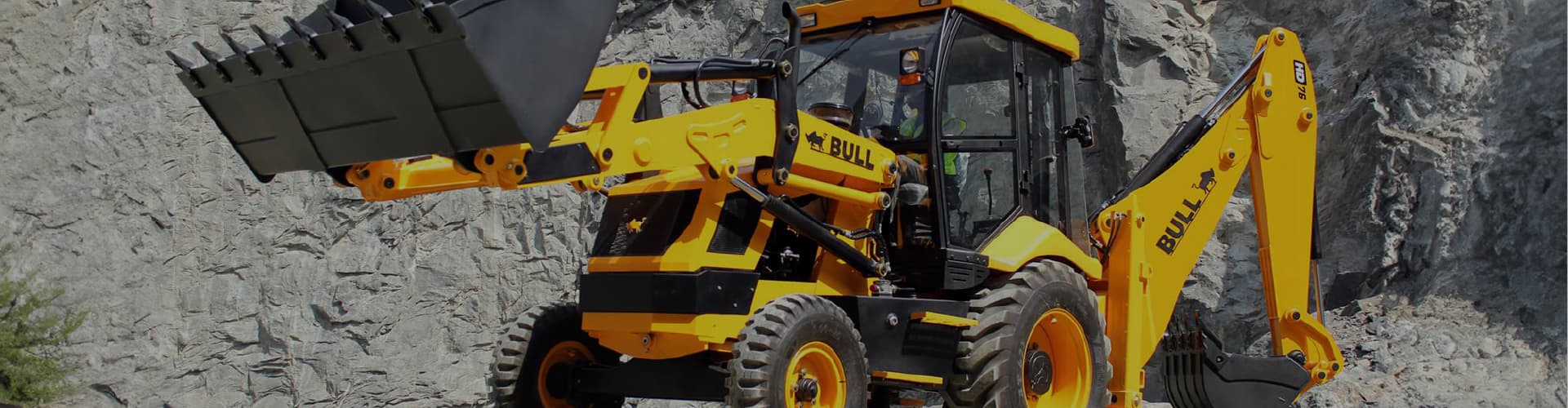
Beyond scheduling, the specific machines making up a fleet, and how well their performance is tracked and maintained, determine how much utilisation gain is even possible. Our detailed wheel loader, backhoe loader and excavator guide covers this selection process across the full range of earthmoving categories.
Tracking Earth Moving Equipment Performance with Data
Telematics data covering engine hours, idle time, and cycle counts gives fleet managers a live view of performance rather than a snapshot pieced together after the fact. Comparing this data across similar machines quickly highlights outliers that may point to an operator training gap, a maintenance issue, or a machine simply mismatched to the tasks it's assigned.
Predictive Maintenance Strategies for Excavators
Unplanned excavator downtime is one of the most disruptive events a project schedule can face, and predictive maintenance, using sensor data on hydraulic pressure, temperature, and vibration, catches developing issues before they cause a full breakdown. This approach keeps utilisation high not by working machines harder, but by keeping them available when the project actually needs them.
FAQs
What is a good equipment utilisation rate for a construction fleet?
Most well-run construction fleets target utilisation between 65 and 85 percent. Rates significantly below this range usually indicate an oversized fleet or scheduling inefficiency, while rates close to 100 percent can signal a fleet stretched too thin to absorb demand spikes.
How does idle equipment actually affect project profitability?
Idle machines continue accruing financing costs, depreciation, and often rental charges regardless of output, meaning every hour of idle time represents cost without corresponding production, which directly erodes project margin over time.
Can predictive maintenance really improve fleet utilisation?
Yes. By catching developing issues before they cause a full breakdown, predictive maintenance keeps equipment available for scheduled work rather than sidelined by unplanned failures, which is one of the most disruptive causes of lost utilisation on a project.
Conclusion
Fleet size tells only part of the story behind a project's profitability. Tracking equipment utilisation as closely as cost and schedule, scheduling fleet management to minimise idle time, and using data to keep excavators and other core machines running reliably all combine to protect project margins in ways that simply owning more equipment never will.
Industries This Guidance Applies To
The principles in this guide apply across the range of sectors GENAVCO supports with construction and earthmoving equipment, including general contracting and building construction, road and infrastructure development, quarrying and mining, utilities and pipeline installation, and industrial and warehouse construction projects. While fleet composition varies by sector, the underlying approach, tracking utilisation as a core profitability metric and scheduling equipment deliberately rather than reactively, holds across all of these operating environments.
Recommendations are informed by equipment supplied and supported across these sectors in the UAE, giving practical grounding in how fleet utilisation and predictive maintenance perform under real project conditions rather than only in theory. Any specific utilisation target or maintenance schedule should still be validated against an individual project's own data and constraints, since no general guide can substitute for a proper site-specific assessment.