Every warehouse knows peak season is coming, and yet the same congestion, delays, and overtime costs tend to resurface year after year. The instinct to solve this by simply adding headcount or renting extra warehouse operations space often costs more than it needs to, when the real gains usually come from squeezing more output out of the warehouse productivity systems already in place before volume spikes hit.
This guide covers why peak seasons strain even well-run facilities, how material handling equipment and warehouse automation strategies improve throughput without added headcount, and how logistics data and warehouse management practices build a more resilient distribution centre that scales without expanding space.
Warehouse Operations and Productivity: Why Peak Seasons Are a Challenge
Peak season doesn't create new problems so much as it exposes the ones that stay hidden at normal volume. A warehouse operations workflow with a small inefficiency at average throughput can become a genuine bottleneck once order volume doubles or triples.
Preventing Warehouse Operations Congestion During Peak Season
Congestion at dock doors, aisle intersections, and packing stations tends to compound quickly once volume rises, since a small queue at one point in the process backs up every stage feeding into it. Reviewing traffic flow and staging areas before peak season begins, rather than reacting once congestion has already appeared, prevents these bottlenecks from ever forming in the first place.
Managing Temporary Workforce for Warehouse Productivity
Temporary staff brought on for peak season inevitably operate at lower productivity than experienced permanent staff during their first shifts, and planning for this ramp-up curve avoids setting unrealistic throughput targets from day one. Pairing new starters with experienced staff on key tasks, and simplifying processes wherever possible during the surge, closes much of this productivity gap faster than leaving temporary workers to find their footing unsupported.
Material Handling Equipment and Warehouse Automation Strategies That Improve Throughput
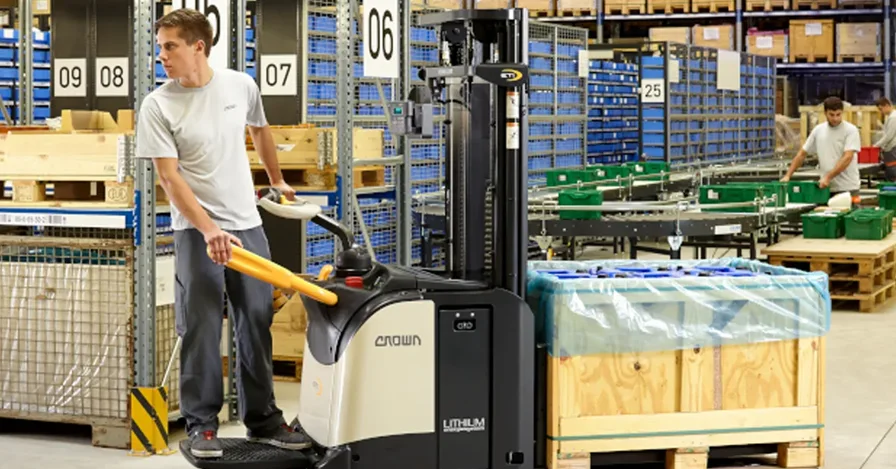
Equipment readiness before peak season begins is one of the most controllable factors in how smoothly a facility handles the surge. Our guide to how to choose the right forklift for warehouse operations covers how to plan fleet capacity ahead of demand spikes like these.
Optimising Material Handling Equipment Before Peak Season
Servicing material handling equipment ahead of the surge, rather than waiting for a breakdown mid-peak, avoids the worst possible timing for unplanned downtime. Confirming fleet capacity against projected peak volume, and arranging temporary equipment hire in advance if needed, removes the scramble that comes from discovering a shortfall once volume has already climbed.
Warehouse Automation: Reducing Order Processing Delays
Automated sortation, pick-to-light systems, and barcode verification all reduce the manual steps that slow order processing precisely when speed matters most. Automation that's already embedded in day-to-day operations before peak season begins tends to perform far more reliably under surge conditions than systems rushed into place once volume has already spiked.
Logistics and Warehouse Management: Building a More Resilient Distribution Centre
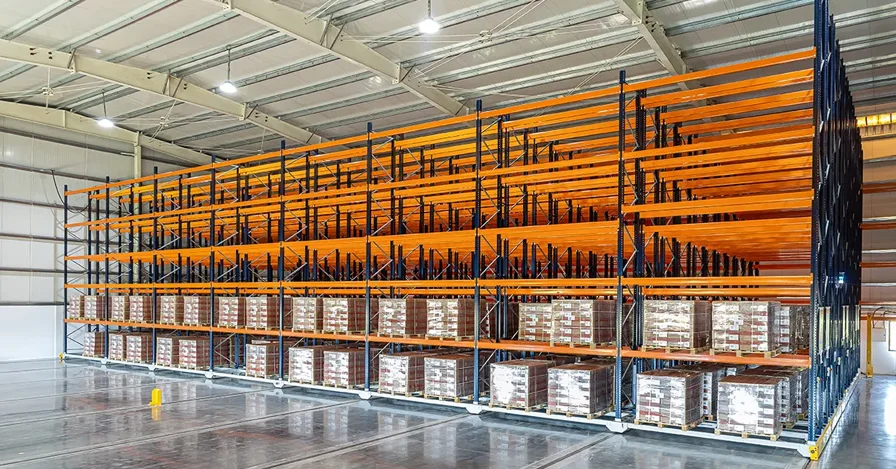
Long-term resilience against peak season pressure comes from how a facility is managed and laid out year-round, not just from the specific measures taken during the surge itself. Our comparison of why pallet racking systems are essential for modern warehouses explains how storage design supports this kind of resilience.
Using Logistics Data for Peak Season Planning
Historical order volume, SKU velocity shifts, and staffing data from previous peak seasons give a far more reliable basis for planning than gut instinct alone. Facilities that review this data methodically each year, rather than starting from scratch, tend to spot recurring bottlenecks and address them permanently rather than repeating the same fire drill every season.
Warehouse Management: Scaling Without Expanding Space
Improving slotting, tightening putaway discipline, and making better use of vertical storage space all increase effective capacity within an industrial warehouse facility's existing footprint, often at a fraction of the cost of temporary overflow space. Facilities that treat these adjustments as a permanent operational improvement, rather than a one-off peak season fix, carry the benefit into every future season rather than rebuilding the same gains from scratch each year.
FAQs
How far in advance should peak season warehouse planning start?
Equipment servicing, staffing plans, and layout reviews are best completed at least six to eight weeks before an anticipated peak, giving enough lead time to address equipment shortfalls or bottlenecks before volume actually rises.
Is renting extra equipment for peak season worth the cost?
This depends on how consistently the shortfall recurs each year. Facilities facing a genuine, recurring capacity gap may find owning additional equipment more cost-effective long term, while irregular or unpredictable surges are often better served by temporary hire.
What is the fastest way to reduce peak season congestion?
Reviewing dock, aisle, and packing station traffic flow before volume rises typically catches the bottlenecks that cause the worst congestion, since these constraints tend to compound quickly once throughput increases beyond normal levels.
Conclusion
Peak season pressure is predictable, even if the exact volume each year isn't, which means most of the congestion and cost overruns it causes are preventable with the right preparation. Servicing material handling equipment and reviewing warehouse automation readiness ahead of the surge, planning workforce ramp-up deliberately, and using historical logistics data rather than gut instinct all combine to deliver a smoother peak season without the cost of overreacting to it.
Industries This Guidance Applies To
The principles in this guide apply across the range of industries GENAVCO supports with warehouse and material handling equipment, including e-commerce and retail fulfilment, third-party logistics and distribution centres, FMCG and consumer goods warehousing, seasonal import and export operations, and manufacturing facilities managing seasonal production spikes. While the scale and timing of peak periods vary by sector, the underlying approach, preparing equipment and layout ahead of demand rather than reacting to it, holds across all of these operating environments.
Recommendations are informed by equipment supplied and supported across these sectors in the UAE, giving practical grounding in how peak season planning performs under real operating conditions rather than only in theory. Any specific staffing, equipment, or layout decision should still be validated against an individual facility's own historical data and constraints, since no general guide can substitute for a proper site-specific assessment.