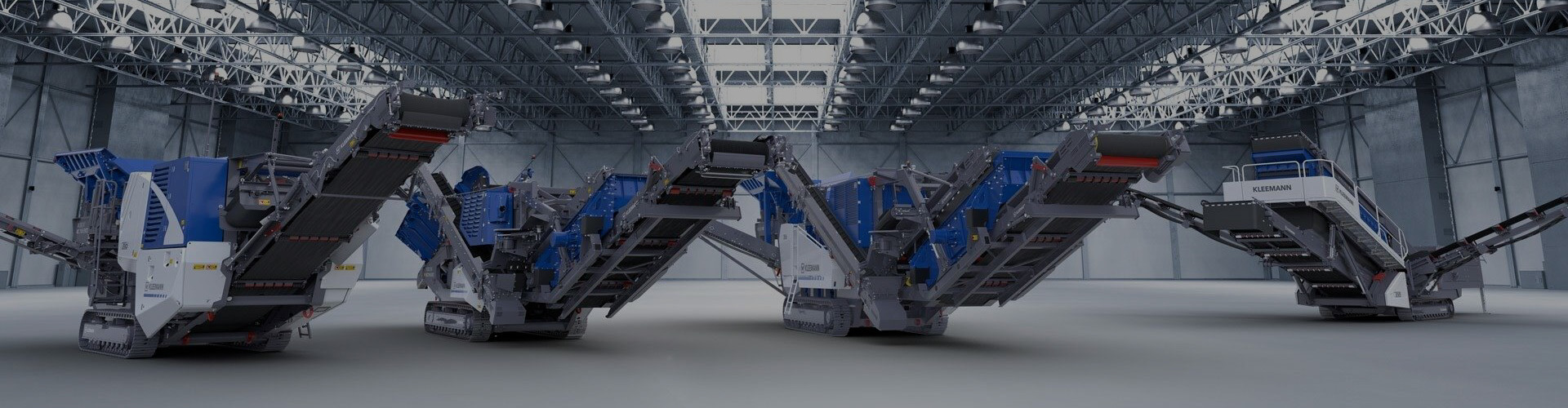
The crushers and screens on a quarry site look much the same as they did a decade ago, but what's changed is how much data now flows out of them. A jaw crusher fitted with modern sensors can report throughput, wear, and fault conditions continuously, turning a purely mechanical decision, when to service, how to feed, when to adjust settings, into one increasingly backed by real data rather than operator instinct alone.
This guide covers how cone crusher and jaw crusher technology are becoming smarter, how screening plant and mobile crusher operations are changing with automation, and what it takes to build a genuinely future-ready aggregate production operation.
Jaw Crushers and Cone Crushers: Investing in Smarter Aggregate Plants
Primary and secondary crushing equipment is where most of the connected technology in modern aggregate plants is concentrated, since these stages have the greatest influence on downstream product quality and overall throughput.
Jaw Crusher Data-Driven Production Planning
Modern jaw crushers increasingly report feed rate, setting position, and throughput in real time, allowing operators to adjust production planning based on actual performance rather than end-of-shift estimates. This visibility makes it possible to spot a gradual drop in output well before it becomes an obvious production shortfall, giving operators time to investigate and correct the cause.
Cone Crusher Technologies Improving Material Recovery
Automatic setting adjustment on modern cone crushers compensates for liner wear continuously, keeping product gradation consistent without requiring manual intervention every time the crushing chamber wears slightly. This kind of automated compensation improves material recovery by reducing the volume of off-specification products that would otherwise need to be reprocessed or rejected.
Screening Plants and Mobile Crushers: Technologies Changing Aggregate Operations
Beyond the crushers themselves, screening and mobile processing technology have both evolved to support more flexible, better-monitored aggregate operations. Our complete guide to aggregates processing equipment for the UAE covers the full crushing, screening, and washing chain in more detail.
Automation in Screening Plant Operations
Automated screen angle and vibration adjustment allows a screening plant to respond to changing feed characteristics without manual recalibration, keeping product size distribution consistent even as upstream crushing output varies slightly. This reduces the operator workload needed to maintain product specification across a full shift.
Mobile Crusher Solutions for Flexible Processing
Modern mobile crushers increasingly include the same connected monitoring capability as fixed installations, giving operators production visibility even when equipment is relocating between quarry faces or job sites. This closes much of the data gap that once existed between mobile and stationary plant configurations, making mobility less of a trade-off against monitoring capability than it once was.
Aggregate Production and Quarry Equipment: Building a Future-Ready Operation
Connected equipment only delivers value once the data it produces actually changes maintenance and operating decisions. Our related guide to why automatic transmissions improve performance in heavy equipment looks at a similar reliability principle applied to a different equipment category, where component monitoring and maintenance discipline drive long-term performance.
Predictive Maintenance for Aggregate Production Equipment
Sensor data on vibration, temperature, and wear rates increasingly allows maintenance to be scheduled based on actual component condition rather than a fixed calendar interval, catching developing issues before they cause an unplanned stoppage. This shift from reactive to predictive maintenance reduces both unnecessary early servicing and the costly downtime that comes from waiting until something actually fails.
Quarry Equipment Remote Plant Monitoring
Remote monitoring platforms let managers oversee production, fuel consumption, and equipment health across quarry equipment and sand washing plant operations from a single dashboard, without needing to be physically on site to catch a developing issue. For operators managing multiple quarry locations, this visibility is increasingly what separates a genuinely well-run operation from one relying on periodic site visits to catch problems after they've already cost production time.
FAQs
What makes a crusher "smart" compared to older equipment?
Smart crushers report throughput, wear, and fault data continuously and often adjust settings automatically to compensate for changing conditions, giving operators real-time visibility and reducing the manual recalibration of older equipment required.
Can mobile crushers offer the same monitoring capability as fixed plants?
Increasingly, yes. Modern mobile crushers now include much of the same connected monitoring found on fixed installations, closing the visibility gap that once made stationary plants the only option for detailed production data.
How does predictive maintenance differ from routine servicing in aggregate plants?
Routine servicing follows a fixed schedule regardless of actual equipment condition, while predictive maintenance uses sensor data to schedule intervention only when it's genuinely needed, reducing both unplanned downtime and unnecessary early servicing.
Conclusion
Aggregate production is quietly becoming a data-driven business, even where the underlying crushing and screening equipment looks familiar. Investing in smarter jaw crusher and cone crusher technology, adopting automation across screening and mobile processing, and building predictive maintenance and remote monitoring into everyday operations gives quarry operators a genuinely future-ready path to higher output and lower unplanned downtime.
Industries This Guidance Applies To
The principles in this guide apply across the range of sectors GENAVCO supports with crushing, screening, and quarry equipment, including quarry and mining operators, aggregate and construction material producers, road and infrastructure contractors sourcing their own material, and recycling operations processing construction and demolition waste. While the specific technology mix varies by scale and material type, the underlying approach, using data to move from reactive to predictive operations, holds across all of these operating environments.
Recommendations are informed by equipment supplied and supported across these sectors in the UAE, giving practical grounding in how smart aggregate production technology performs under real operating conditions rather than only in theory. Any specific equipment selection or monitoring investment should still be validated against an individual site's own production data and constraints, since no general guide can substitute for a proper site-specific assessment.