FMCG warehouses live under a specific kind of pressure that other sectors don't face quite as acutely: extremely high inventory turnover, tight expiry-driven rotation requirements, and demand spikes tied to promotions and seasonal cycles that can double throughput almost overnight. Generic material handling equipment and racking strategies rarely hold up well against this pressure without specific adjustments for how FMCG products actually move through a facility.
This guide covers how industrial warehouse racking and equipment choices address FMCG-specific storage challenges, how warehouse automation and operations strategies improve efficiency under this kind of demand, and how forklift and pallet racking system planning prepares FMCG warehouses for continued growth.
Material Handling Equipment and Industrial Warehouse Racking for FMCG Storage Challenges
FMCG storage challenges are fundamentally different from lower-turnover warehousing, since the same SKU might move through a facility dozens of times faster than comparable inventory in other sectors.
Managing High Inventory Turnover with the Right Material Handling Equipment
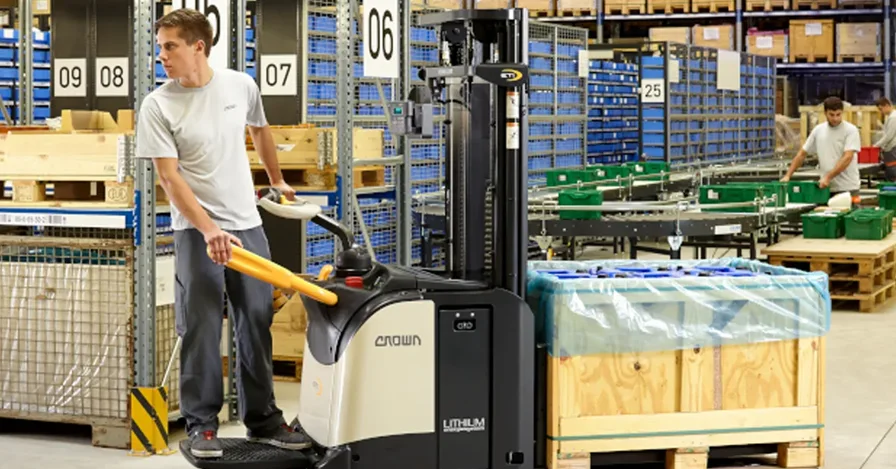
Equipment supporting FMCG operations needs to sustain far more cycles per shift than the same category of machine would face in a lower-turnover warehouse, making duty cycle rating and cycle time just as important as raw lift capacity. Equipment specified without this context often looks adequate on paper but struggles to keep pace once actual FMCG order volumes are applied to it.
Industrial Warehouse Racking: Reducing Picking Delays During Peak Demand
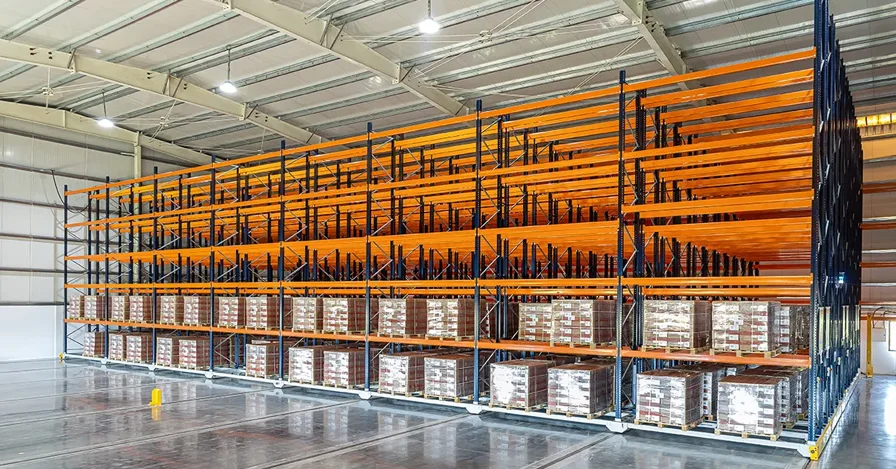
Racking layouts that place high-velocity FMCG lines far from primary aisles create picking delays that compound significantly during promotional or seasonal peak periods. Slotting racking specifically around actual pick frequency data, rather than a generic layout, is one of the most direct ways to prevent these delays from appearing once demand spikes.
Warehouse Automation and Operations Strategies That Improve Efficiency
Automation delivers particularly strong returns in FMCG environments precisely because the repetitive, high-volume nature of the work suits automated systems well. Our comparison of why pallet racking systems are essential for modern warehouses covers how racking configuration supports this kind of high-throughput operation.
High-Density Storage Solutions Through Warehouse Automation
Automated storage and retrieval systems allow FMCG warehouses to pack significantly more inventory into the same footprint than manual racking and picking would support, which matters enormously given how quickly FMCG stock volumes can grow. This density gain is often what allows a facility to absorb genuine business growth without a costly relocation or expansion.
Warehouse Operations: Faster Material Movement with Modern Equipment
Modern conveyor systems, automated sortation, and connected forklift fleets all reduce the manual handling steps that would otherwise slow down high-volume FMCG order processing. Even modest reductions in per-order handling time compound significantly at FMCG order volumes, making these efficiency gains far more impactful here than in lower-throughput warehouse environments.
Forklifts and Pallet Racking Systems: Preparing FMCG Warehouses for Growth
Planning equipment and racking for where FMCG demand is heading, not just where it stands today, is what allows a warehouse to scale without a disruptive mid-growth overhaul. Our guide to how to choose the right forklift for warehouse operations covers how to plan fleet capacity ahead of this kind of growth.
Forklift Fleet Planning for a Warehouse Automation Roadmap
Building a forklift fleet with an eye toward future automation, rather than purely current manual operation needs, avoids stranding investment in equipment that doesn't integrate well once automated systems are introduced. Facilities planning a phased automation roadmap benefit from specifying equipment compatible with that eventual end state from the outset, rather than treating each stage as an isolated decision.
Pallet Racking System Data: Driving Better Inventory Management
Racking systems increasingly capture location and movement data that feeds directly into inventory management, giving FMCG operators far more accurate stock visibility than periodic manual counts ever could. This data becomes especially valuable for managing expiry-driven rotation requirements, where knowing exactly where and how long stock has been sitting is critical to avoiding warehouse productivity losses from write-offs and rework.
FAQs
Why does FMCG warehousing need different equipment specifications than other sectors?
FMCG operations typically involve far higher inventory turnover and more frequent handling cycles than other warehouse types, meaning equipment needs to sustain a higher duty cycle and racking needs to prioritise pick speed over raw storage density in many cases.
How does warehouse automation help FMCG operations specifically?
The repetitive, high-volume nature of FMCG order processing suits automated systems particularly well, since even small efficiency gains per order compound significantly at the volumes typical of FMCG distribution.
Should FMCG warehouses plan equipment around future automation from the start?
Yes, where a phased automation roadmap is anticipated. Specifying compatible equipment from the outset avoids stranding investment in machines that don't integrate well once automated systems are eventually introduced.
Conclusion
FMCG warehouses face storage and handling pressures that generic warehousing approaches don't fully address, from extreme inventory turnover to promotion-driven demand spikes. Specifying forklift and pallet racking system equipment for actual duty cycle, slotting racking around real pick frequency data, and planning automation as part of a longer-term growth roadmap consistently position FMCG operators to scale efficiently rather than reacting to capacity problems after they've already slowed the business down.
Industries This Guidance Applies To
The principles in this guide apply across the range of FMCG and consumer goods sectors GENAVCO supports with warehousing and material handling equipment, including packaged food and beverage distribution, personal and home care product warehousing, retail and grocery distribution centres, pharmaceutical and consumer health distribution, and general fast-moving consumer goods logistics. While specific product handling requirements vary by category, the underlying approach, specifying equipment and racking for high turnover and planning for automation ahead of growth, holds across all of these operating environments.
Recommendations are informed by equipment supplied and supported across these sectors in the UAE, giving practical grounding in how warehouse solutions perform under real FMCG operating conditions rather than only in theory. Any specific equipment selection or racking configuration should still be validated against an individual facility's own inventory profile and growth plans, since no general guide can substitute for a proper site-specific assessment.