Running out of storage space feels like a building problem. In most cases, it's actually a racking problem. A pallet racking system designed around actual inventory rather than whatever configuration came with the building can unlock significant additional capacity within the exact same four walls, often making an expansion or relocation unnecessary altogether.
This guide walks through how warehouse racking decisions add capacity without adding space, how industrial warehouse racking needs to scale with growing inventory, and where heavy duty shelving, drive in racking, and cantilever racking each fit into a well-planned storage strategy.
Pallet Racking Systems: The First Step to Maximising Warehouse Space
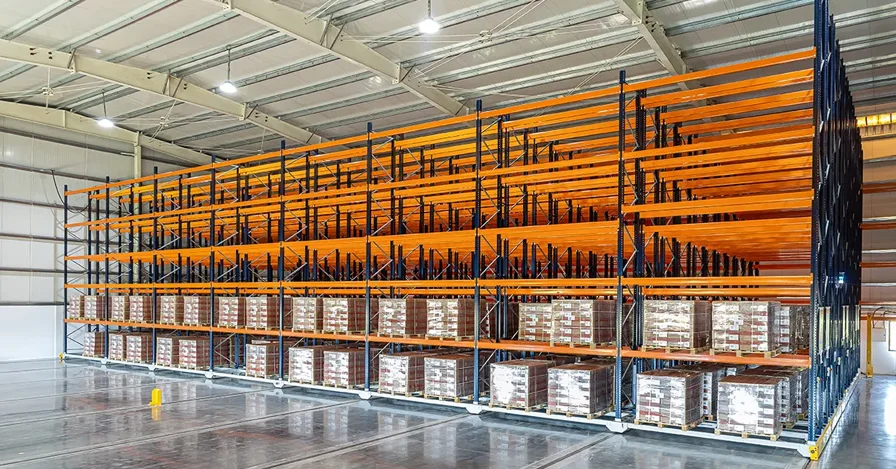
Before considering more specialised storage systems, most warehouses have significant room to improve capacity through better standard pallet racking design alone.
How a Pallet Racking System Adds Capacity Without Adding Space
Usable storage capacity depends far more on how vertical and horizontal space is organised than on total floor area. Racking that makes full use of available ceiling height, with aisle widths matched to the handling equipment in use, consistently unlocks more pallet positions than a layout designed around convenience rather than actual capacity potential.
Warehouse Racking Options for Different Storage Needs
Selective racking remains the most flexible option for mixed-SKU operations needing direct access to every pallet position, while higher-density formats trade some accessibility for significantly more storage per square metre. Our broader look at why pallet racking systems are essential for modern warehouses covers this full range of configurations in more detail.
Industrial Warehouse Racking Systems for Growing Inventory
As inventory volume and product range grow, racking systems that worked well at a smaller scale can quickly become a constraint rather than an asset.
Choosing Industrial Warehouse Racking for High-Volume Storage
High-volume operations typically need racking systems engineered for heavier loads and more frequent handling cycles than standard commercial racking is designed to support. Structural rating, beam capacity, and how the system handles repeated forklift contact over years of continuous use all become more important as throughput scales up.
Warehouse Racking Systems: Matching Design to Product Type
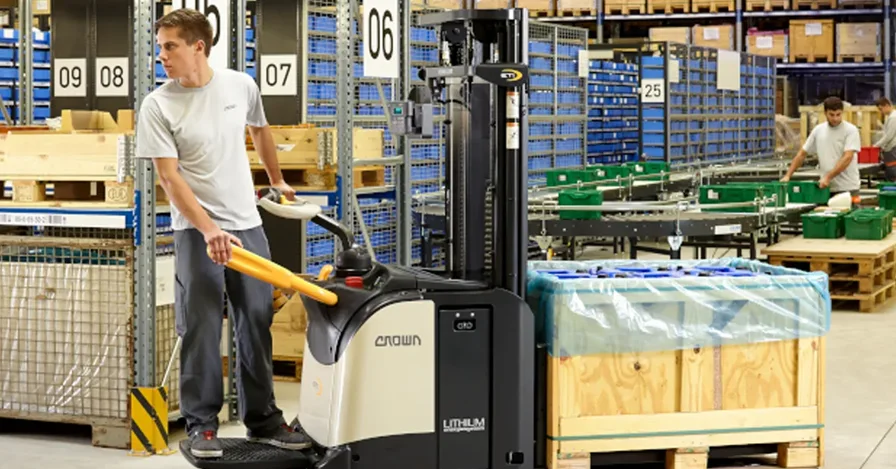
Palletised bulk goods, individually picked small items, and long or irregularly shaped material each need a fundamentally different racking approach, and forcing one product type into a system designed for another wastes both space and handling efficiency. Our guide to how to choose the right forklift for warehouse operations explains how racking configuration and forklift selection need to be planned together rather than treated as separate decisions.
Heavy Duty Shelving, Drive-In and Cantilever Racking Explained
Beyond standard pallet racking, several specialised systems exist to solve storage challenges that conventional racking simply isn't built to handle.
When Heavy Duty Shelving Makes Sense for Your Inventory
Heavy duty shelving suits smaller, individually picked items that don't require pallet-level handling, offering denser storage for these SKUs than pallet racking would provide for the same footprint. Warehouses with a genuine mix of palletised and individually picked inventory often run both systems side by side, matching each storage type to the specific product category it handles best.
Drive-In and Cantilever Racking: Best Use Cases for High-Density Storage
Drive-in racking maximises density for uniform, high-volume SKUs by allowing forklifts to enter directly into a continuous rail structure, while cantilever racking uses open arms to support long or irregularly shaped material such as pipe, timber, or steel sections that don't fit any pallet-based system. Choosing between these formats depends less on general industry convention and more on the specific dimensions, rotation requirements, and volume of the material actually being stored.
FAQs
Can better racking really avoid the need for a warehouse expansion?
In many cases, yes. Because storage capacity is usually limited by how space is organised rather than by total floor area, redesigning racking can unlock significant additional capacity within an existing footprint before expansion becomes necessary.
How do I know if I need drive-in racking or cantilever racking?
Drive-in racking suits uniform, palletised material stored in high volume, while cantilever racking is designed for long or irregularly shaped items that don't fit a pallet format at all, such as pipe or timber. The material being stored, not general preference, should drive this choice.
Can a warehouse use multiple racking systems together?
Yes, and most warehouses handling varied inventory do exactly this, combining pallet racking, heavy duty shelving, and specialised systems like cantilever or drive-in racking to match each storage type to the specific product category it suits best.
Conclusion
Expanding storage capacity rarely starts with a bigger building. It starts with racking that's actually matched to what's being stored, whether that means better pallet racking design, industrial warehouse racking built for higher-volume throughput, or specialised drive-in and cantilever systems for material standard racking was never designed to handle. Businesses that plan warehouse racking systems around actual product type and volume consistently unlock more usable space than those defaulting to whatever configuration already exists on the floor.
Industries This Guidance Applies To
The principles in this guide apply across the range of industries GENAVCO supports with warehouse racking and storage systems, including third-party logistics and distribution centres, retail and FMCG warehousing, manufacturing and industrial storage, building materials and steel distribution, and cold chain and food storage facilities. While the ideal racking mix varies by sector, the underlying approach, matching system type to product dimensions, rotation requirements, and volume, holds across all of these operating environments.
Recommendations are informed by racking systems supplied and supported across these sectors in the UAE, giving practical grounding in how storage decisions perform under real operating conditions rather than only in theory. Any specific racking configuration or capacity plan should still be validated against an individual facility's own inventory data and layout, since no general guide can substitute for a proper site-specific assessment.