Two warehouses storing the exact same product can end up with completely different storage economics depending on a single decision: drive in racking or selective racking. Both are proven, widely used systems, but they optimise for opposite priorities, density versus accessibility, and picking the wrong one for a given operation can quietly cost far more in lost efficiency than the racking itself ever cost to install.
Understanding how these two systems actually differ, which industries lean toward each, and how to weigh throughput against storage density when choosing between them helps businesses avoid a costly mismatch between their pallet racking system and how their warehouse actually operates.
Understanding Drive-In and Selective Racking Systems
Before comparing return on investment, it's worth being clear on what each system actually is and how it physically differs from the other.
What Is Drive-In Racking?
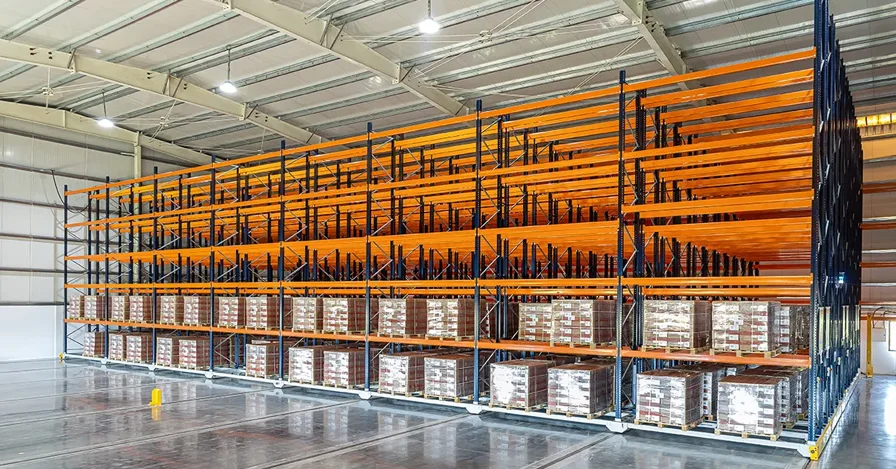
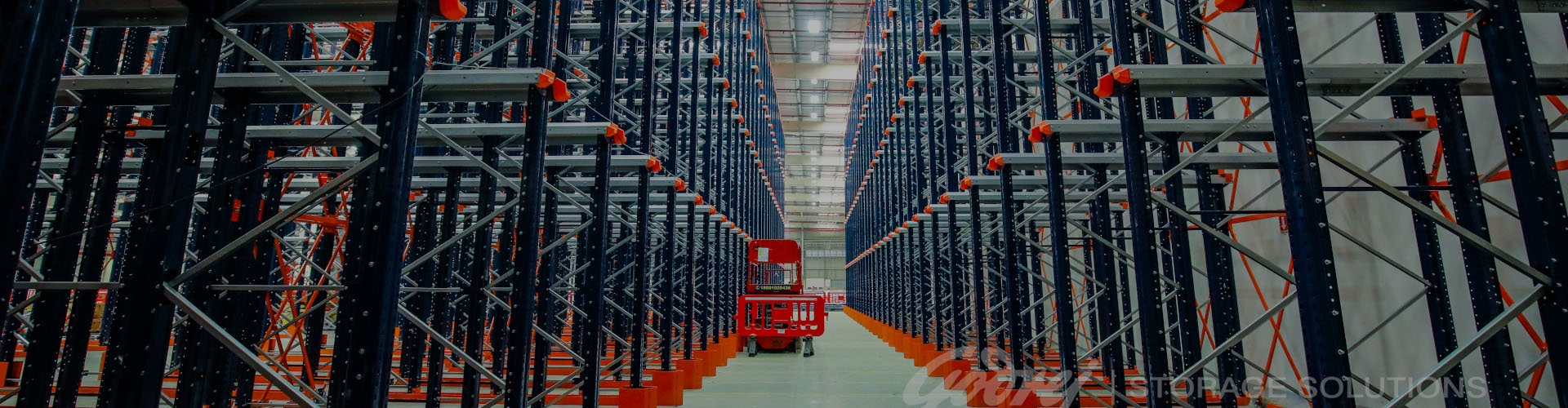
Drive-in racking allows forklifts to enter directly into a continuous rail structure, stacking pallets several deep and multiple levels high within a single dense block. This design maximises storage density per square metre of floor space, at the cost of direct access to individual pallets, since units are typically loaded and unloaded on a last-in, first-out basis.
What Is Selective Pallet Racking?
Selective racking gives direct access to every pallet position from the aisle, making it the most flexible and widely used warehouse racking systems configuration for operations with varied SKUs and frequent picking. The trade-off is lower storage density, since aisle space is needed alongside every rack row rather than being shared across a dense block.
Which Industries Benefit Most from Drive-In Racking?
Drive-in racking earns its keep in specific operational conditions where high-density storage of uniform product outweighs the need for constant SKU-level access.
Cold Storage Warehouses
Cold storage facilities benefit enormously from drive-in racking's density, since every cubic metre of refrigerated space carries a significant ongoing energy cost. Maximising storage volume within a fixed refrigerated footprint directly reduces cost per pallet stored, making density a much higher priority here than in ambient warehousing.
Food and Beverage Distribution
Operations handling large, uniform batches of a limited number of SKUs, such as beverage distribution, are well suited to drive-in racking's last-in, first-out flow. The system works particularly well when stock naturally moves in full pallet quantities and doesn't require picking individual units from deep within a block.
How to Choose the Right Warehouse Storage Solution
The right choice depends less on industry convention and more on the specific throughput and rotation demands of the operation itself. Our broader look at why pallet racking systems are essential for modern warehouses covers additional configurations, including cantilever racking and other specialised systems worth considering alongside these two, and our guide to how to choose the right forklift for warehouse operations explains how forklift type needs to be matched to whichever racking system is ultimately selected.
Warehouse Throughput Considerations
High-throughput operations with frequent, mixed-SKU picking generally perform better on selective racking, since forklifts can access any position without needing to clear pallets stacked in front of it. Facilities with lower pick frequency but higher storage volume per SKU often see stronger returns from industrial racking systems built around drive-in density instead.
Inventory Rotation Requirements
Products requiring strict first-in, first-out rotation, such as perishables with expiry dates, are generally a poor match for drive-in racking's last-in, first-out flow, and are far better served by selective racking or heavy duty shelving configured for controlled rotation. Getting this mismatch wrong risks stock aging out at the back of a drive-in block before it's ever picked, turning a density advantage into a waste problem.
FAQs
Is drive-in racking always more cost-effective than selective racking?
Not always. Drive-in racking offers better storage density, which lowers cost per pallet stored, but only delivers strong ROI when paired with uniform, high-volume SKUs. Operations with frequent mixed-SKU picking often see better overall returns from selective racking despite its lower density.
Can drive-in racking handle first-in, first-out inventory rotation?
Standard drive-in racking operates on a last-in, first-out basis, making strict FIFO rotation difficult. Products requiring guaranteed rotation order are generally better suited to selective racking or specialised flow racking systems designed specifically for FIFO handling.
How do I decide between drive-in and selective racking for a mixed-product warehouse?
Many mixed-product warehouses use both, applying drive-in racking to high-volume, uniform SKUs and selective racking to lower-volume, frequently picked items, rather than forcing every product into a single racking type.
Conclusion
Neither drive-in nor selective racking is universally better, each delivers stronger ROI under different operating conditions. Businesses that match warehouse racking choice to their actual throughput and rotation requirements, rather than defaulting to whichever system looks most efficient on paper, consistently get more value from their storage investment. For many operations, the strongest result comes not from picking one system exclusively but from combining both where each genuinely fits the product it's storing.