Throughput has overtaken almost every other priority for warehouse operators heading into 2026, according to recent industry research — and in most facilities, the equipment moving product between storage and dispatch is either the biggest lever for improving that throughput or the biggest bottleneck holding it back. Labour typically accounts for the majority of a warehouse's operating budget, and a large share of that labour time is spent simply walking or waiting rather than doing productive work. This guide walks through the material handling bottlenecks that quietly drain warehouse productivity, how modern forklifts address them directly, and what building a genuinely high-performance warehouse actually requires.
Why Material Handling Bottlenecks Slow Warehouse Operations
Most productivity loss in a warehouse doesn't show up as one dramatic failure — it accumulates in small, repeated inefficiencies across thousands of movements a day, which is exactly why it's so easy to overlook until someone measures it.
Inefficient Product Movement
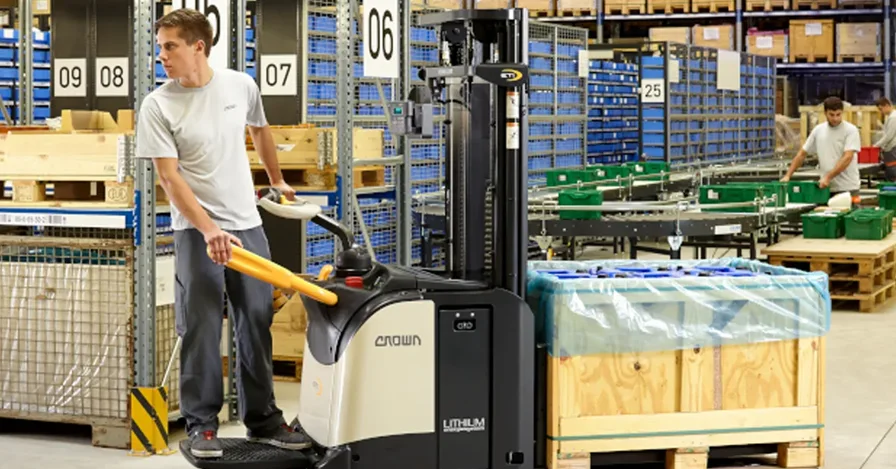
Forklifts frequently spend a significant share of their operating time travelling empty — moving to a pickup point without a load rather than carrying product — and every one of those empty runs is capacity the operation paid for but didn't use productively. This waste compounds when equipment isn't matched to the task: a full-size counterbalance truck sent to retrieve a single small pallet from a narrow aisle wastes time manoeuvring that a purpose-built machine wouldn't need. Mapping actual travel patterns against ideal routes is usually the fastest way to expose where product movement is quietly bleeding hours out of a shift.
Long Picking Times
Industry data consistently shows that travel between locations, not the physical act of picking itself, accounts for the majority of total picking time in a typical warehouse — meaning most of the labour cost tied to order fulfilment is spent walking or driving, not retrieving product. Poor SKU slotting is a major contributor: placing slow-moving stock in prime, easy-access locations while fast-moving items sit further away forces pickers to cover far more distance per order than necessary. Because pick rate is one of the most direct levers on total warehouse labour cost, even a modest improvement in picking speed tends to produce an outsized reduction in overall operating expense.
How Modern Forklifts Improve Productivity
Equipment choice directly addresses both bottlenecks above — travel efficiency and load handling — which is why forklift specification has become a genuine productivity lever rather than a simple procurement decision. Our electric forklift guide covers the technology driving these gains in more depth.
Faster Travel Speeds
AC drive motors and regenerative systems in modern electric forklifts deliver stronger acceleration than older platforms, cutting the time spent on each individual travel segment across a shift. Multiplied across the hundreds of movements a forklift completes daily, even a small per-trip improvement compounds into a measurable increase in total throughput, particularly in high-frequency put-away and replenishment cycles where travel segments repeat constantly.
Better Load Handling
Modern mast and hydraulic systems place and retrieve pallets with less repositioning than older equipment required, reducing the fine-adjustment time that adds up significantly across a full shift of picks. Articulated warehouse forklift designs extend this advantage further by handling loads directly within narrow racking aisles, eliminating the extra manoeuvring a standard counterbalance truck needs to square up to a rack face before placing or retrieving a pallet.
Building a High-Performance Warehouse
Forklift selection solves part of the productivity equation, but it only delivers its full value inside a warehouse that's laid out and organised to support it.
Optimising Warehouse Layout
Placing high-velocity stock closest to dispatch and slower-moving inventory further away directly cuts the travel distance behind most picking time, since the layout itself determines how far equipment and pickers have to move for every single transaction. Warehouses that treat slotting as a one-time setup decision rather than a periodically reviewed process tend to accumulate exactly the kind of inefficient placement that quietly erodes pick rate over time as product mix shifts.
Integrating Storage Systems
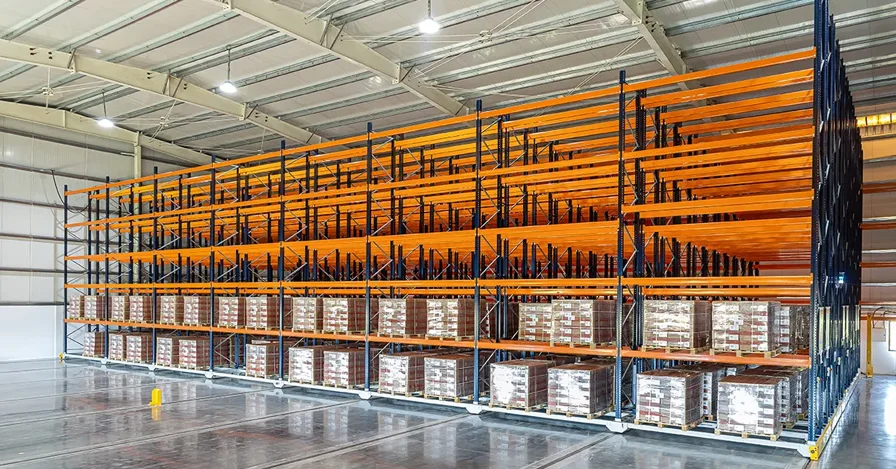
Forklifts and racking are not independent purchasing decisions — aisle width, rack height, and beam configuration all have to be specified together for the combination to perform as intended. Warehouse management systems designed around the actual forklift fleet enable higher storage density without compromising retrieval speed, which is precisely the combination that translates equipment investment into measurable throughput improvement rather than just capital expenditure. Our warehouse automation trends guide and forklift, reach truck, and VNA guide both cover how to plan this integration in more detail.
Frequently Asked Questions
What is the biggest cause of lost productivity in most warehouses?
Travel time — both empty forklift runs and picker walking distance — typically accounts for the largest share of lost productivity, often exceeding the time spent on the actual handling or picking task itself. Addressing layout and slotting usually delivers faster returns than adding more equipment or labour.
Can changing forklift type alone improve warehouse throughput?
Equipment upgrades help, particularly when moving to articulated or narrow-aisle forklifts that reduce manoeuvring time, but the largest productivity gains usually come from combining the right equipment with layout and slotting improvements rather than changing equipment in isolation.
How often should warehouse slotting be reviewed?
Slotting should be reviewed whenever product mix or order patterns shift meaningfully, rather than left as a one-time setup decision. Seasonal demand changes and new SKU introductions are common triggers that make previously efficient layouts gradually less effective.
Conclusion
Warehouse productivity rarely fails all at once — it erodes gradually through empty travel runs, poorly slotted stock, and equipment that isn't quite matched to the task at hand. The right forklift addresses part of that equation directly through faster travel and better load handling, but the full productivity gain only shows up when equipment, layout, and storage systems are planned together rather than purchased separately. Warehouses that treat these as one integrated decision consistently outperform those that upgrade equipment in isolation and hope the rest falls into place. If you're reviewing your warehouse operation and want help matching the right forklift and storage combination to your throughput goals, Genavco's material handling team can help build a setup suited to your facility.