Warehouses that ran comfortably on manual picking and paper-based stock counts a few years ago are now struggling to keep pace with order volumes, tighter delivery windows, and rising labour costs. The gap between a manual operation and an automated one is no longer a marginal efficiency difference — it's becoming the difference between winning and losing a distribution contract. This guide looks at the automation trends reshaping material handling in 2026, the technologies driving that shift, and what a warehouse actually needs to prepare for it.
Why Warehouse Automation Is Becoming a Business Necessity
Automation used to be a differentiator reserved for large distribution centres with deep capital budgets. That's changed. Labour availability has tightened, e-commerce has pushed order volumes higher with smaller batch sizes, and customers now expect same-day or next-day fulfilment as standard. A warehouse that still relies purely on manual picking and paper-based stock counts is competing at a structural disadvantage against operations that have automated even part of their workflow.
Rising Demand for Smart Warehouses
A smart warehouse connects its equipment, racking, and software into a single data layer, so managers can see stock levels, equipment location, and order status in real time instead of relying on end-of-shift counts. This shift is being driven as much by customer expectations as by internal efficiency goals — retailers and manufacturers alike are now asking their logistics partners for real-time visibility before they sign a contract. Warehouse management is no longer just about where stock sits on a shelf; it's about how quickly that stock can be located, moved, and dispatched.
The Role of Automation in Logistics
Automation's biggest impact in logistics isn't replacing people — it's removing the repetitive, low-value movement that eats up labour hours without adding throughput. Automated guided systems handle the constant back-and-forth between storage and dispatch, freeing warehouse staff to focus on quality checks, exceptions, and customer-specific packing requirements. For multi-site operators, automation also standardises processes across locations, which makes it far easier to shift volume between warehouses during peak season without retraining an entire workforce each time.
Technologies Driving the Future of Material Handling
The technologies behind this shift aren't experimental anymore — they're proven, commercially available, and increasingly affordable at mid-warehouse scale, not just for the largest distribution centres.
Smart Forklifts and Connected Equipment
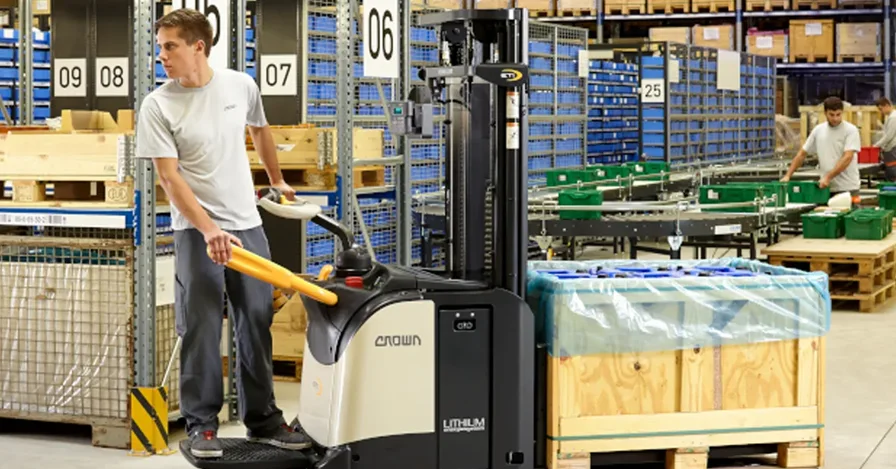
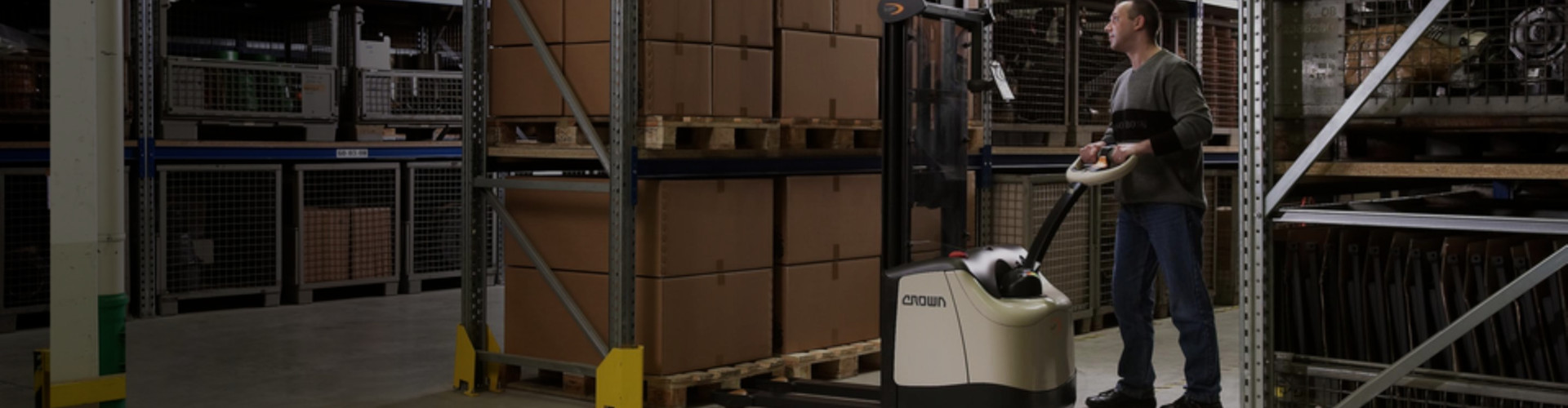
Modern electric forklifts now come with fleet management systems that track utilisation, flag impact events, and monitor operator behaviour in real time, turning a fleet of individual machines into a connected data source. Crown electric forklifts, for example, pair AC motor technology with fleet telematics that give warehouse managers visibility into which machines are earning their keep and which are sitting idle. Articulated forklifts, such as the Flexi range, extend this further by combining very narrow aisle access with the same connected monitoring, letting operators pack more storage into the same footprint without losing sight of machine performance.
Automated Storage and Retrieval Systems
Automated storage and retrieval systems (AS/RS) use computer-controlled cranes, shuttles, or vertical lift modules to place and retrieve stock without a forklift driver navigating the aisle. Unit-load AS/RS handles full pallets in high-bay racking, while mini-load and shuttle-based systems manage smaller totes and cartons at much higher pick rates. The right configuration depends on SKU count, order profile, and building height — a system sized for slow-moving bulk pallets looks nothing like one built for a high-velocity e-commerce pick face, and mismatching the two wastes both capital and floor space.
How to Prepare Your Warehouse for Automation
Automation delivers the best return when it's planned around the building and the stock profile, not bolted onto an existing layout as an afterthought.
Optimising Warehouse Layout
Before adding any automated equipment, the layout itself needs an honest review. Aisle widths, ceiling height, floor flatness, and dock door positioning all determine which automation technologies are even feasible. A building with generous vertical clearance can support high-bay racking and unit-load AS/RS, while a lower-ceiling facility may get more value from mini-load systems or narrow-aisle forklifts that increase pallet density without requiring structural changes. Getting the layout review right the first time avoids costly retrofits once equipment is already installed.
Choosing the Right Storage Systems
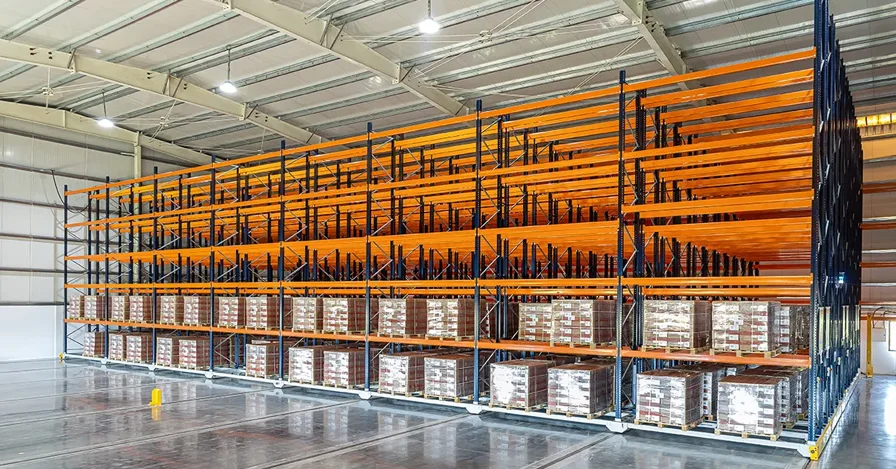
Storage infrastructure is the backbone that automation runs on — the sturdiest AS/RS in the world is only as good as the racking supporting it. Godrej Storage Solutions pallet racking and shelving systems are engineered for exactly this kind of integration, with configurations built to carry the dynamic loads generated by shuttle and stacker crane operations, not just static pallet weight. Warehouses planning a phased move toward automation should select racking rated for future automation loads from day one, rather than replacing an entire structure later. A closer look at the full range of forklifts, racking, and warehouse equipment available for UAE operations is a useful next step before finalising any layout.
Frequently Asked Questions
Is warehouse automation only viable for large distribution centres?
No. Mid-sized warehouses can automate in phases — starting with connected forklifts or a single mini-load system — rather than committing to a full-scale AS/RS from the outset. Scaling automation gradually spreads the capital cost and lets a business validate returns before expanding further.
What is the difference between a unit-load and mini-load AS/RS?
A unit-load AS/RS handles full pallets and large containers, typically in high-bay racking. A mini-load system manages smaller totes, cartons, or bins at much higher pick rates, making it better suited to fast-moving, low-unit-count orders such as e-commerce fulfillment.
Does my existing racking need to be replaced before automating?
Not always — it depends on whether the current structure is rated for the dynamic loads that shuttle systems or stacker cranes generate. A structural review by the racking manufacturer will confirm whether existing frames can be reinforced or whether new racking is the more practical route.
Conclusion
Warehouse automation in 2026 isn't a single big-bang project — it's a series of deliberate choices about layout, equipment, and storage infrastructure that compound over time. The warehouses seeing the biggest gains are the ones treating automation as a phased strategy: starting with connected equipment, validating the data, and expanding into automated storage once the fundamentals are proven. A well-planned layout, forklifts built for the job, and racking engineered for tomorrow's throughput together form the foundation every automation project depends on. If you're mapping out a phased automation plan for your facility, Genavco's material handling team can help match the right forklifts, racking, and layout to your specific warehouse.